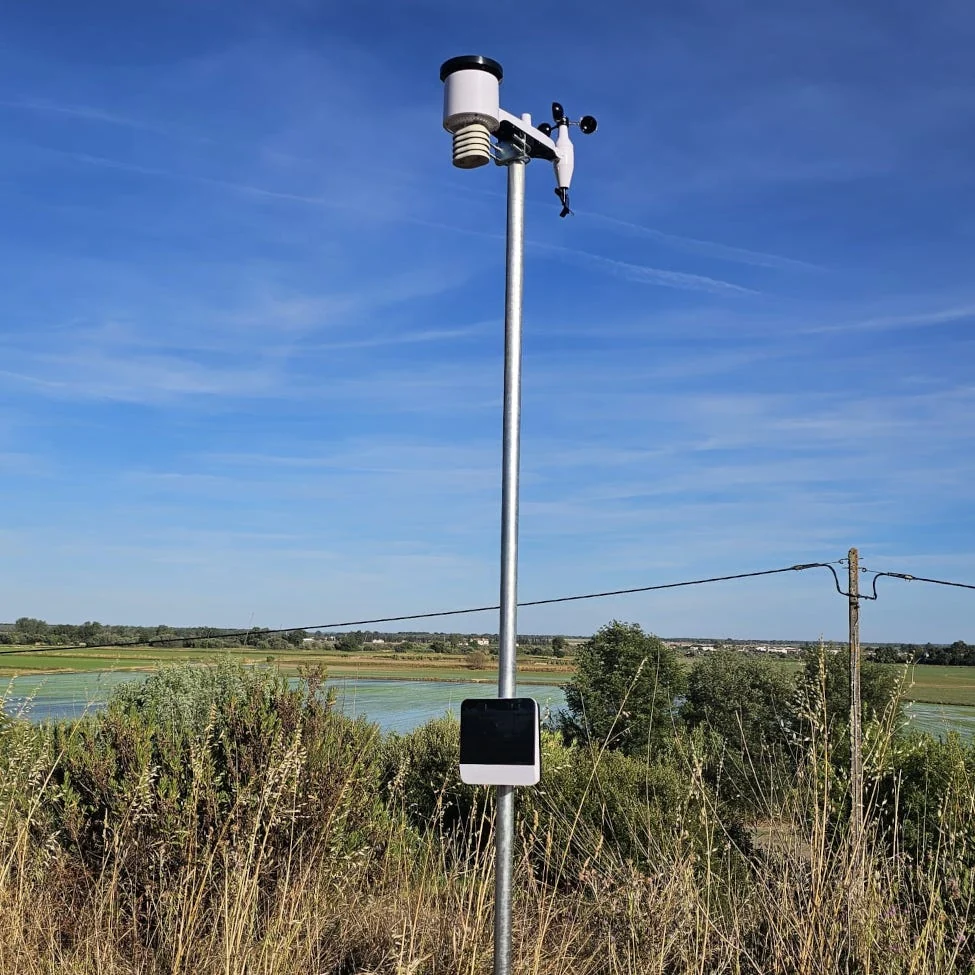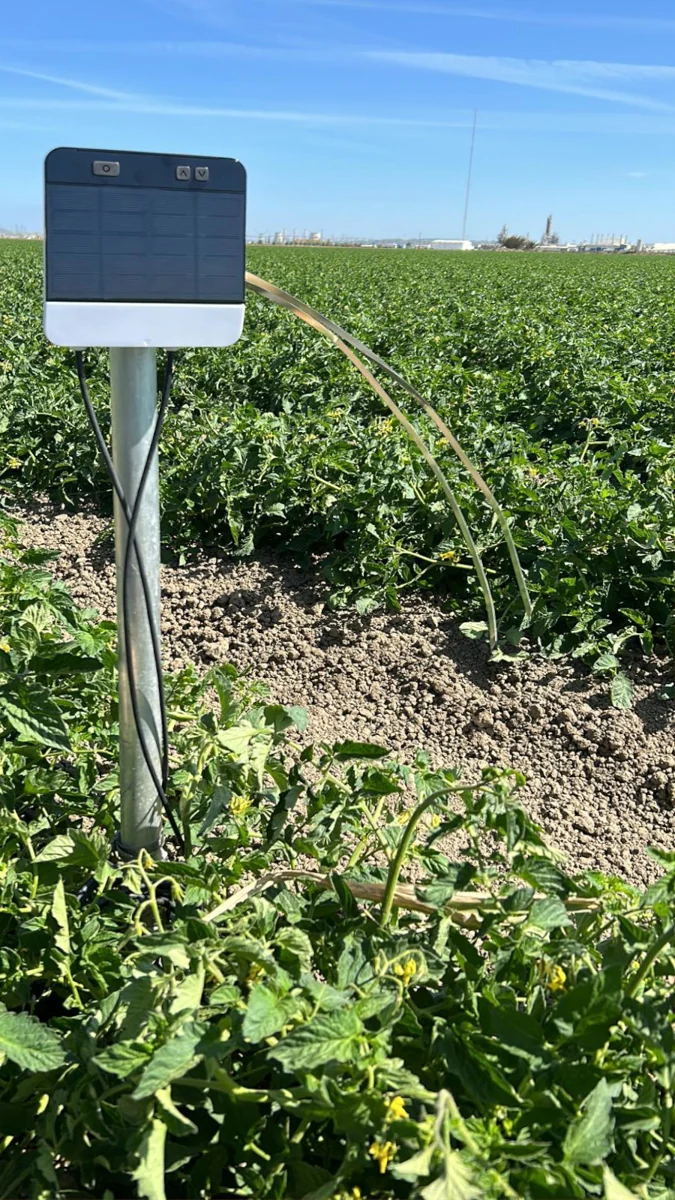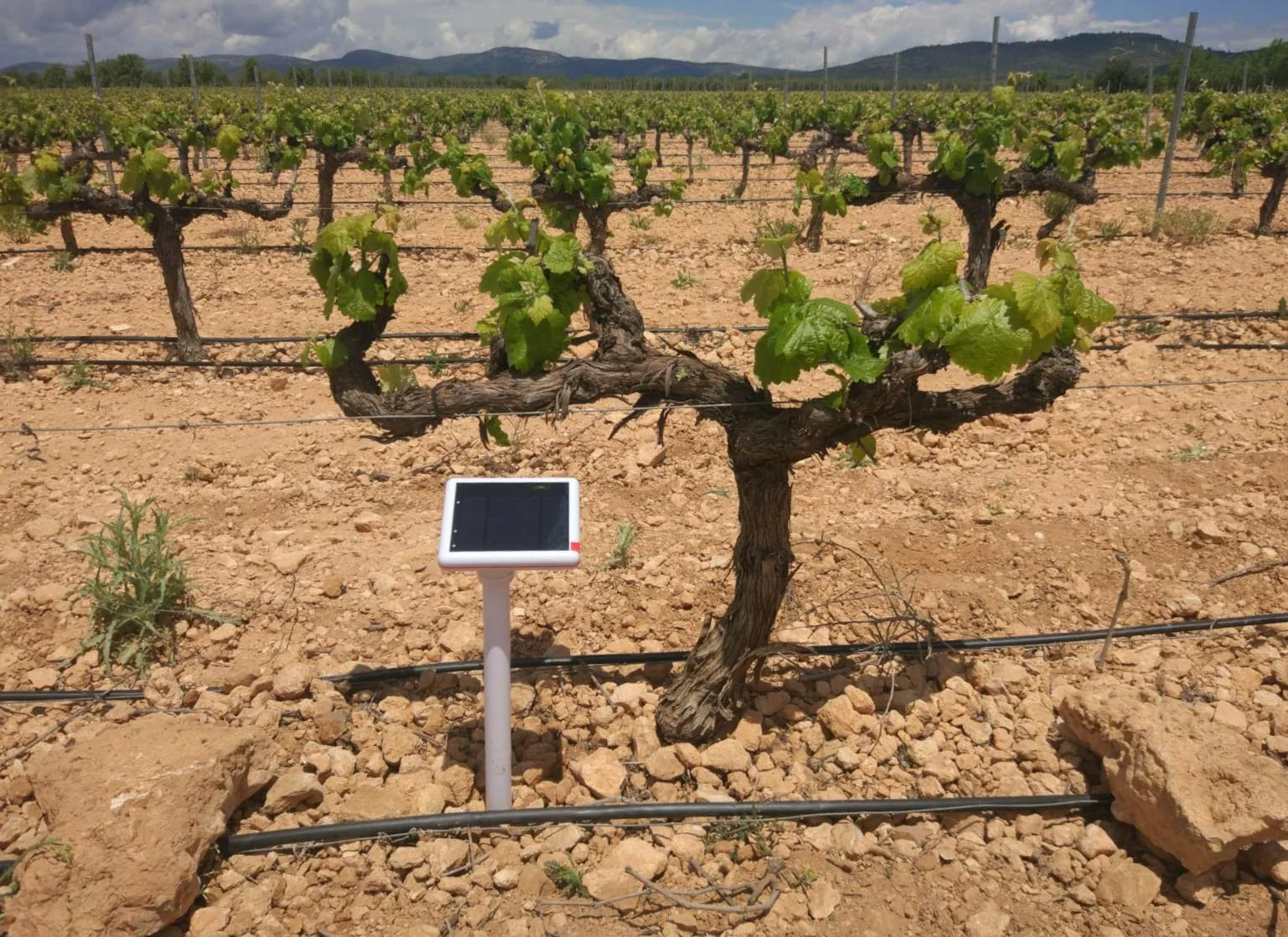
What a soil sensor measures
A soil sensor samples a small volume around its sensing element. Representative installation and repeated observations support the interpretation of irrigation response, wetting depth, salinity and soil temperature. The measured quantity and sensing position determine which of these processes the record describes.
Water content and water potential answer different questions. Volumetric water content describes the fraction of soil volume occupied by water, usually in m³/m³ or percent. Matric potential describes how tightly the soil holds water, usually in kPa. A reading of 25% water content cannot be converted into a universal irrigation trigger: soil texture and rooting depth change its meaning.
How the main sensing methods work
Capacitance and frequency-domain probes infer water content from electrical properties. Time-domain reflectometry analyses a pulse travelling along a probe. Both require an appropriate relationship between the electrical measurement and water content. A tensiometer uses a water-filled tube and porous tip to measure suction. Granular-matrix sensors estimate tension through resistance in a material that exchanges water with the soil.
Temperature and salinity can influence electrical measurements. Factory calibration, soil-specific calibration and installation quality should be considered together. A fine display resolution does not establish accuracy. Bulk electrical conductivity is also affected by water content and soil structure; it does not directly report nitrogen, phosphorus or potassium concentrations.
Installation and spatial coverage
Map differences in soil, topography and irrigation before selecting locations. Monitor the active root zone at more than one depth. A shallow reading can show surface drying while deeper roots still have water. Maintain soil contact, avoid oversized holes and protect cables and equipment from field operations. Record the sensor depth, coordinates, installation method and any disturbed soil.
Inspect the first irrigation response before trusting alerts. A flat trace could indicate stable conditions, poor contact or an instrument problem. A deep wetting response can help investigate drainage, but it is not automatically proof of overwatering. Check application duration, rainfall and the position relative to emitters.
Water storage calculations
For a uniform 300 mm layer, water content of 0.24 m³/m³ corresponds to 72 mm of stored water. If an independently established field-capacity value is 0.30 m³/m³, the difference is 18 mm: (0.30 − 0.24) × 300. This estimates a storage deficit, not the gross amount to pump. Rainfall, application efficiency, crop stage and the rest of the root profile still matter.
Compare soil monitoring systems
Terra, Soil Mini, TEROS 12 and Drill & Drop address different installation requirements. Terra combines a probe with network connectivity. Soil Mini provides wired moisture and EC measurements at local shallow points. TEROS 12 is a wired point sensor for an existing or new logger. Drill & Drop samples several depths along one profile. Compare the complete measurement and telemetry package for your soil and root zone.
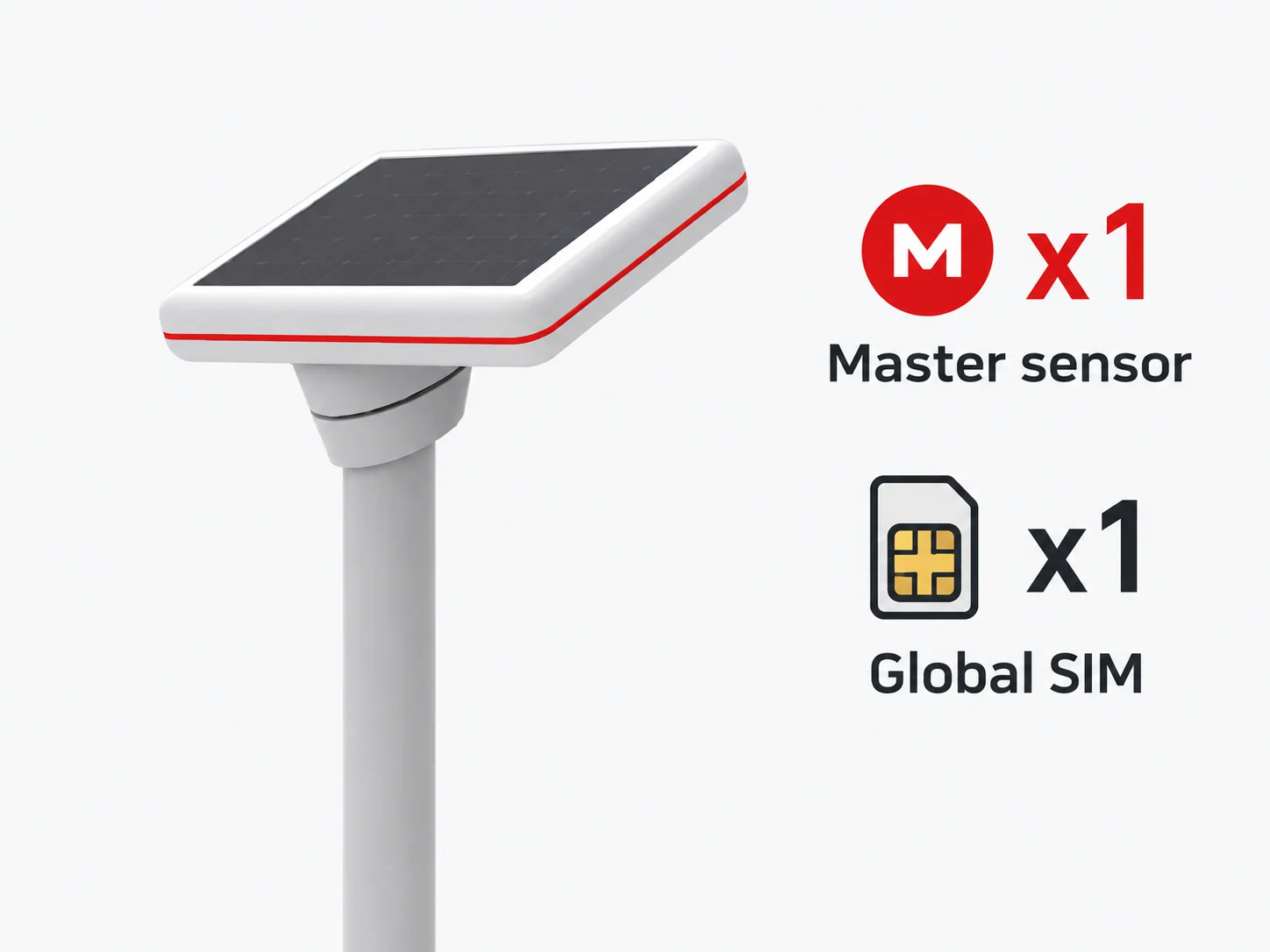
Terra Master; Node version also offered
Pycno Terra
A strong starting point for growers who want an integrated soil-monitoring network. The Master handles cellular upload and can collect readings from compatible Nodes.
Choose Master/Node, depth, modem and local radio frequency before ordering.
View product details ↗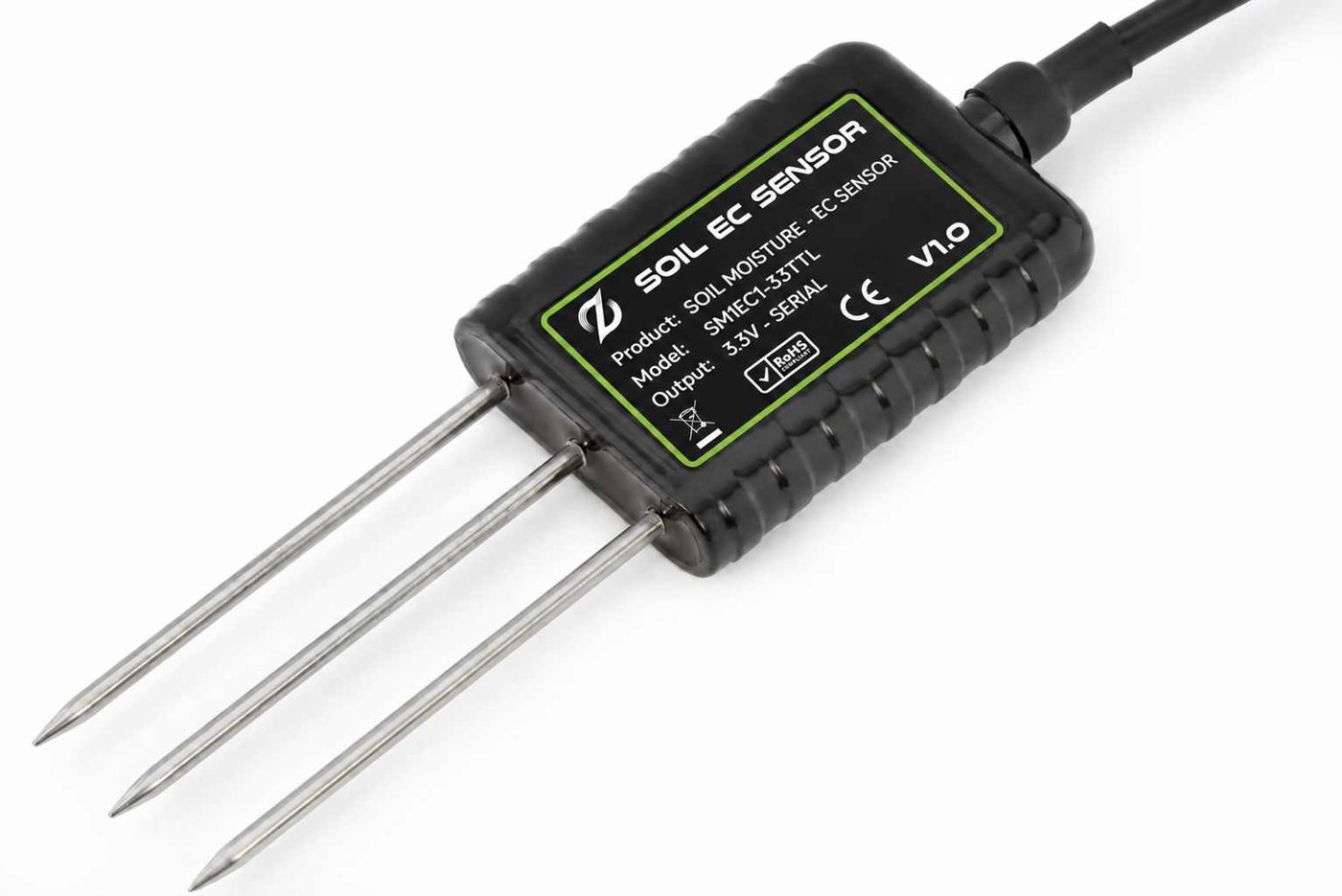
Soil moisture and EC; selected wired interface
Pycno Soil Mini
A wired probe for installations requiring several shallow measurement points. The UART version uses a Pulse UART sliding module, while the RS-485 version uses its corresponding module.
Match the interface to the Pulse module; RS-485 and SDI-12 variants have different supply availability.
View product details ↗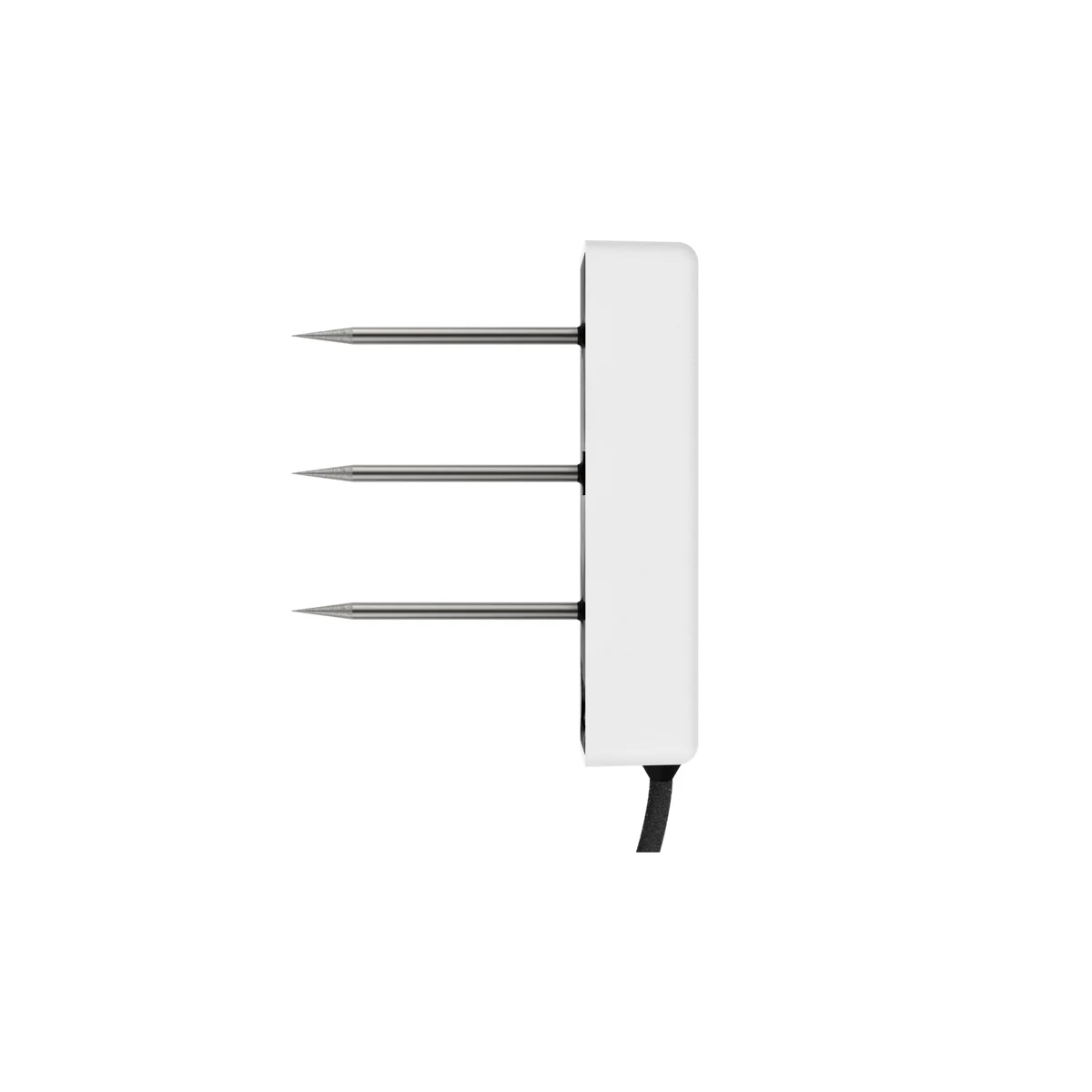
TEROS 12 wired probe
METER TEROS 12
A compact wired probe for growers and researchers who need water content, temperature and bulk electrical conductivity. It works with METER logging systems and compatible SDI-12 loggers.
Build multi-depth coverage with multiple probes; budget for logging and telemetry.
View product details ↗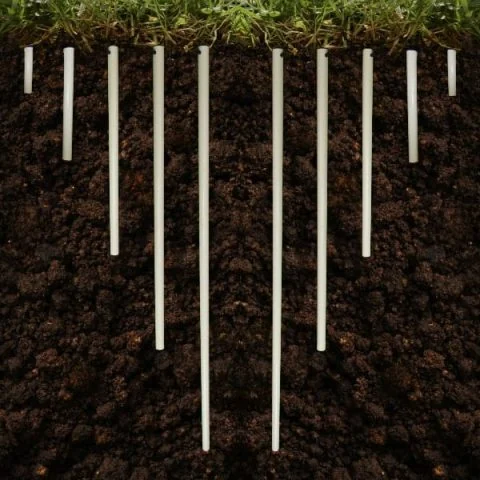
Multi-depth probe family; salinity optional
Sentek Drill & Drop
A profile probe for tracking conditions at several depths from one installation. The range is particularly relevant when deeper roots and water movement require more than a single-depth measurement.
Select the probe interface and data-transfer system together.
View product details ↗| Model | Measurement / role | Data connection | Coverage / installation |
|---|---|---|---|
| Pycno Terra | Soil moisture and soil temperature; ambient measurements also listed | Master uploads through cellular; Nodes use a Master | 30, 60 or 90 cm probe options; moisture modules at 15 cm intervals |
| Pycno Soil Mini | Soil moisture and electrical conductivity | 3.3 V UART, RS-485 or SDI-12 version | Local shallow measurement points |
| METER TEROS 12 | Volumetric water content, temperature and bulk EC | SDI-12; compatible logger required | One local measurement volume per installed probe |
| Sentek Drill & Drop | Soil moisture and temperature; salinity on equipped variants | SDI-12 or RS232/RS485 variants; matched telemetry required | 30–120 cm probes with sensing every 10 cm |
System selection
For a grower starting a remote monitoring network, Terra's integrated Master/Node architecture can reduce the number of separate components to specify. Depth and modem configuration should correspond to the site. Soil Mini extends a suitably configured Pulse installation with wired shallow measurement points, which is useful where several growing zones require separate observations. Where a compatible logger already exists, TEROS 12 offers water content, temperature and bulk EC through SDI-12. For deeper profiling, Drill & Drop provides closely spaced measurements down a single probe.
Include installation, connectivity, subscriptions and replacement parts in a quote. Calibration and representative placement remain necessary whichever architecture you select.
The Pycno platform combines visual sensor-data analysis, rule-based alerts and spreadsheet export for supported installations. Displayed trends should retain sensor depth, units and calibration context when they are used to interpret irrigation response.
Terminology
- Field capacity
- Water remaining after substantial drainage; its operational estimate depends on the soil and measurement procedure.
- Root zone
- The soil depth from which the crop is actively obtaining water.
- Repeatability
- Agreement between repeated measurements under the same conditions.
- Calibration
- The relationship used to convert instrument response into a reported quantity.
From spot readings to continuous records
Manual observations and water-filled tension instruments remain useful reference tools. Electronic probes add frequent measurements and remote access. Telemetry changes how quickly a grower sees a record; it does not remove the need for representative sampling or agronomic interpretation.
Can one sensor represent my farm?
Only if the monitored location adequately represents the specific management decision. Distinct soils, irrigation zones and crops usually require separate consideration. Start with a mapped pilot and verify whether its readings explain conditions elsewhere.