Gateway and logger architectures
Agricultural gateways and data loggers occupy different positions in a monitoring system. A measurement logger acquires electrical or digital signals, applies a configured measurement sequence and stores observations. A gateway transfers information between device and application networks. Some units combine these functions or provide interfaces for local control.
The important distinction is where the measurement occurs. A wired soil instrument may deliver readings through SDI-12 to a logger or a modular gateway. A LoRaWAN soil sensor measures and encodes its own observations before transmitting them to a radio gateway. Those systems can support the same agricultural task while requiring different power arrangements, device configuration and software infrastructure.
Modular gateways and measurement loggers
Deep Orbital Pulse
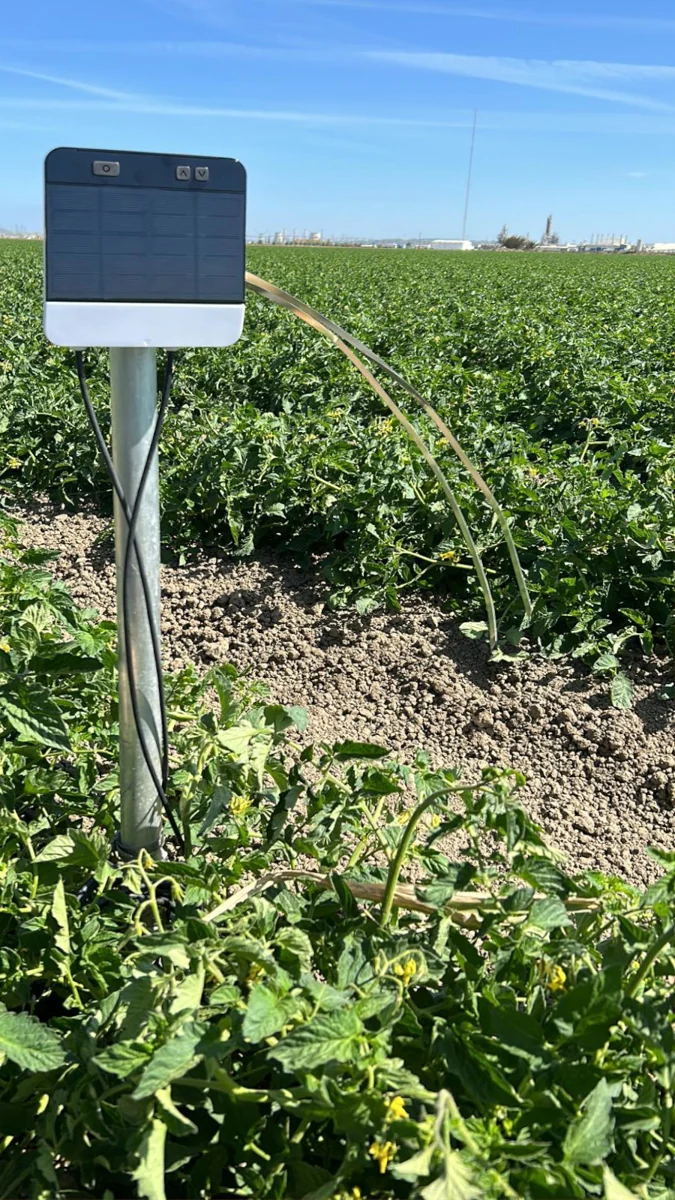
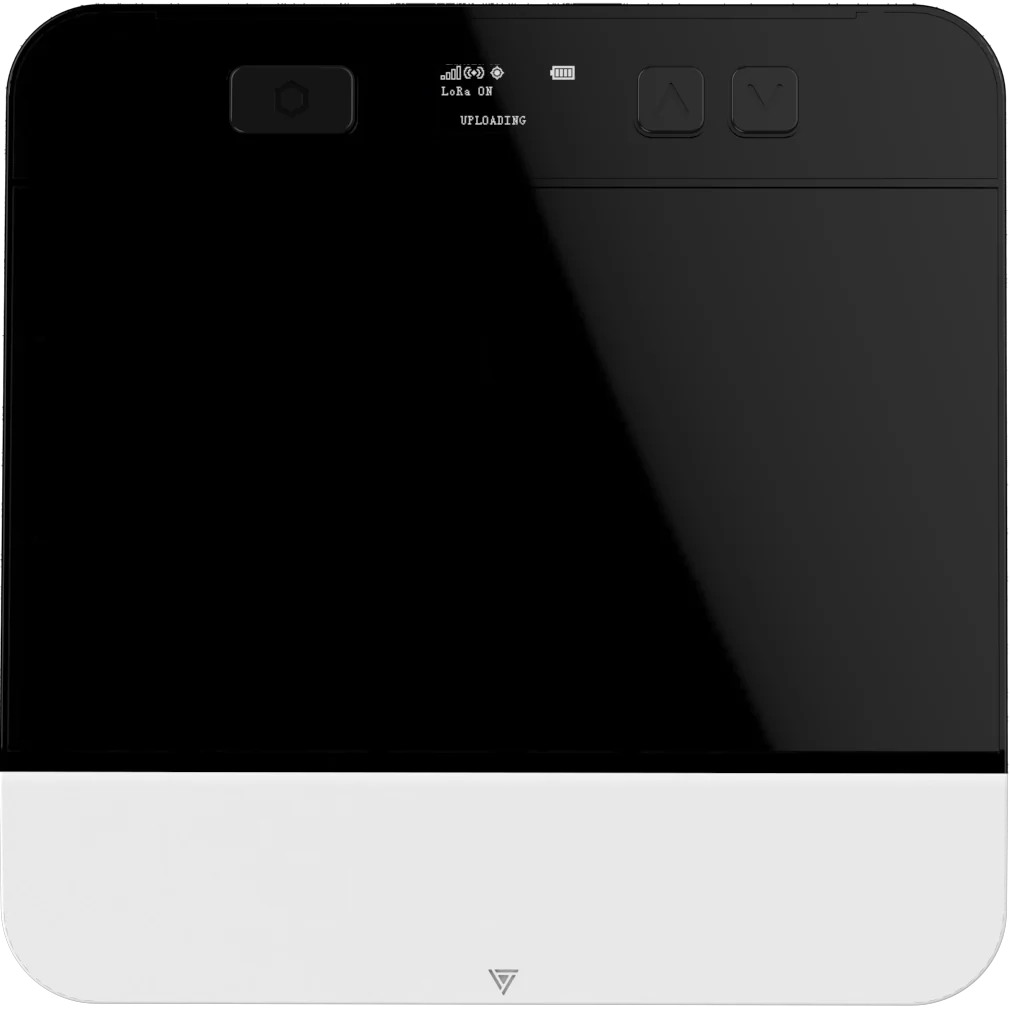
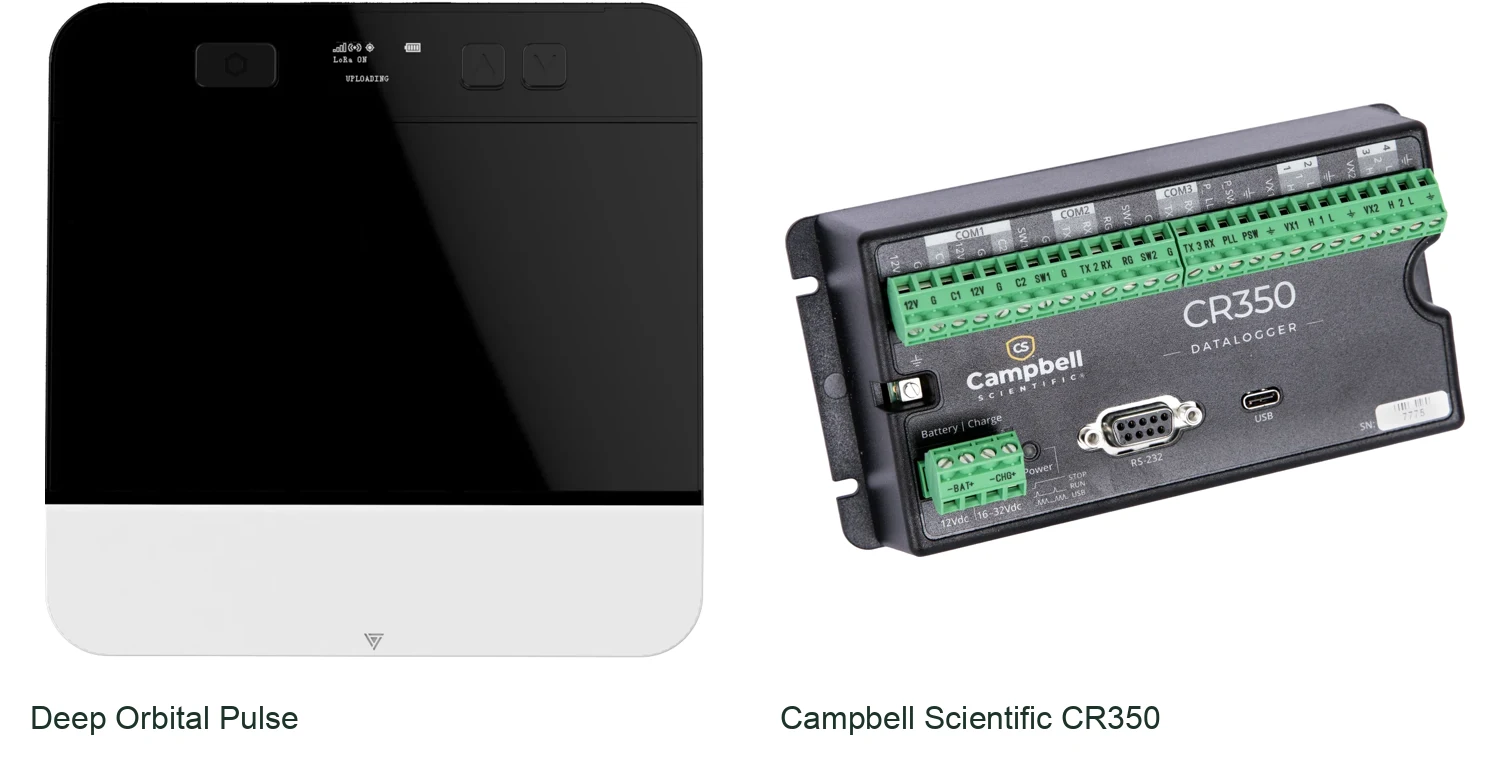
Pulse is a modular gateway with two sliding-module slots and selectable modem and regional radio configurations. The current kit configurator lists flowmeter and two-port SDI-12 modules. Its integrated solar panel and ability to add selected instrument interfaces make it a strong starting point for mixed farm monitoring that may expand from water measurement into weather and soil sensing.
The base kit should be distinguished from a complete instrument package: dummy modules seal unused slots, and specific serial or actuator interfaces require confirmation. Pulse lists LoRa radio connectivity; this does not establish compatibility with LoRaWAN end devices. Its module architecture is particularly relevant where the application requires an explicitly configured combination of wired and local wireless instruments.
Campbell Scientific CR350
CR350 provides direct analog measurement, pulse counting, SDI-12 and two independent RS232/RS485 ports. A local program controls measurement timing, processing and storage. Communications options include regional radios, Wi-Fi and cellular configurations.
This architecture suits installations requiring custom measurement sequences and local processing of instrument signals. The data logger is part of a larger field assembly with an external power supply, enclosure and the selected communications option. Its listed input accuracy concerns the electrical measurement and does not establish the complete sensor system's accuracy.
Outdoor LoRaWAN gateways
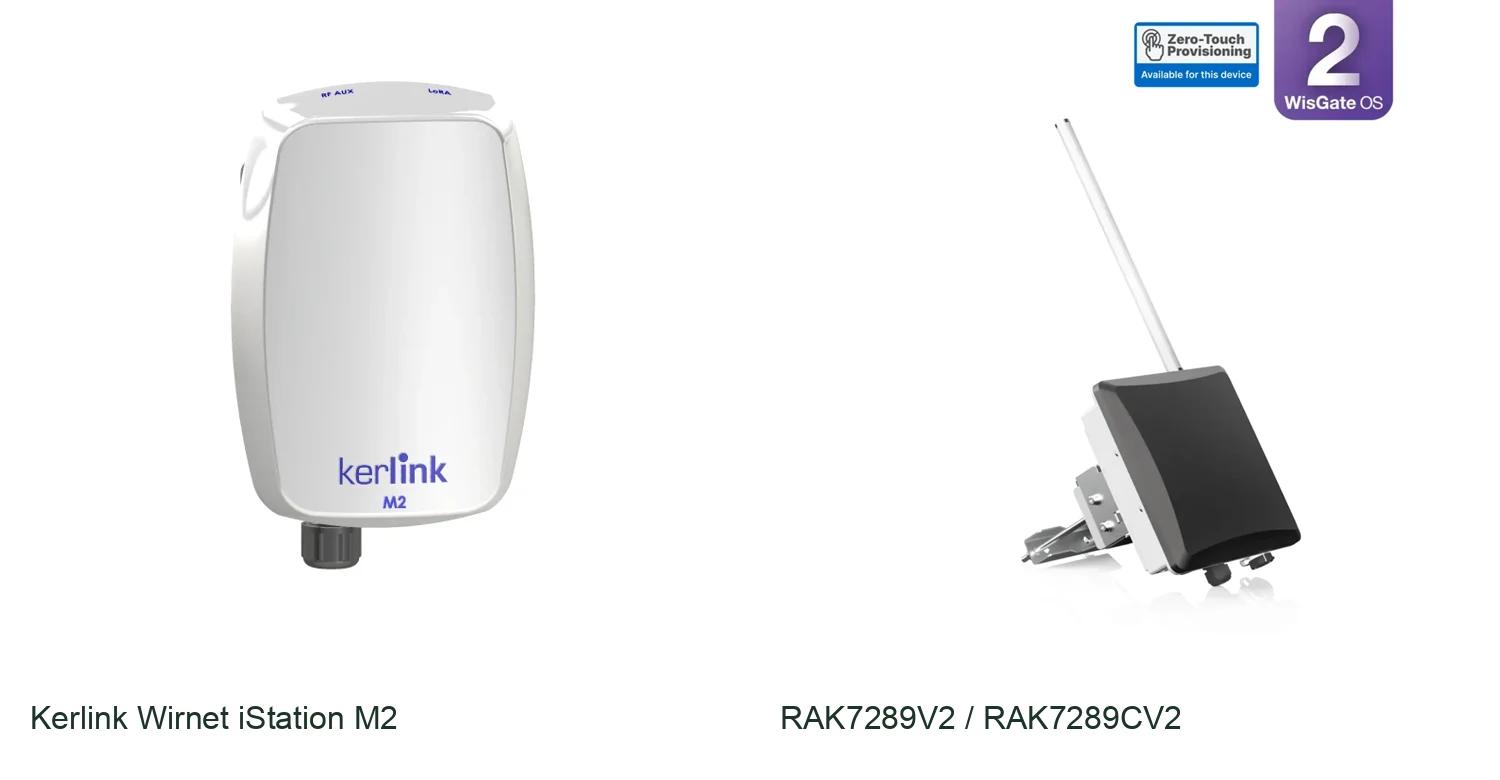
Kerlink Wirnet iStation M2
Wirnet iStation M2 is an eight-channel outdoor LoRaWAN gateway with an IP67 housing. Its product documentation lists Ethernet with PoE, Wi-Fi and cellular connection options, together with solar compatibility. The M2's specifications should be kept separate from the earlier Wirnet iStation generation.
It addresses the radio-network infrastructure rather than replacing a soil probe or direct analog logger. A complete deployment also needs compatible end devices, a network-server arrangement and application integration. The power package and specific modem configuration determine the suitability of an isolated agricultural site.
RAKwireless WisGate Edge Pro
RAK7289V2 and RAK7289CV2 are eight- or sixteen-channel outdoor LoRaWAN gateway variants with an IP67 enclosure. Ethernet and Wi-Fi are listed; cellular support belongs to the CV2 variant. The range includes regional frequency and channel-count selections.
A built-in network server and packet-forwarder options provide different integration routes. Selecting a gateway by its family name alone can conceal important differences in cellular hardware, channel count and regional radio compatibility. The sensor payload decoder and application data model remain part of the system design.
Gateways for farm buildings
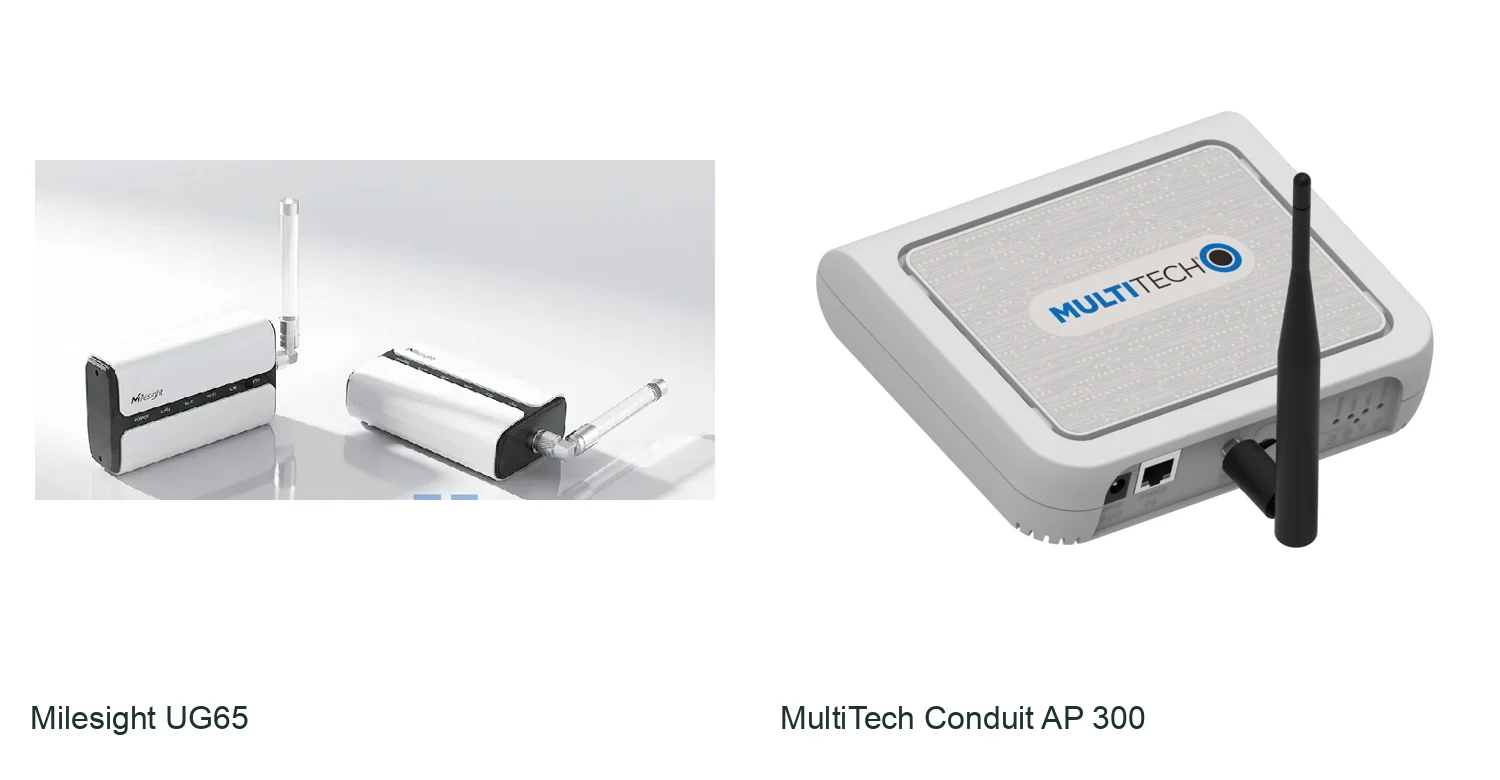
Milesight UG65
UG65 is an indoor or semi-outdoor LoRaWAN gateway with an embedded network server, Ethernet/PoE and Wi-Fi. Cellular service is an optional configuration. It is relevant to compatible devices around buildings, sheltered installations and facilities with an existing power or network connection.
The radio gateway does not directly measure an arbitrary wired sensor. An SDI-12 probe requires a compatible acquisition device before its data can enter a LoRaWAN network. Installation exposure and regional frequency selection should match the exact UG65 configuration.
MultiTech Conduit AP 300
Conduit AP 300 is an indoor eight-channel LoRaWAN gateway family. The manufacturer provides Ethernet-only and regional cellular models, with internal or external LoRa antenna configurations. Basics Station and packet-forwarder support provide connections to LoRaWAN network services; DeviceHQ supports remote gateway management.
This is a suitable architecture for sheltered farm facilities using compatible LoRaWAN devices. It should not be specified as an exposed field unit without a separately designed protective installation. Regional cellular models and antenna accessories form part of the hardware selection.
Comparison by acquisition role
| System | Instrument acquisition | Internet connection | Installation requirement |
|---|---|---|---|
| Pulse | Selected sliding modules and supported local wireless devices | Configured cellular or Wi-Fi | Matching modules, modem and peripheral power |
| CR350 | Direct analog, pulse and digital measurements | Selected communications hardware | Program, enclosure and external power system |
| Wirnet iStation M2 | LoRaWAN end-device messages | Ethernet/PoE, Wi-Fi and cellular options | Outdoor network infrastructure and selected power package |
| WisGate Edge Pro V2 | LoRaWAN end-device messages | Ethernet, Wi-Fi; LTE on CV2 | Regional band, channel count and network-server configuration |
| UG65 | LoRaWAN end-device messages | Ethernet, Wi-Fi; optional cellular | Indoor or semi-outdoor installation |
| Conduit AP 300 | LoRaWAN end-device messages | Ethernet-only or regional cellular model | Indoor location and selected antenna configuration |
Application and software integration
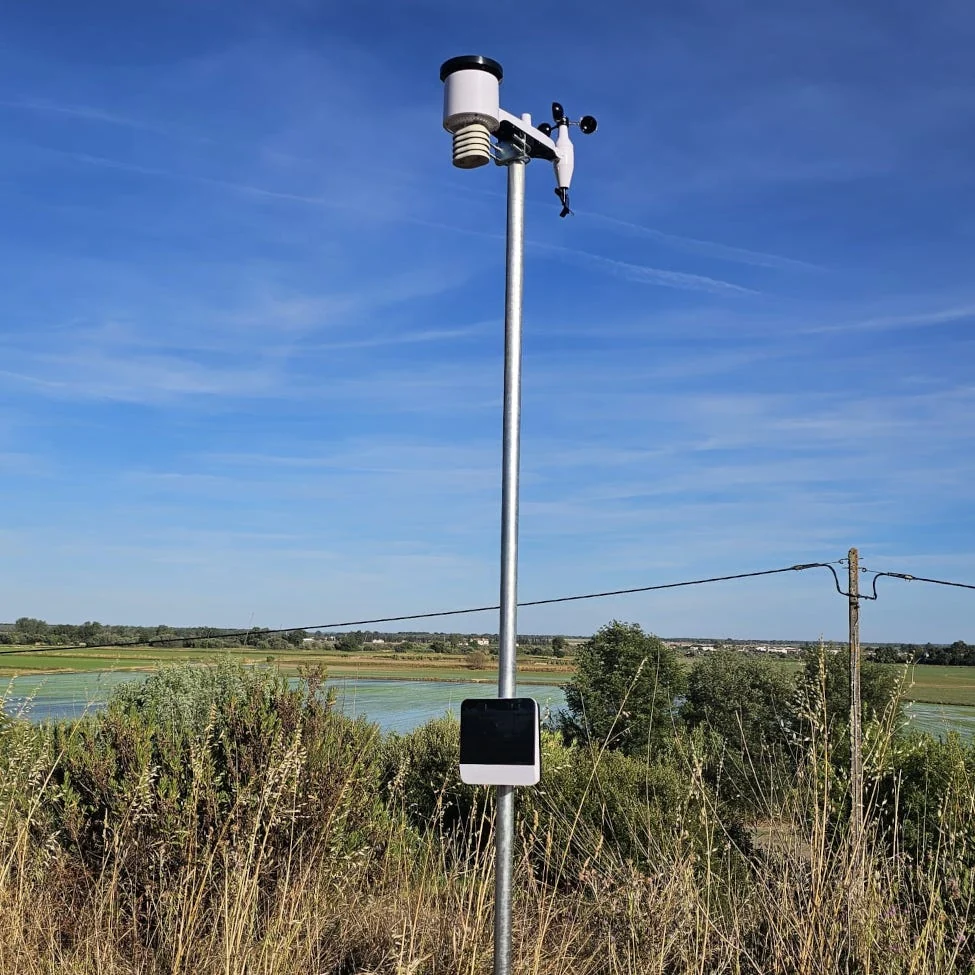
For a documented Pulse ecosystem, SKY WS provides weather observations using the supported LoRa connection. The current SKY listing requires Pulse and excludes Terra Masters. That distinction illustrates why a shared radio band cannot establish system interoperability.
Pycno's platform provides visual data analysis, alerts, growing degree-day and chilling-hour calculations, crop disease models and spreadsheet export. A compatible Pulse monitoring package can provide a coherent hardware-to-analysis route where these functions meet the farm's requirements. Other architectures may use the logger's own software or a separate network and application service.
Network-server management and agronomic interpretation are separate capabilities. A LoRaWAN network server handles device sessions and packet routing; an application decodes the sensor payload and converts the readings into useful records. Comparisons should identify where each function is supplied and what recurring service is required.
Power and data continuity
The acquisition interval, communication schedule and instrument load determine the system's energy requirement. For example, a complete assembly averaging 3 W requires 72 Wh per day before charging and storage losses. A logger's idle-current figure cannot be substituted for that complete load. Solar sizing must also reflect the site's seasonal radiation and usable battery capacity.
During a communications outage, acquisition, local storage and upload recovery may behave differently. The installation specification should define the capacity of each buffer, retention of original timestamps and treatment of stale measurements. Control applications additionally require explicit limits and an independently verified response to failed commands.
Terminology and development
Field logging separates measurement from continuous communications; telemetry adds remote access to those records. LoRaWAN introduced a standardised device-and-server architecture for low-power wide-area networks. Modular gateways combine selected instrument interfaces with communications, while measurement loggers retain a role where acquisition and local programming are central requirements.
- Protocol
- The rules and message structure used to exchange information.
- Interface
- The electrical or wireless connection used by a device; protocol compatibility must also be established.
- Network server
- A LoRaWAN service managing device communication independently of the application's measurement interpretation.
- Payload decoder
- Software converting encoded sensor messages into named quantities and units.
Which architecture supports a mixed wired farm installation?
Pulse offers a direct modular route where the chosen instruments have supported interfaces. CR350 addresses custom analog or digital measurement programs. A LoRaWAN gateway is appropriate when the instruments are compatible end devices or have a suitable acquisition interface.
Can one gateway establish complete field coverage?
Coverage depends on terrain, antenna placement, vegetation, interference and the end-device configuration. A site survey and recorded delivery performance are more informative than a general range claim.
Sources & further reading
- Deep Orbital Pulse modular gateway documentation
- Deep Orbital Pulse product documentation
- Campbell Scientific CR350 product documentation
- Milesight UG65 product documentation
- Pycno SKY WS product documentation
- Pycno Terra product documentation
- LoRa Alliance: LoRaWAN
- Pycno software platform
- Kerlink Wirnet iStation M2
- RAKwireless RAK7289V2 WisGate Edge Pro
- MultiTech Conduit AP 300