Irrigation automation coordinates hydraulic equipment, measurements and operating rules. The controller must execute valve and pump commands in a defined sequence, verify the resulting delivery and handle interruptions without relying on an operator continuously watching a dashboard.
Local control and remote supervision
A complete architecture has three distinct roles: field measurement, execution of control rules and remote supervision. Some dedicated irrigation controllers combine the first two. A modular gateway can connect several instrument types and control interfaces, while a cloud service supplies visibility and changes to operating plans. The location of the rule execution matters whenever a communications link is unavailable.
Specify the behaviour of an active event during a network interruption, a restart and a missing sensor reading. A controller retaining a timetable in memory is not necessarily retaining every remotely configured rule. The supplier’s documentation and commissioning tests should identify which actions remain local and which require a live service.
Five control approaches
Dedicated agricultural control systems, conventional wired controllers and a modular gateway serve different installations. Compare the complete package, including valve outputs, power, water-meter inputs, communications equipment and any service agreement. Station counts are not a reliable measure of capability when one system addresses individual valves and another coordinates entire irrigation heads.
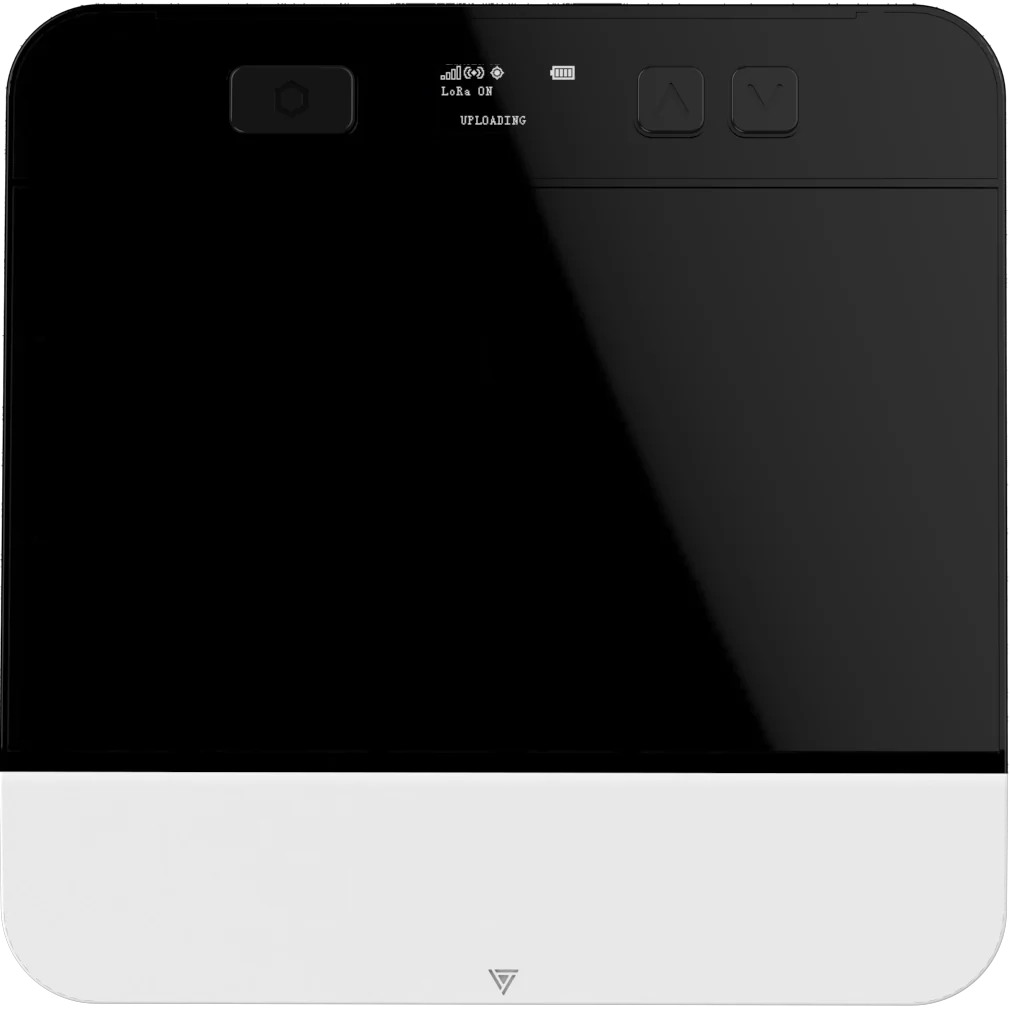
Configurable modem, radio and sliding modules
Deep Orbital Pulse
A modular choice for a farm expected to add different instruments over time. Its current listing offers flowmeter and two-port SDI-12 sliding modules, with configurable cellular and regional radio options.
Choose sensor modules and modem alongside the gateway; verify third-party integration.
View product details ↗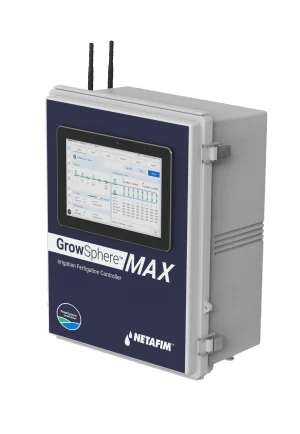
MAX controller family and GrowSphere platform
Netafim GrowSphere MAX
A dedicated agricultural platform for coordinating hydraulic equipment and supported measurements. MAX targets more complex projects than the smaller GrowSphere FLEX configuration.
Project-specific output expansion, sensor interfaces and dosing hardware need a complete specification.
View product details ↗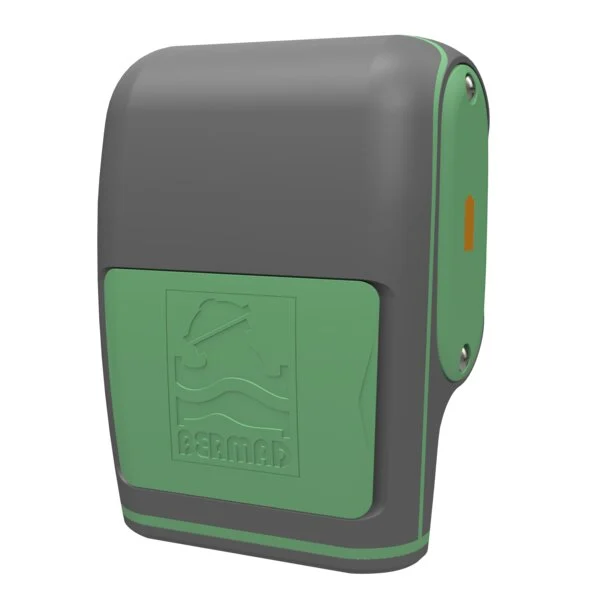
Battery-operated agricultural controller
BERMAD Omega R
An agricultural controller designed around latching valves, volumetric operation and remote supervision. BERMAD also describes integration with hydraulic heads and water meters.
Valve compatibility, battery/solar arrangement, cellular service and regional availability matter.
View product details ↗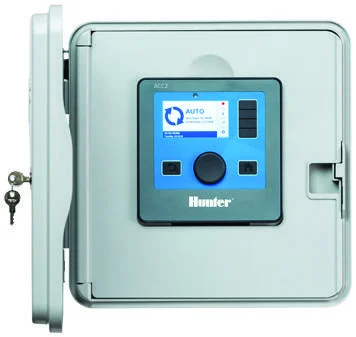
Conventional wired controller; A2C-1200-M family
Hunter ACC2
A modular controller with flow-zone management and conditional responses. The conventional wired model supports expanding station and flow-input capacity as the network grows.
Landscape/commercial architecture; specialised agricultural dosing needs separate assessment.
View product details ↗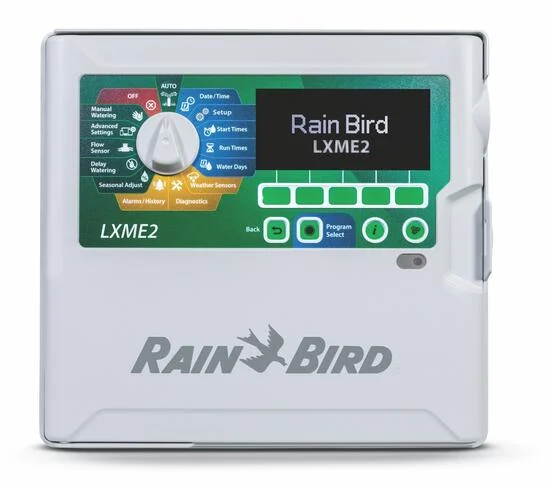
PRO version of the conventional wired LXME2
Rain Bird ESP-LXME2 PRO
The PRO configuration adds flow monitoring and a second pump/master-valve circuit to the modular LXME2 platform. Station expansion uses the supported 12-station modules.
The base LXME2 lacks the PRO flow input and second pump/master-valve circuit.
View product details ↗| Model | Measurement / role | Data connection | Coverage / installation |
|---|---|---|---|
| Deep Orbital Pulse | Gateway for compatible sensors and actuators | Cellular, Wi-Fi and LoRa; interfaces added through selected modules | Mixed wired instruments and local wireless devices |
| Netafim GrowSphere MAX | Irrigation and fertigation control with supported sensors | Configured controller, sensor connections and GrowSphere service | Medium-to-large projects; manufacturer lists up to 256 valves |
| BERMAD Omega R | Valve operation, water-meter feedback and supported monitoring | DC-latching outputs and cellular cloud access | Small farm hydraulic networks; selected I/O configuration |
| Hunter ACC2 | Valve operation and flow-feedback supervision | Wired outputs; optional Centralus communication modules | 12 stations expandable to 54; three flow inputs expandable to six |
| Rain Bird ESP-LXME2 PRO | Valve sequencing and flow monitoring | Wired outputs; compatible connectivity options | 12-station base expandable to 48 |
Valve outputs, pumps and electrical interfaces
A DC-latching solenoid changes state with a brief electrical pulse and retains its state without continuous energisation. A conventional AC solenoid requires sustained power while open. The output stage must match that operating method, wiring distance and coil requirements. A relay contact is an electrical switching interface; it is not automatically a power supply for a valve or pump.
Pump motors normally require suitable starters, contactors or drive equipment. A controller’s pump-start output commands that equipment rather than driving the motor directly. Interlocks link operation to conditions such as source level, downstream demand and acceptable pressure. The hydraulic design sets whether a valve opens before the pump starts and how much overlap is permissible between blocks.
Deep Orbital Pulse is useful where several sensor interfaces and automation functions need to share a modular installation. The selected modules and electrical interfaces determine its connection to instruments and actuators. A project using it for irrigation still needs an explicit valve-driver arrangement, pump interlocks and defined operating rules; the gateway should be specified as part of that control architecture.
Delivery feedback and operating thresholds
Time-based operation applies a scheduled duration. Volume-based operation stops after a measured delivery target. At 18 m³/h, a 6 m³ target takes 20 minutes under steady conditions. If flow falls to 12 m³/h, the same target takes 30 minutes. Volume feedback therefore changes runtime, but it does not establish that distribution within the block is uniform.
Flow and pressure alarms should correspond to the active hydraulic configuration. Two simultaneous blocks can have a different expected range from either block alone. Allow a defined stabilisation period after switching, then evaluate the sustained condition. A blockage alarm and a low-source-level interlock serve different purposes and need separate responses.
Sensor-triggered irrigation adds another layer. Soil moisture, substrate drainage or weather data can influence timing, but each measurement must represent the crop area being controlled. Keep the permitted operating window, maximum event volume and fault response independent of a single agronomic trigger.
Commissioning and lifecycle records
The commissioning record should identify every output, its connected device, normal state and manual override. Test valve operation individually before testing combinations. Compare commanded state with measured flow, and verify that the physical valve closes under the intended fault and shutdown conditions.
Retain the configuration, wiring schedule, output load calculations and controller backup alongside hydraulic drawings. Record who can change schedules and alarm responses. A useful event log distinguishes a planned stop, operator intervention, sensor fault and power restart. Those distinctions help explain a crop response that appears days after an irrigation interruption.
Assess support arrangements together with hardware. Replacement output modules, compatible solenoids, batteries, modem availability and service access influence the operating life of a system. A controller designed for landscape irrigation may suit a nursery or modest conventional valve network, while intensive fertigation or large agricultural hydraulic networks can require a more specialised platform.
Timers, volumetric control and connected systems
Mechanical and electromechanical timers automated irrigation duration before electronic controllers added multiple programmes, sensor inputs and diagnostics. Metered control introduced delivery volume as an operating target. Remote communications subsequently made supervision and configuration available beyond the control head, without changing the need for correctly specified local hydraulic and electrical equipment.
- Actuator
- A device that changes a physical condition, such as a solenoid-operated valve.
- Interlock
- A condition that permits or prevents an equipment action.
- Duty cycle
- The fraction of a period during which an output or device operates.
- Fail state
- The defined physical or software state reached after a specified fault.
Questions about irrigation control
Does cellular connectivity guarantee operation during an outage?
No. Connectivity describes communications. Local programme storage, rule execution and power-loss behaviour must be evaluated separately for the selected controller.
Can a flow alarm replace a pump interlock?
A flow alarm detects a delivery condition. Pump protection can also require pressure, source-level or drive-status information and an appropriate local control path.
Are fertigation functions interchangeable between controllers?
No. Compare supported dosing equipment, channels, feedback inputs and sequencing. A controller that schedules valves does not necessarily regulate nutrient concentration or acid dosing.