Network architecture
A farm sensor network connects measurement instruments, acquisition hardware and applications. Its design determines whether observations remain interpretable through changes in power, communications and equipment. Measurement interval, reporting interval and control response time are separate specifications: an instrument may sample frequently while transmitting an accumulated record less often.
The acquisition layer supplies instrument power, initiates measurements and records their units and timestamps. A gateway provides a communications path; a network server manages supported radio devices; an application stores and interprets observations. Some equipment combines these roles, but the responsibilities remain distinct. Local irrigation control also requires an actuator interface and defined operating behaviour during an outage.
Instrument interfaces and protocols
SDI-12 is an addressed serial interface operating at 1200 baud for environmental instruments. A recorder requests a measurement and retrieves the returned values. Instruments may share a bus, subject to addressing, loading, cable and power requirements. Digital transfer does not remove the need to identify the quantity, unit and calibration used by each instrument.
RS485 describes differential electrical signalling. Modbus defines messages and data access used by many RS485 instruments. A successful connection requires matching serial configuration, device address and register interpretation, including scale factors and byte order. A UART instrument requires its specified signal voltage and pin assignment; it should not be connected directly to an RS485 terminal.
LoRa refers to radio modulation, while LoRaWAN specifies a network architecture and protocol. Compatible frequency alone does not establish interoperability. A proprietary LoRa instrument and a LoRaWAN gateway may require different receiving hardware or firmware. Cellular service connects equipment through an operator network; coverage, regional modem support and account arrangements remain installation-specific.
Acquisition hardware
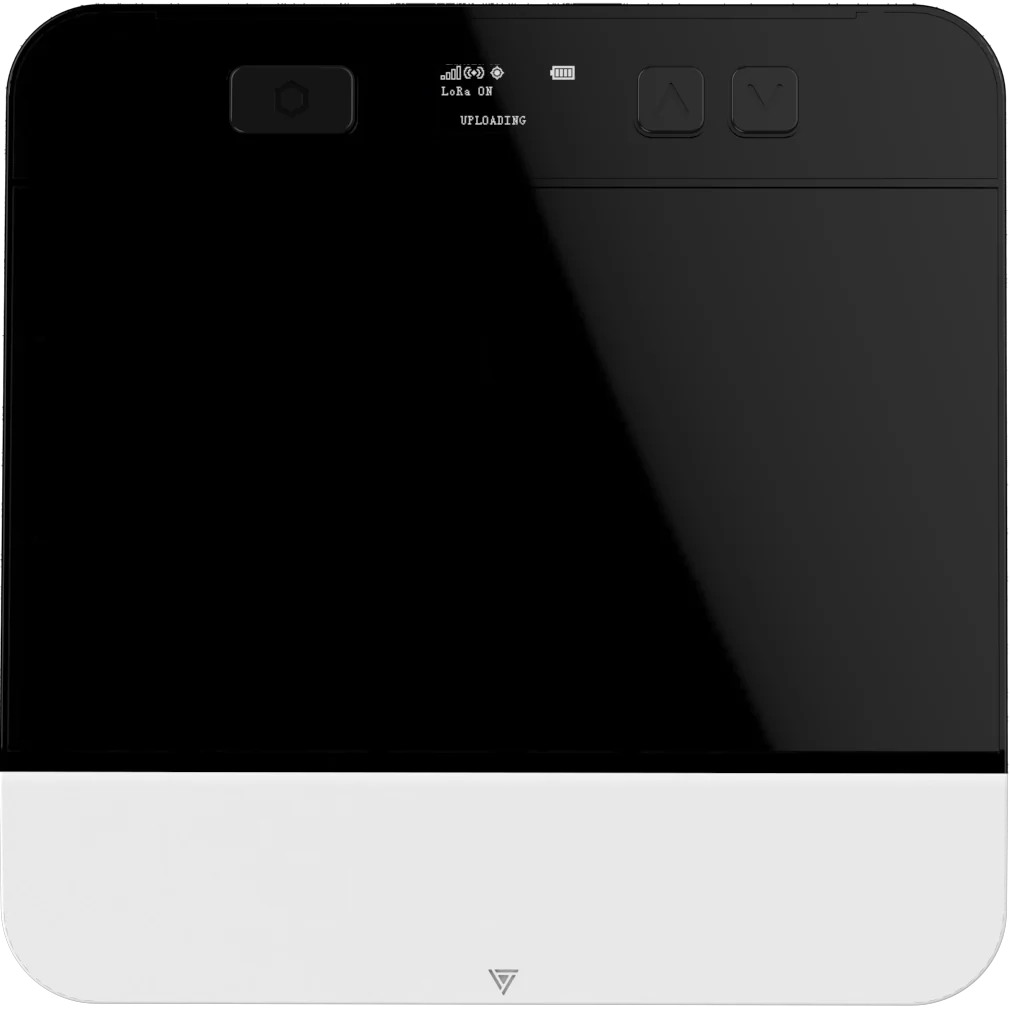
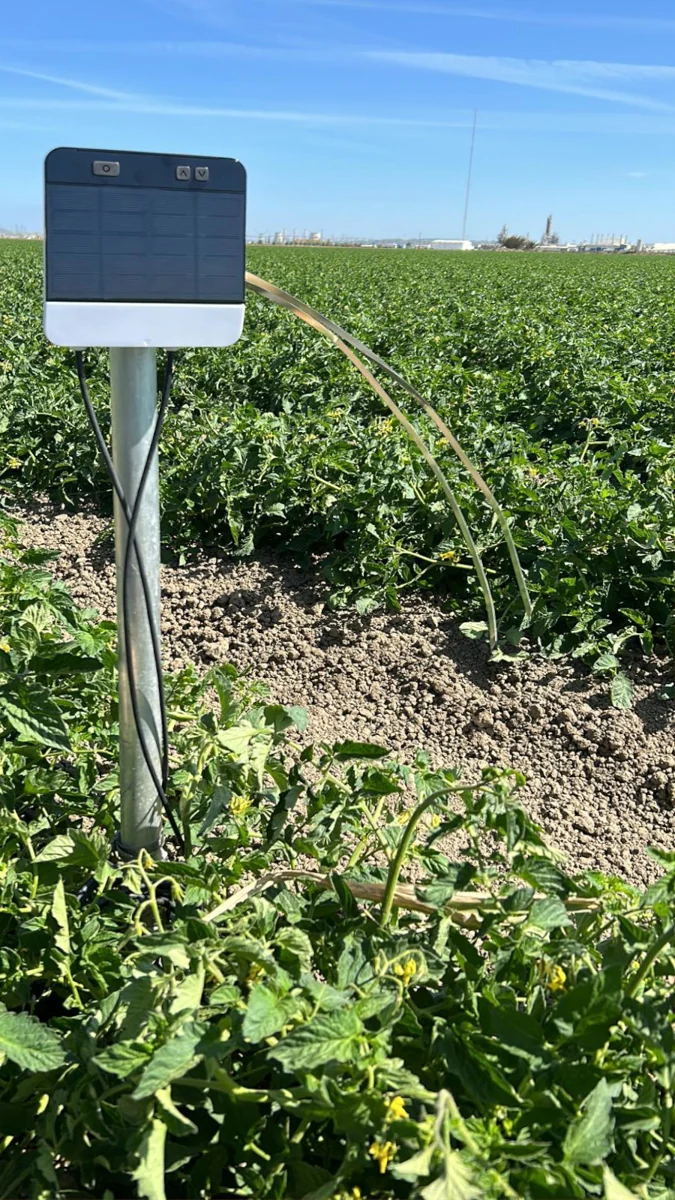
Deep Orbital Pulse is a useful architecture for mixed monitoring installations because its two sliding-module slots allow selected instrument interfaces to accompany cellular and local wireless communications. The supplied modem, regional radio frequency and modules should be listed explicitly. The documented solar panel and external-panel connection provide options for field power; they do not establish autonomy for an unspecified peripheral load.
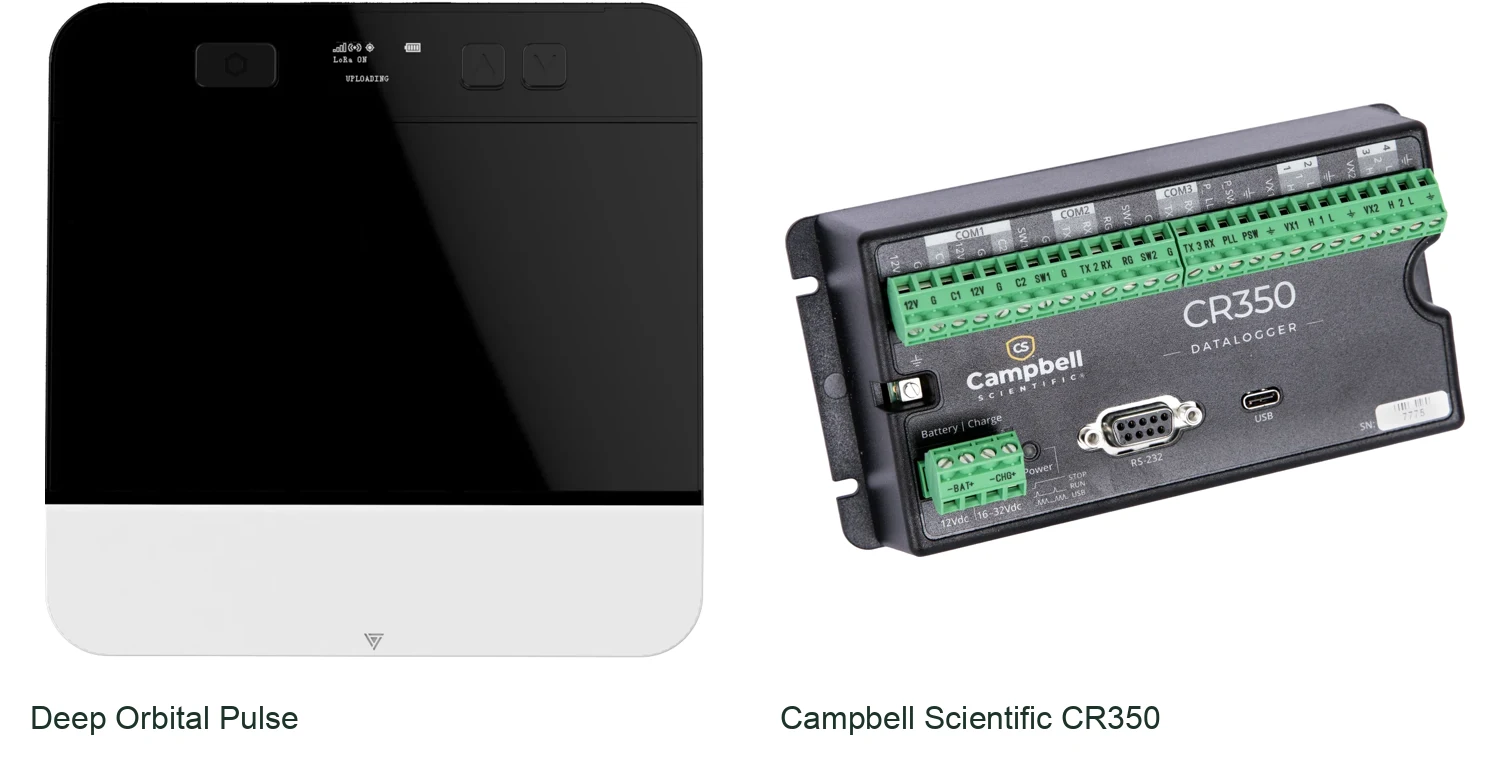
Campbell Scientific CR350 combines analog measurement, digital instrument interfaces and a programmable local acquisition sequence. It is appropriate where measurement scheduling and local processing are central requirements. The communications option, enclosure and power supply belong in the complete specification.
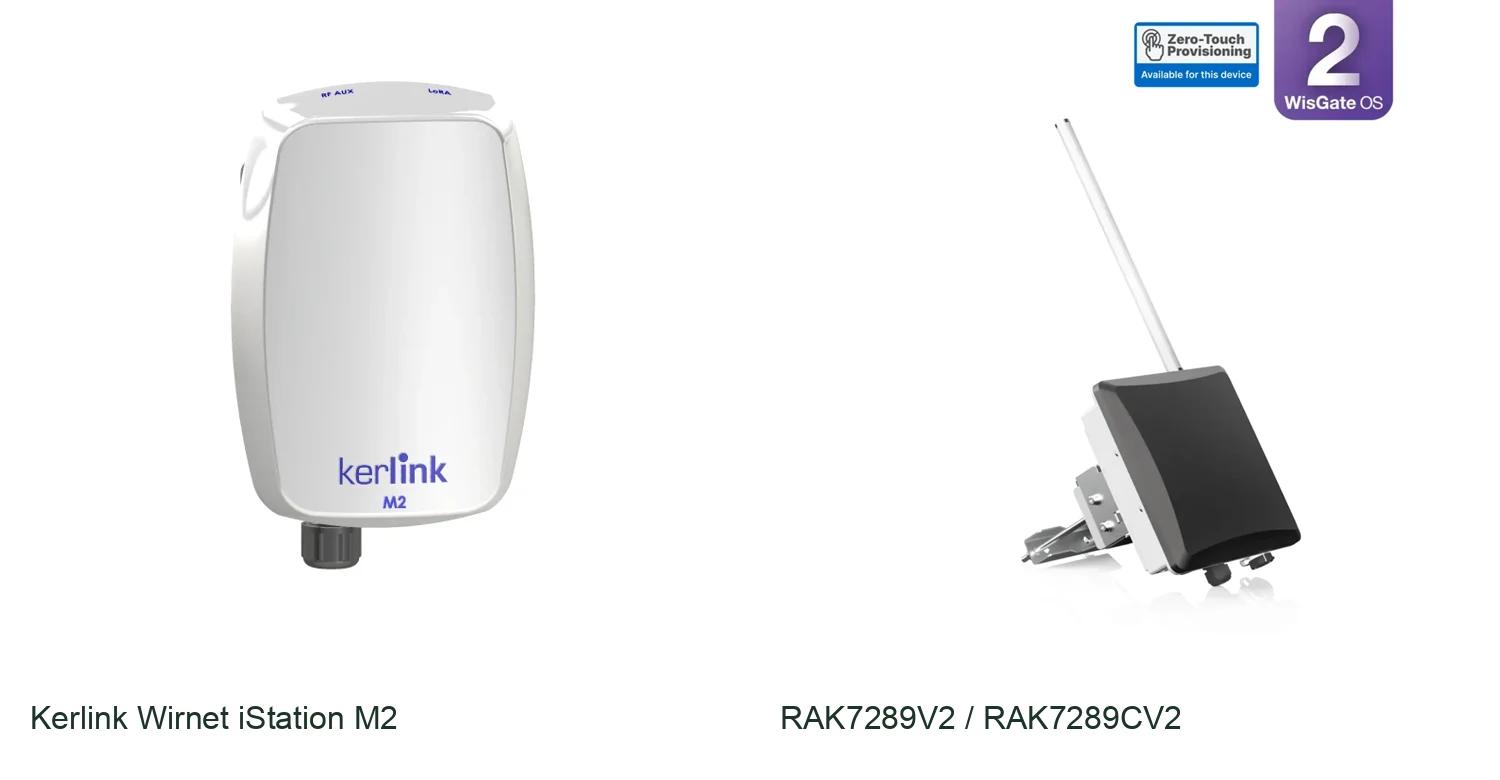
Kerlink Wirnet iStation M2 and RAKwireless RAK7289V2 WisGate Edge Pro are outdoor LoRaWAN gateway alternatives. They transport observations from compatible end devices rather than providing universal wired sensor inputs. Network-server arrangements and internet connectivity must be specified alongside the gateway.
Power and radio design
An energy budget includes standby consumption, sensor excitation, warm-up, measurement, radio activity and conversion losses. A continuous 2 W load consumes 48 Wh in 24 hours. A nominal battery capacity is not entirely usable, and solar production varies with season, orientation, shading and weather. System sizing therefore uses an allowable discharge limit and a defined period of reduced generation.
Radio surveys should include the intended antenna height and seasonal vegetation. Buildings, terrain and wet foliage affect propagation. Signal strength and delivery rate should be examined together: an occasional strong reception does not establish reliable transmission throughout the operating season. Equipment must also meet regional frequency and installation requirements.
Data continuity and automation
Records require device identity, original measurement time, unit, calibration reference and a quality flag. Upload time alone cannot reconstruct an outage. Local buffering, retry behaviour, duplicate handling and clock recovery determine whether restored connectivity produces a continuous record or an ambiguous sequence.
An irrigation rule should define the permitted age of its input, the action on a missing reading, maximum operating duration and independent confirmation through flow or pressure. Local control and remotely executed rules have different failure modes. A communications alarm should therefore be distinguished from an agronomic threshold alarm.
Pycno's analysis platform provides sensor charts, rule-based alerts, growing degree-day and chilling-hour calculations, disease models and spreadsheet export. These functions support interpretation of compatible soil and weather records. Device identity and sampling times remain necessary when observations are combined with machinery or imagery data.
Development
SDI-12 originated in 1988 through collaboration between instrument manufacturers and the US Geological Survey's Hydrologic Instrumentation Facility. Its addressed digital interface supported low-power acquisition at remote sites. Subsequent radio and cellular networks extended the transfer of observations while retaining the need for instrument-specific excitation, calibration and data interpretation.
Terminology
- Duty cycle
- The fraction of an operating period during which a device or function is active.
- Buffer
- Storage retaining observations until they can be transferred.
- Latency
- The delay between an event or measurement and its availability to a receiving system.
- Packet delivery rate
- The proportion of transmitted messages successfully received over a stated interval.
Frequently asked questions
Does a longer reporting interval reduce measurement frequency?
Only if the configuration links them. A logger can retain frequent observations and transmit batches less often, provided its storage and software support that arrangement.
Can one gateway connect every farm instrument?
Compatibility depends on electrical interfaces, protocol, firmware, regional radio settings and power. The gateway and logger comparison separates acquisition equipment from LoRaWAN infrastructure.
How should a network outage appear in a dataset?
Missing observations should remain identifiable. Buffered observations should retain their original timestamps and quality information, rather than being assigned the time at which the connection returned.
Sources & further reading
- Deep Orbital Pulse modular gateway documentation
- Deep Orbital Pulse product documentation
- Campbell Scientific CR350 product documentation
- Kerlink Wirnet iStation M2
- RAKwireless RAK7289V2 WisGate Edge Pro
- LoRa Alliance: LoRaWAN
- Pycno software platform
- SDI-12 Support Group: environmental instrument interface
- SDI-12 Support Group: interface history