Leaf wetness duration is the time during which water is present on a leaf surface. It is an environmental input to several crop disease models, particularly when combined with temperature. Electronic sensors estimate this condition from a surface designed to respond to condensation, rain or irrigation.
Wetness measurement and duration
A wetness sensor measures conditions on its own surface. Its response depends on material, orientation, thermal properties and exposure. The output is converted to a wet or dry classification using a defined threshold. The duration of classified wetness can then be accumulated over an event or reporting period.
For a five-minute logging interval, 72 consecutive wet intervals represent six hours. This calculation assumes that each record represents its full interval and that no observations are missing. A gap in the record cannot be counted as dry. Brief interruptions may need to be handled according to the disease model's rules rather than a generic merging rule.
Humidity indicates water vapour in the air; it does not directly establish that a leaf carries liquid water. Dew can form when a surface cools sufficiently, and rain or irrigation can wet leaves when relative humidity is below saturation. Leaf temperature and airflow influence drying, so a weather station and a wetness sensor provide complementary observations.
Leaf wetness sensors
The five options below use different sensing surfaces and acquisition systems. Electrical compatibility, wetness scale and maintenance requirements belong in the comparison alongside the measurement principle. Their numerical outputs are not interchangeable thresholds.
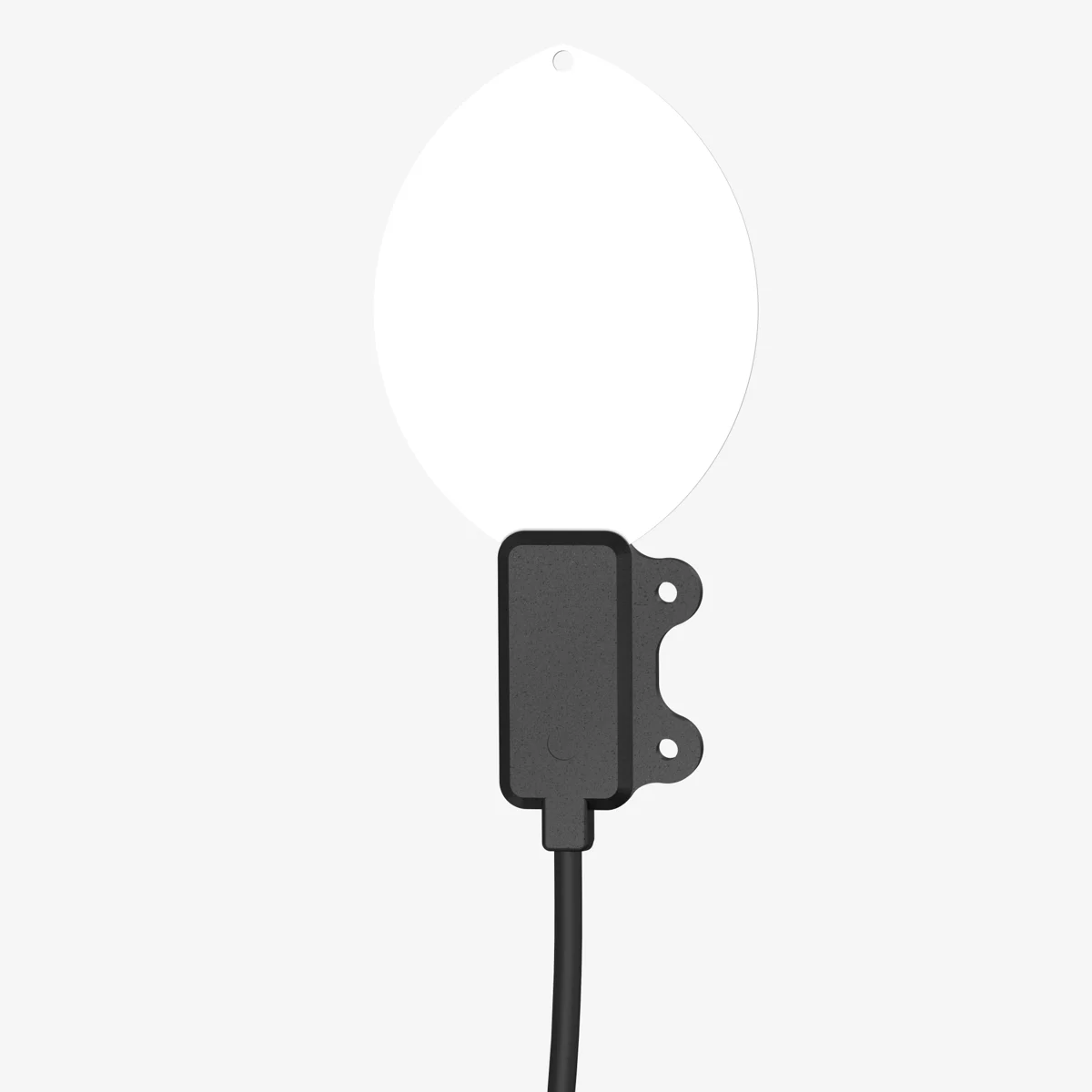
PHYTOS 31 dielectric surface sensor
METER PHYTOS 31
A dielectric sensor with a leaf-like sensing surface. It needs no initial paint coating and provides analogue output for compatible data acquisition.
Excitation, threshold interpretation and UV surface maintenance require attention.
View product details ↗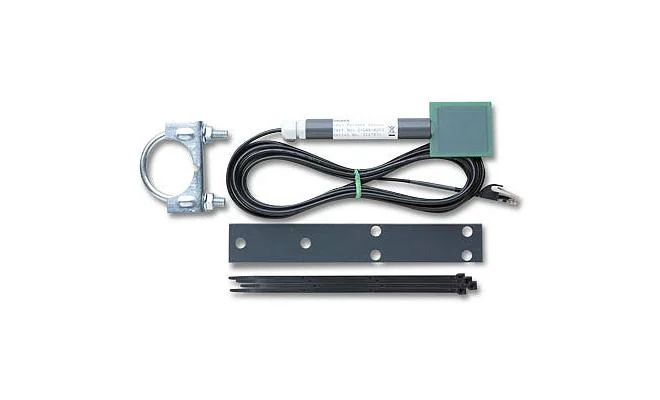
HOBO leaf wetness smart sensor
Onset S-LWA-M003
A preconditioned capacitive-grid sensor supplied with a mounting bracket. Its setup requires no painting; the bracket supports a range of mounting angles.
The proprietary station connection and wetness scale must suit the monitoring system.
View product details ↗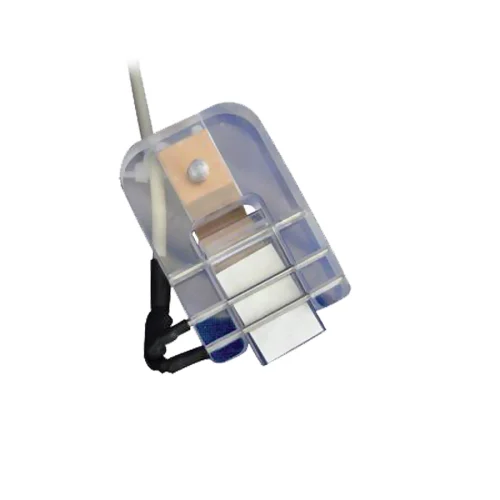
Order 600015; motherboard-specific alternatives
Pessl Instruments leaf wetness sensor
Conductivity through filter paper supplies a wet/dry response. The transparent holder reduces solar heating, and the cited models use a 5 m cable.
Select the correct sensor order number and maintain the sensing material.
View product details ↗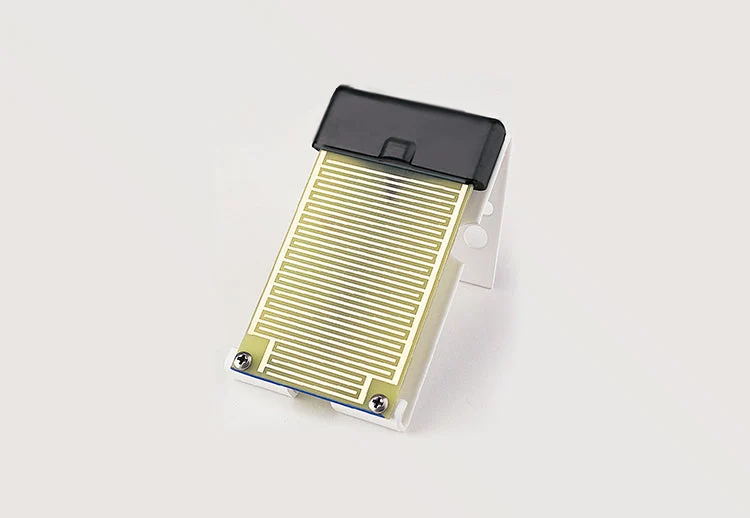
Leaf Wetness Sensor SKU 6420
Davis 6420
A surface-moisture sensor for Vantage Pro2 and EnviroMonitor installations. It connects through the specified sensor station or node rather than independently transmitting to a console.
The necessary receiving/transmitting equipment is additional to the sensor.
View product details ↗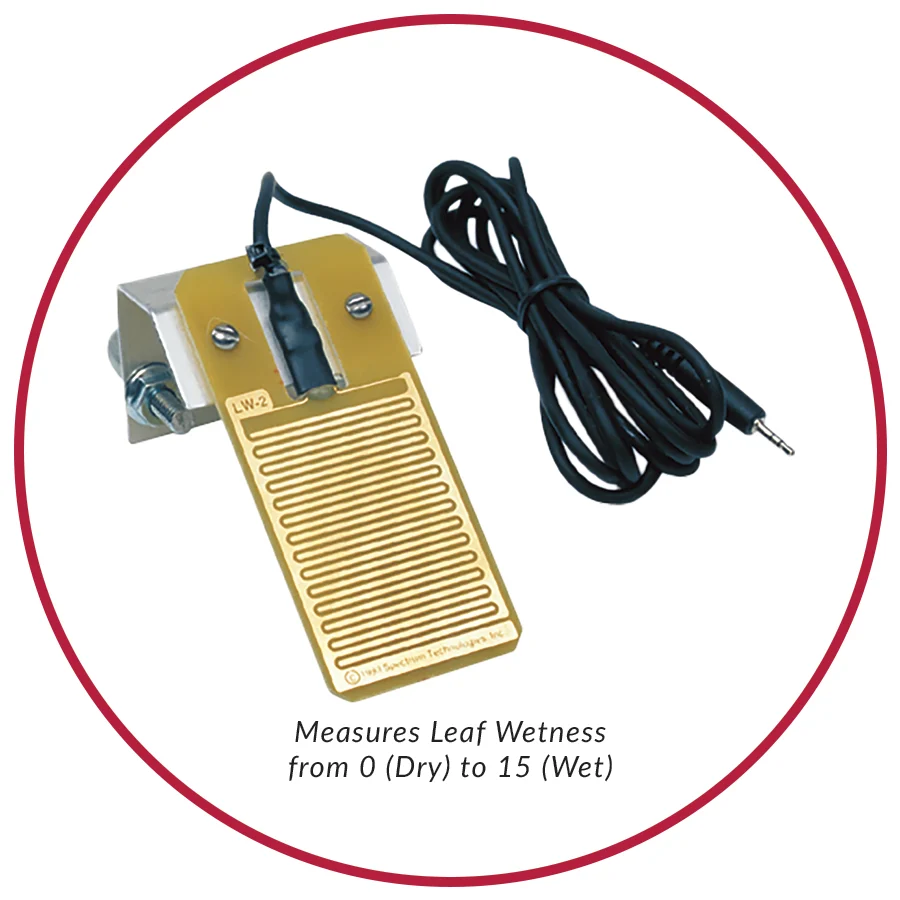
Gold-plated resistance grid
Spectrum WatchDog 3666
Interlaced gold-plated conductors detect a change in resistance when water bridges the grid. The instrument manual classifies values above 6 as wet.
Deposits can change conductance; use the specified cleaning and threshold procedure.
View product details ↗| Model | Measurement / role | Data connection | Coverage / installation |
|---|---|---|---|
| METER PHYTOS 31 | Leaf surface wetness | Analogue voltage; ZL6 or suitable excitation/voltage logger | 12 × 5.8 cm simulated leaf |
| Onset S-LWA-M003 | Leaf wetness on a 0–100 scale | Compatible HOBO station Smart Sensor connection | Capacitive sensing grid; 3 m cable |
| Pessl Instruments leaf wetness sensor | Wet/dry surface condition | Compatible METOS acquisition configuration | Filter paper between stainless-steel electrodes |
| Davis 6420 | Surface moisture, scale 0–15 | 6345/6345CS transmitting station or 6810 EnviroMonitor Node | One sensor surface; 12 m cable |
| Spectrum WatchDog 3666 | Leaf wetness, scale 0–15 | Compatible WatchDog external sensor port | Exposed sensing grid |
Electrical sensing principles
Resistance grids detect a conductive path across electrodes. Water and dissolved material change this path, which is why contamination can alter the apparent wetness. Spectrum 3666 uses a gold-plated resistance grid; its instructions define a wet classification above 6 on the instrument's 0–15 scale. That threshold should not be transferred to a sensor using a different scale or surface.
Dielectric sensors respond to the electrical properties of water on a sensing surface. PHYTOS 31 uses this approach and supplies an analogue voltage dependent on its excitation. The Onset smart sensor uses a capacitive grid and reports a 0–100 wetness scale through its compatible HOBO system. These scales describe sensor response rather than the percentage of every leaf in a crop that is wet.
The Pessl sensor uses conductivity through filter paper held between electrodes. Its material and service requirements differ from those of a sealed dielectric plate. Davis 6420 supplies a 0–15 surface-moisture reading through a compatible transmitting station or EnviroMonitor Node, rather than connecting directly to the weather console as an independent radio device.
Canopy exposure and maintenance
Position sensors in the canopy exposure required by the monitoring protocol. Outer leaves can wet and dry differently from shaded inner leaves. Sensor angle affects drainage and the received radiation; height and orientation should therefore be recorded, not changed between observations without noting the change.
Comparison with representative leaves during dew, rain and drying events helps establish whether the installation follows the intended canopy condition. More than one exposure may be needed where a dense canopy contains persistently shaded and exposed regions. Agreement between two sensors does not establish agreement with leaves if both share an unrepresentative exposure.
Deposits from sprays, dust and irrigation salts can change response. Follow the selected manufacturer's cleaning and surface-maintenance instructions, and inspect mounting stability after field operations. PHYTOS 31 has a specified UV-protection maintenance procedure; an absence of painting during initial setup does not mean the surface requires no subsequent care.
Disease models and observation systems
A disease model connects environmental conditions with a particular host and pathogen process. Apple scab models are a well-established example: the Mills table relates temperature and wetness duration to infection conditions. The applicable model version, susceptible tissue, inoculum and crop stage determine how the environmental record is interpreted. A wetness event alone does not diagnose infection.
Maintain the model's required temporal resolution and temperature statistic. An event-average temperature, an hourly temperature series and a daily maximum are different inputs. Record sensor outages and changes in threshold because they alter calculated wetness duration and can shift an inferred infection period.
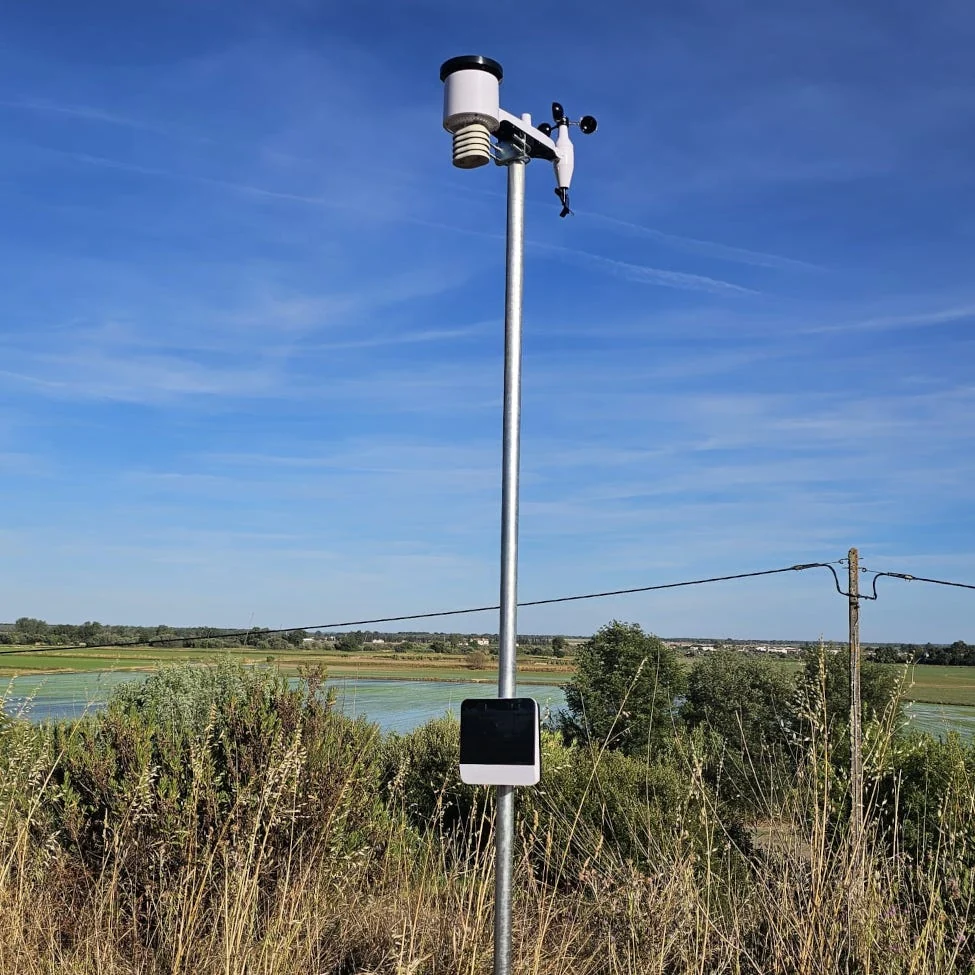
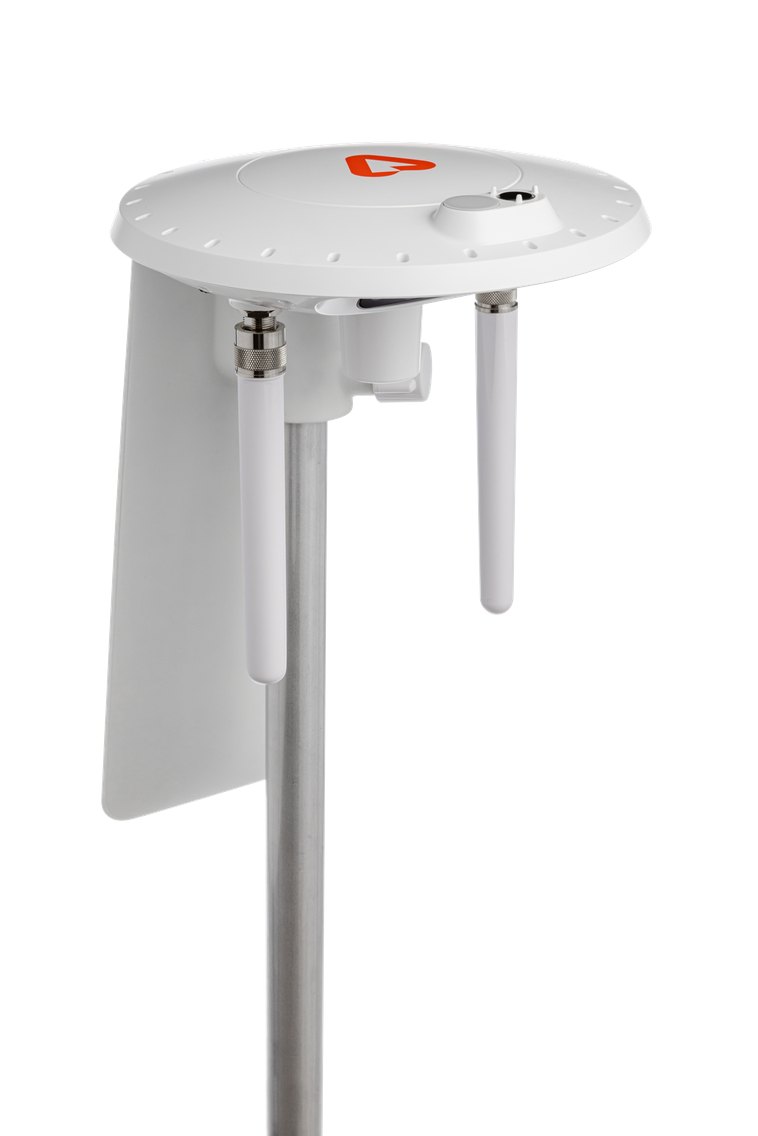
SKY WS weather observations through Pulse provide a useful meteorological context for a canopy wetness record. A separate wetness instrument still requires a supported electrical interface and acquisition configuration. The weather station's humidity measurement should not be relabelled as measured leaf wetness, and a data dashboard should not be assumed to include a crop-specific disease model.
Pycno's platform includes phenological and disease-model functions alongside charts, filtering and alerts. Where it receives the required observations, it offers a useful analysis environment for a Pulse-based installation. Confirm the available crop/pathogen model and its input requirements before interpreting a risk output; the presence of modelling software does not establish that every connected sensor supplies the required data.
Development and terminology
Temperature–wetness relationships were used in disease forecasting before connected field instrumentation. METER renamed its LWS sensor PHYTOS 31 in 2015. Automatic loggers made repeated wetness observations easier to collect, while remote systems made event records available without visiting the field. The scientific interpretation remains pathogen-specific even when several sensors share one monitoring platform.
- Leaf wetness duration
- The accumulated time for which the observed surface meets a defined wetness condition.
- Threshold
- The sensor output used to classify a record as wet or dry.
- Infection period
- A period satisfying specified environmental conditions for a particular disease process.
- Inoculum
- The pathogen material capable of initiating infection.
Questions about wetness observations
Can relative humidity replace a wetness sensor?
Only where the selected model explicitly uses a humidity-based estimate and its assumptions suit the site. It remains an estimate rather than a direct surface observation.
Are two 0–15 sensors directly comparable?
The shared numerical range does not establish matching surfaces, thresholds or response. Use each instrument's documented interpretation.
Does a wetness alert mean the crop is infected?
It describes a measured condition or a modelled risk. Disease assessment also depends on the host, pathogen, growth stage and field evidence.
Sources & further reading
- METER PHYTOS 31 documentation
- Onset S-LWA-M003 documentation
- Pessl Instruments leaf wetness sensor documentation
- Davis 6420 documentation
- Spectrum WatchDog 3666 documentation
- American Phytopathological Society: apple scab
- Pycno SKY WS product documentation
- Deep Orbital Pulse modular gateway documentation
- Pycno software platform