Barn sensing connects the conditions around animals with the ventilation equipment intended to manage them. Temperature, humidity, gases and building pressure answer different questions. A well-designed installation records those quantities in representative places and checks whether a control change improves conditions where the animals actually spend time.
Choose the quantity before the instrument
Air temperature describes the thermal environment, while relative humidity expresses actual water-vapour pressure as a percentage of saturation water-vapour pressure at the same temperature. Together they support a temperature-humidity index for heat-load assessment. That index still leaves out important details such as direct sun, air movement and the animal’s production level. The University of Maryland’s dairy guidance emphasises shade, water and adequate ventilation alongside environmental observations.
Carbon dioxide and ammonia are different gases. CO2 observations can reveal changing ventilation conditions; ammonia observations help assess a gas associated with livestock-house air quality. One gas sensor cannot establish the concentration of the other. Gas concentration is commonly reported in parts per million, abbreviated ppm.
Building pressure is another quantity. A sub-pressure sensor compares a measured zone with a reference zone, supporting negative-pressure ventilation control. Air speed describes movement at a location, while ventilation rate describes the volume exchanged per unit time. Pressure readings and fan commands are useful feedback, but neither alone proves the air speed beside an animal.
Five instruments for different barn decisions
These products cover complementary measurement roles rather than competing for one universal “best barn sensor” position. The two CO2 choices offer different installation routes; the other instruments add temperature, humidity, ammonia and ventilation pressure. Match output variants to the installed controller before ordering.
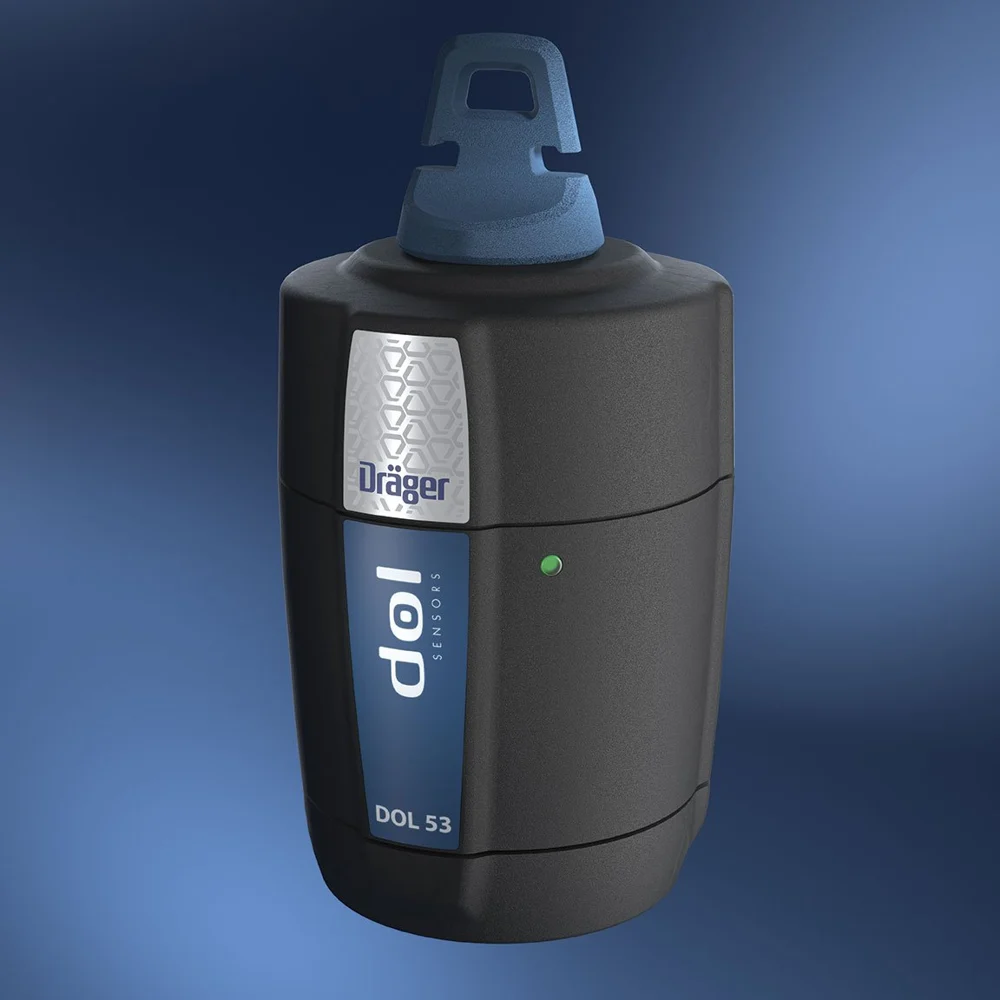
Fixed ammonia sensor
dol-sensors DOL 53
A fixed ammonia instrument designed for continuous monitoring in livestock buildings.
Plan filter care and sensing-element replacement; protect the sensor during cleaning.
View product details ↗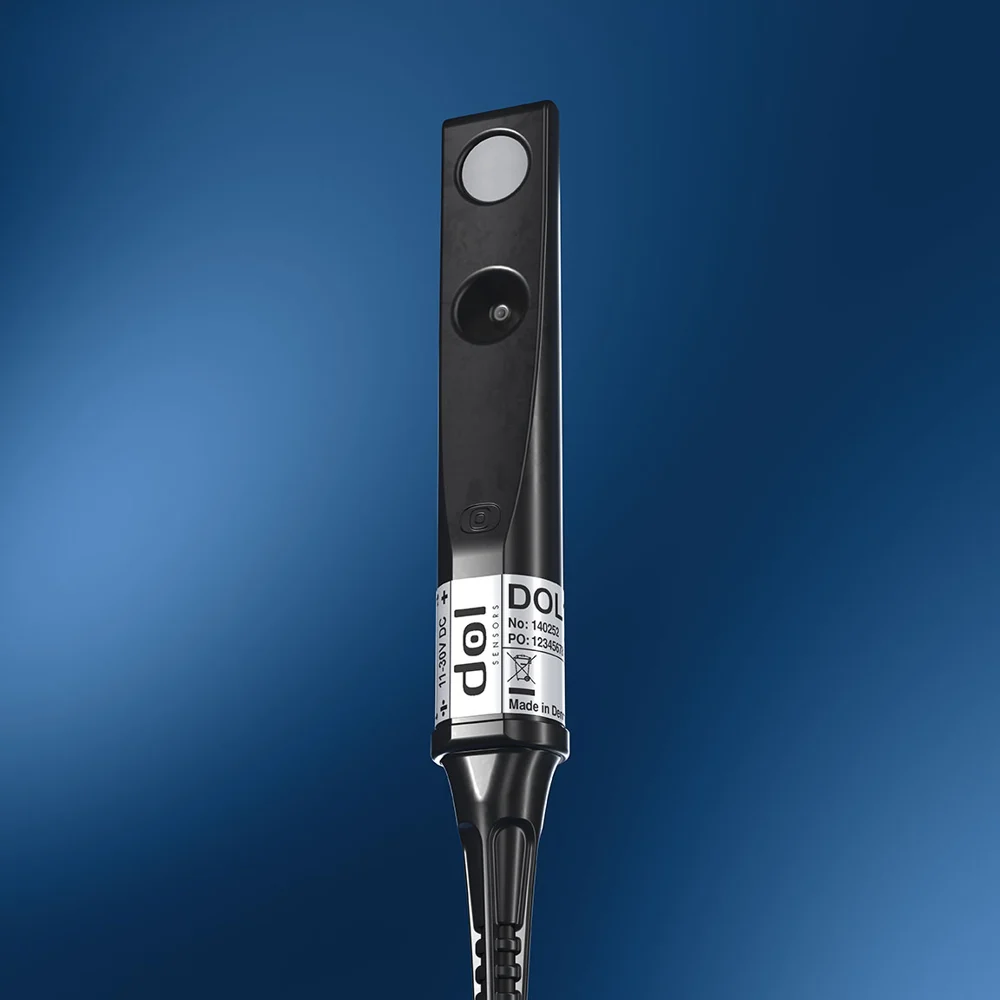
Temperature and humidity sensor, output-specific variants
dol-sensors DOL 114
A combined temperature and humidity probe designed for livestock-house conditions.
Choose the output matching the controller and follow the protective-cap cleaning procedure.
View product details ↗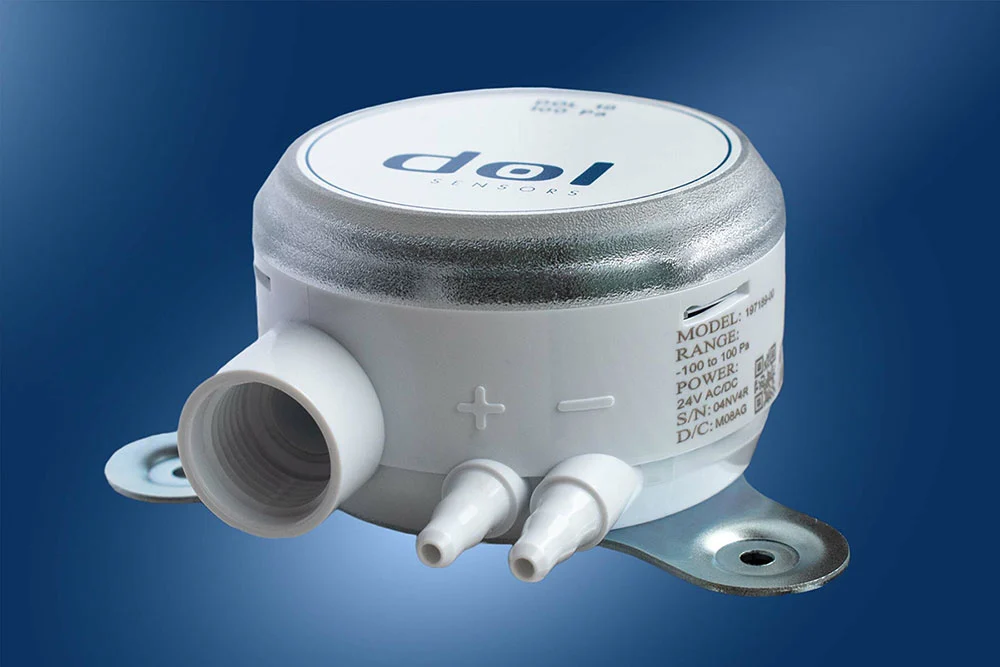
Sub-pressure sensor
dol-sensors DOL 18
A building-pressure instrument for livestock ventilation and central-duct control.
Tubing arrangement and condition affect the reading; pressure is not a direct airflow measurement.
View product details ↗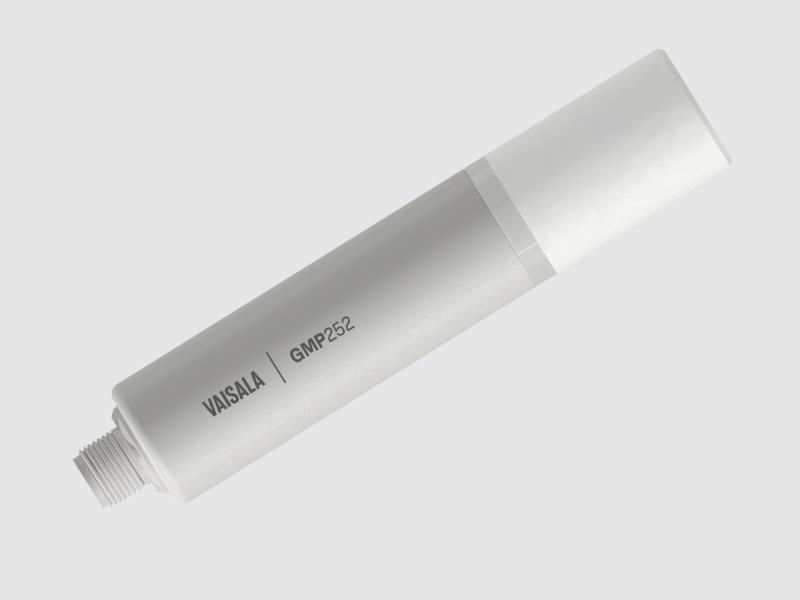
GMP252 CARBOCAP carbon dioxide probe
Vaisala GMP252
A carbon dioxide probe intended for humid industrial and greenhouse environments. Its heated sensing head and compensation functions support demanding installations.
It needs suitable power and a host; temperature compensation is not a complete climate measurement system.
View product details ↗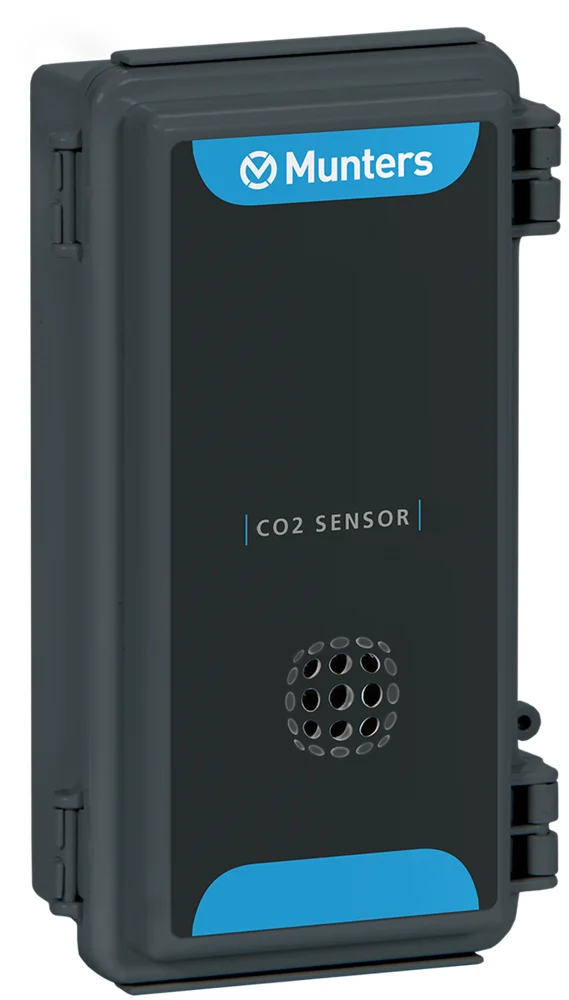
Agricultural CO2 sensor enclosure
Munters CO2 Sensor
A CO2 monitoring sensor housed in a sealed enclosure for agricultural environments.
Confirm the CO2 versus Green CO2 model and applicable wiring manual.
View product details ↗| Model | Measurement / role | Data connection | Coverage / installation |
|---|---|---|---|
| dol-sensors DOL 53 | Ammonia concentration | Analogue output to a compatible climate controller | Stationary livestock-house placement with replaceable sensing element |
| dol-sensors DOL 114 | Air temperature and relative humidity | 0–5 V, 0–10 V or 4–20 mA variants | Representative animal-zone placement |
| dol-sensors DOL 18 | Pressure difference used in ventilation control | Compatible climate or production computer | Pressure ports and tubing connect reference and measured zones |
| Vaisala GMP252 | CO2; nominal range 0–10,000 ppm | Analog voltage/current and RS-485 configured outputs | One sampling location; heated sensor head reduces condensation |
| Munters CO2 Sensor | Carbon dioxide | Compatible controller; confirm quoted output configuration | Fixed sensor enclosure in an agricultural building |
Measure the animal environment
Plan sensor positions around the occupied space, the feeding area and the ventilation layout. A device beside an open doorway may describe fresh incoming air while missing conditions deeper inside the building. A probe above a heater can overrepresent its local effect. Keep a map of instrument positions so a change in mounting location does not become an unexplained change in the record.
Install according to each manufacturer’s orientation, cable and cleaning instructions. Dust and condensation can affect sensing or response. A sealed electronics housing does not mean the exposed measurement element can be pressure-washed without the prescribed protection. The DOL 114 page specifies a protective cleaning cap, while the ammonia instrument has a different service arrangement.
For a pressure instrument, inspect the reference port and tubing route with the installer. Blocked, wet or disconnected tubing can undermine the signal even if the device remains powered. Record controller scaling and units, especially when an analogue signal has been assigned a concentration or pressure range in software.
Connect observations to ventilation control
A monitoring record can be useful before automatic control is introduced. Compare occupied-zone observations with outside conditions, animal behaviour and fan operation. When adding control, give the controller a defined target, a permissible operating range and a fault response. The ventilation system must continue to handle a disconnected or implausible sensor predictably.
Commission one input at a time. Check that a physical change appears in the expected channel and that the displayed units and scaling agree with the instrument. Then verify the corresponding actuator action. A sensible reading attached to the wrong ventilation zone is still a faulty installation.
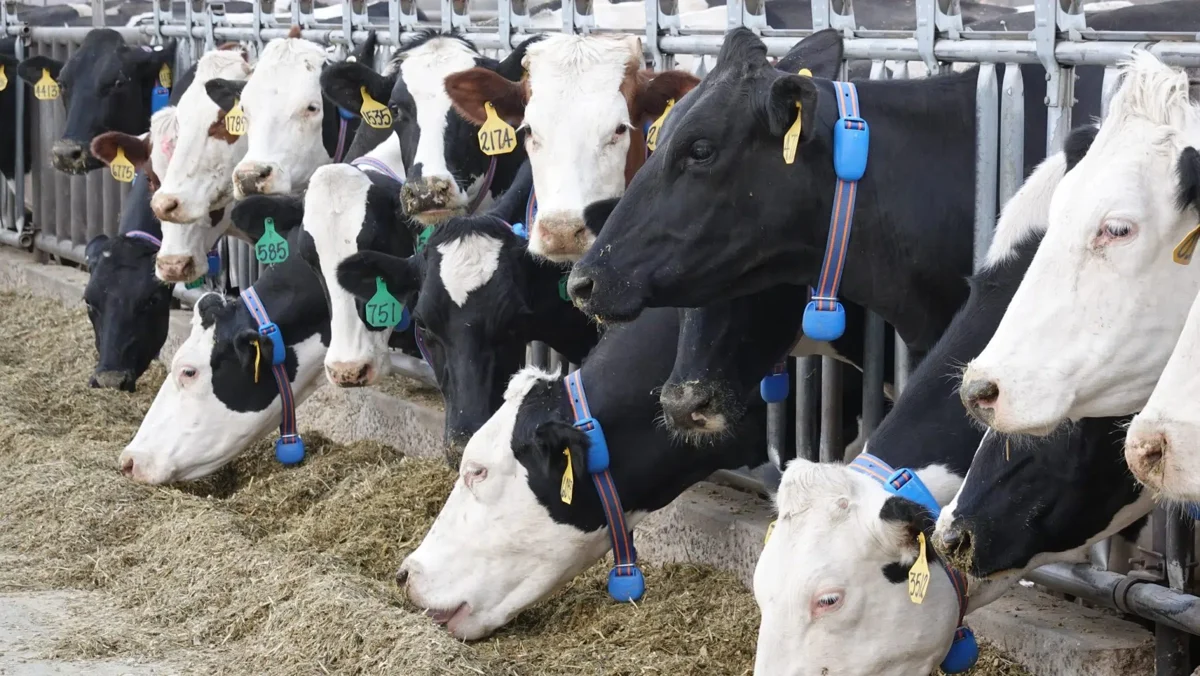
Keep cooling and air exchange distinct. A circulation fan may increase local air movement without providing the same fresh-air exchange as the building’s extraction system. The animal response and spatial measurements help establish whether the arrangement is working in the occupied area. If hotter conditions are accompanied by a herd-wide change in eating or rumination, the animal monitoring record supplies useful additional context.
Maintain a record you can trust
Set a documented service routine for filters, exposed probes, pressure tubing and controller inputs. Follow calibration and sensing-element replacement procedures for the specific device. Log service work so a step in the record after replacement can be understood. Compare suspect readings with an appropriate reference instrument rather than changing a control offset to make the display look plausible.
Ask whether the quoted package includes receiving hardware, power supplies, analogue-input modules and logging. A bare probe and a complete cloud-connected installation are different purchases. Check export access, alarms and what happens to local control when remote connectivity is lost.
From climate control to recorded feedback
Thermostatic control established a direct link between temperature and ventilation action. Adding humidity, gas and pressure inputs allows the controller to respond to more of the building environment and retain evidence of operation. DOL 53 received a EuroTier innovation award in 2016, marking the development of continuous ammonia monitoring for livestock-house use.
Barn-measurement terminology
- NDIR
- Non-dispersive infrared sensing, used by instruments such as GMP252 to measure CO2 through infrared absorption.
- Sub-pressure
- A pressure below a defined reference, used in negative-pressure ventilation systems.
- Controller scaling
- The mapping between an electrical input and the displayed physical quantity.
- THI
- A temperature-humidity index used to assess heat-load conditions; use the formula and interpretation appropriate to the animals.
Questions about barn installations
Does a weather station describe the conditions inside a barn?
It provides outside context. Indoor heat, moisture, gas production and air distribution require measurements in the building itself.
Can a humidity probe also measure ammonia?
No. Humidity and ammonia require different sensing functions. Resistance to ammonia exposure describes durability, not ammonia measurement capability.
Should every barn use the same control threshold?
Set the operating strategy for the species, age, stocking conditions and building design with the relevant adviser. A generic instrument range is not an animal-management target.