A useful livestock monitoring system makes the next animal check easier to organise. Collars and ear sensors follow behaviour through the day, helping a stockperson notice changes that a brief walk through the herd may miss. The buying decision starts with the animals, the housing and the people who will act on the records.
What collars and ear sensors observe
An accelerometer measures movement along several axes. The tag’s position gives that movement a meaning: a neck sensor follows head and neck motion, while an ear sensor experiences a different pattern. Software classifies recurring patterns into behaviour such as eating, rumination, activity or inactivity. These classifications are estimates of behaviour, rather than a direct measurement of feed mass.
Rumination is the process of regurgitating and chewing previously swallowed feed. A daily rumination record can reveal a change in an animal’s routine, but the reason requires investigation. Feed access, a changed group, heat and illness can all affect behaviour. The University of Wisconsin’s precision dairy guidance describes how movement or sound signals become usable behavioural records; the raw sensor and the final alert are different stages of that process.
Some ear devices also observe ear temperature. That peripheral measurement should be interpreted with the behaviour record and conditions around the animal. It is a different quantity from the internal temperature recorded by a retained bolus.
Five monitoring packages to consider
These options offer different routes into individual dairy-cattle monitoring. Compare the complete package of tags, receivers, software and support.
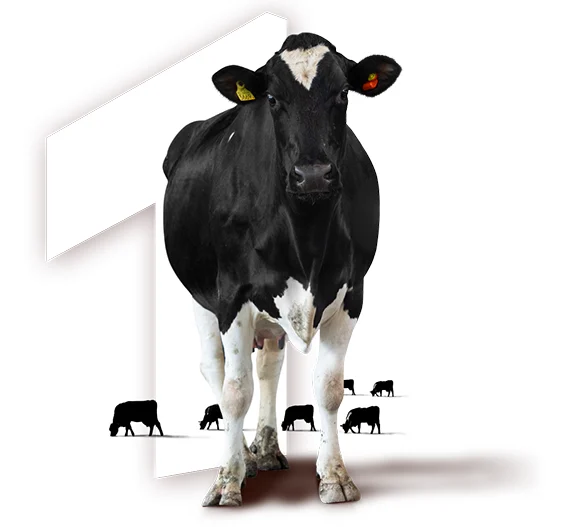
Dairy cattle ear sensor
CowManager Ear Sensor
An ear-mounted monitoring system that combines behavioural records with ear-temperature observations.
Ear temperature is a peripheral observation; confirm attachment and routing coverage.
View product details ↗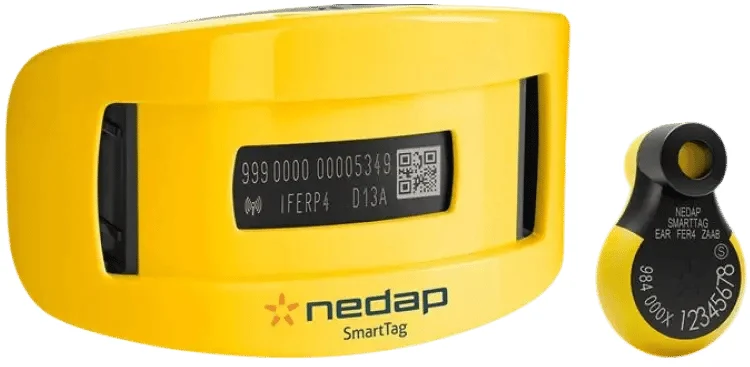
CowControl monitoring tag options
Nedap SmartTag Neck / Ear
Nedap offers neck and ear monitoring options within its cow-management system.
Neck and ear options differ; confirm locating and RFID in the quoted package.
View product details ↗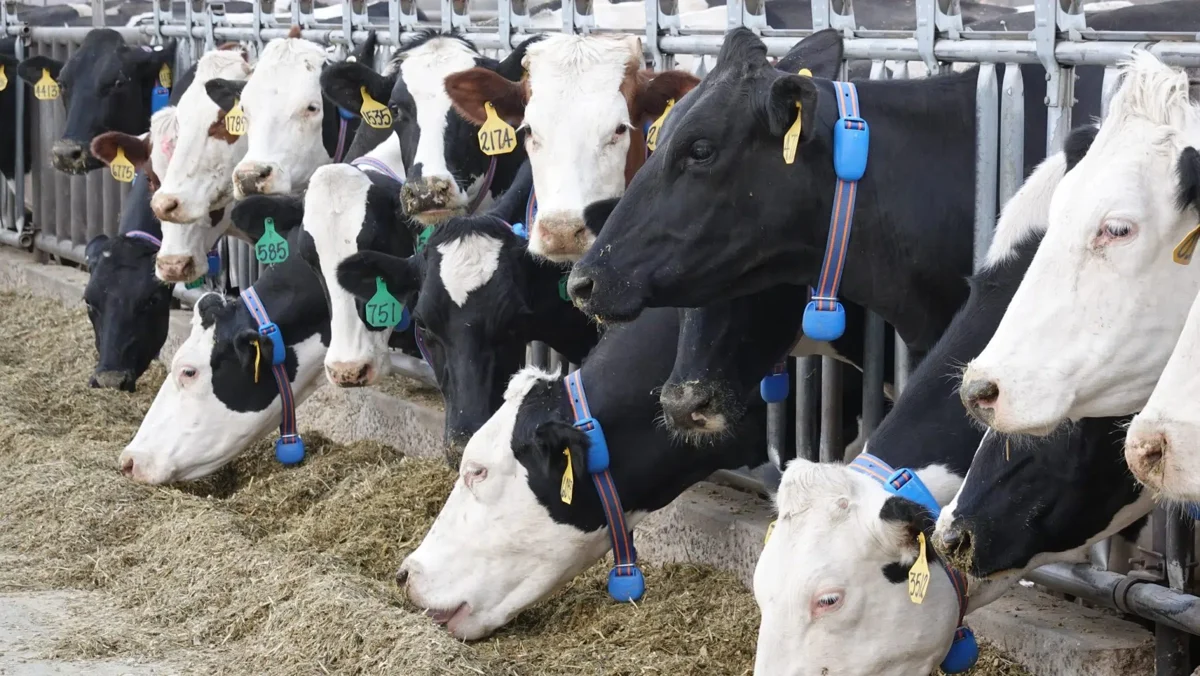
Neck monitoring sensor
Afimilk AfiCollar
A neck sensor that sends individual behavioural records to the Afimilk management system.
Additional feeding-efficiency services require other equipment; the collar alone is not a feed scale.
View product details ↗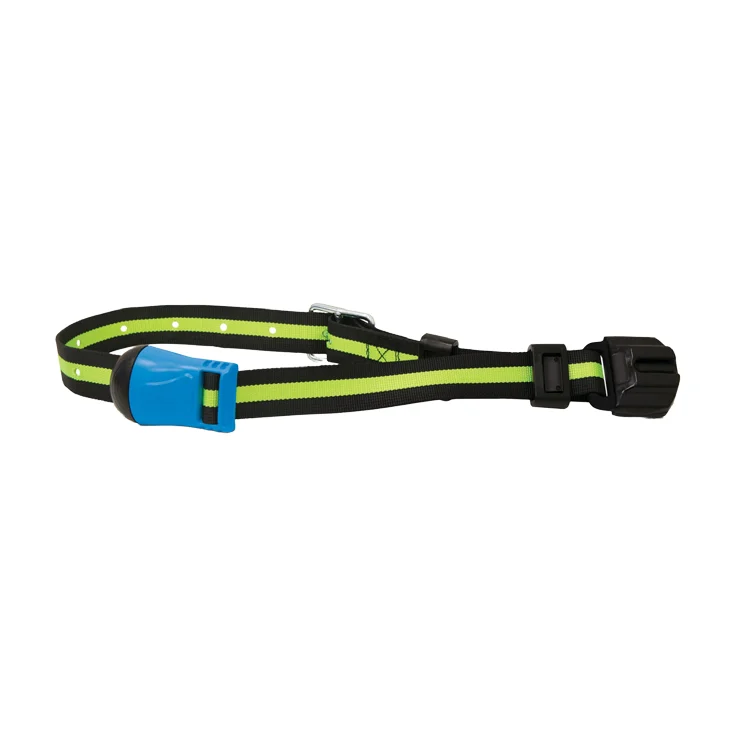
New Zealand documented neck-tag package
SenseHub Dairy Neck Tag
A neck-mounted motion sensor supported by receiving hardware and SenseHub Dairy software.
Regional hardware and service packages vary; ear and neck tags differ in identification functions.
View product details ↗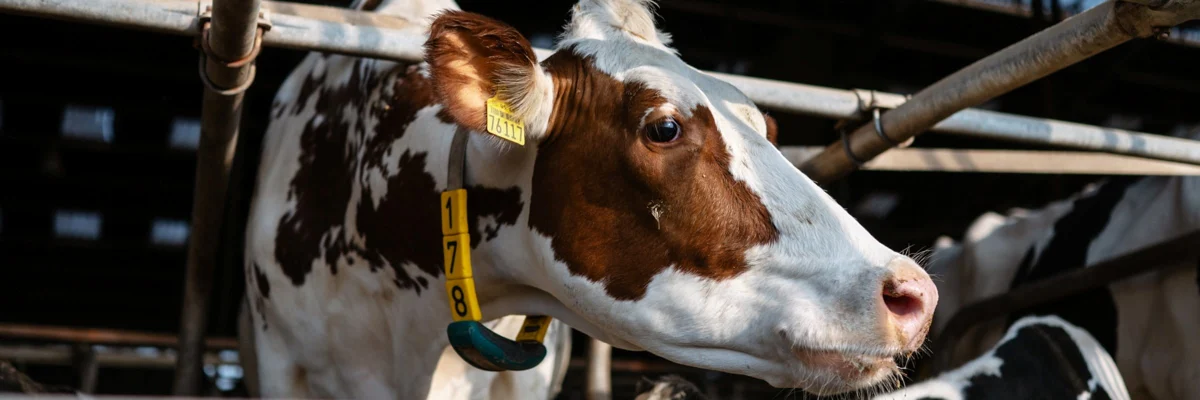
Neck monitoring package
GEA CowScout
GEA’s cow-monitoring system turns behavioural records into reproduction and animal-check worklists.
Confirm cloud, locating and existing-system compatibility as separate configuration choices.
View product details ↗| Model | Measurement / role | Data connection | Coverage / installation |
|---|---|---|---|
| CowManager Ear Sensor | Eating, rumination, activity and ear temperature | CowManager routers and software | One compatible ear sensor per animal; radio infrastructure required |
| Nedap SmartTag Neck / Ear | Eating, rumination and behaviour changes; functions depend on tag | Nedap receiving infrastructure and software | Tag choice and infrastructure determine locating and identification functions |
| Afimilk AfiCollar | Eating, rumination and activity-derived alerts | Afimilk Reader and AfiFarm | One collar per animal with Afimilk Readers |
| SenseHub Dairy Neck Tag | Movement patterns used for behavioural monitoring | SenseHub readers, server and software | One collar per cow; site survey defines antennas and server |
| GEA CowScout | Activity, eating and rumination behaviour | GEA herd-management integration | Neck tags and receiving infrastructure; locating is package-dependent |
From an individual baseline to an animal check
An activity baseline is a reference for an animal’s usual pattern. Comparing a cow with her own recent behaviour can be more informative than comparing every animal with one herd-wide number. Lactation stage, housing and feeding schedule also give the record context. A group change can explain a shared shift that would otherwise look like several separate animal events.
Keep the response visible: identify the animal, inspect her, compare the alert with feeding and milking records, and record the finding. An alert becomes valuable when someone owns that task. When clinical examination or treatment is needed, involve the herd veterinarian. A behavioural deviation alone does not identify its cause.
Afimilk’s system documentation links AfiCollar records to a Reader and AfiFarm. SenseHub’s New Zealand documentation likewise describes a receiving and server package defined by a site survey. These dependencies are as relevant to a purchase as the tag itself.
Fit, coverage and daily operation
Ask the installer to demonstrate coverage in the collecting yard, dry-cow area, calving pens and grazing routes used by the monitored animals. A receiver beside the parlour may leave important periods outside the expected reporting interval. Check how stored records return after an animal comes back into range, and whether the display distinguishes missing data from inactivity.
Follow the supplied fitting procedure. Collar position and ear-tag placement affect the signal, and growing animals need suitable attachment checks. Record the tag-to-animal association when a tag is moved. A technically sound record assigned to the wrong animal can send the team to the wrong cow.
Before expanding, use a defined group to test worklists, staff access, notification settings and replacement procedures. Review checked alerts and missed events together with your advisers. Alert sensitivity describes how readily a system flags a possible event; a more sensitive setting may also create more unnecessary checks. Request evidence for the same species, age group and management system you intend to use.
How behaviour monitoring developed
Electronic identification provided a way to attach records to individual animals; activity monitoring then added a changing signal to that identity. Collars expanded the observation from movement to eating and rumination, while modern platforms combine those records with management software. In a 2021 study of AfiCollar, researchers compared sensor classifications with directly observed eating and rumination. That validation design demonstrates why the specific behaviour and observation method matter more than a broad “accuracy” label.
Terms used in herd monitoring
- Accelerometer
- A sensor that records acceleration and provides movement information for behavioural classification.
- Rumination time
- Time classified as cud chewing within a stated reporting period.
- Receiver
- The infrastructure that collects tag transmissions for processing or transfer.
- Group alert
- A notification based on a shared change across several animals, which can help investigate management or environmental conditions.
Questions before choosing a system
Can a dairy-cow system be used unchanged on calves or sheep?
Choose a product and algorithm supported for the intended species and age group. Attachment, motion patterns and management routines differ, so a cattle specification cannot establish suitability for another animal.
Does locating come with every monitoring tag?
Check the exact configuration. Locating and identification functions can depend on tag type, additional infrastructure and software, even within one product family.
What belongs in the ownership-cost comparison?
Include tags, receiving equipment, installation, software, connectivity, replacement hardware, staff training and the cost of acting on alerts. Ask how records can be exported if the farm later changes its management system.