A rumen bolus places a monitoring instrument inside a ruminant. It can provide a temperature record and behaviour-related observations without an external collar. Some boluses also measure pH, but that is a separate sensing function with its own service requirements and interpretation.
Where an internal sensor measures
A monitoring bolus is orally administered and designed to remain in the animal. The systems considered here describe retention in the reticulum, the compartment beside the rumen. The bolus contains sensing elements, electronics, a battery and a radio. A receiving station collects its transmissions and passes records to the management platform.
The temperature signal describes conditions at that internal location. Drinking can produce a temperature change, which software may use to identify drinking-related events. It does not follow that every temperature dip is a measured volume of water. Check whether the purchased system supplies a temperature series, an event count or a modelled intake estimate, and what validation supports that output.
Activity and rumination outputs also require interpretation. Internal motion and contractions provide different signals from the neck movements used by a collar. A familiar label in two dashboards does not establish identical measurement methods.
Two internal monitoring systems
The standard Moonsyst cattle bolus and smaXtec’s monitoring platform provide two routes into internal monitoring. Within each family, distinguish the standard temperature-and-behaviour configuration from the separate pH configuration. Choosing a package begins with that distinction, rather than assuming every retained bolus measures rumen chemistry.
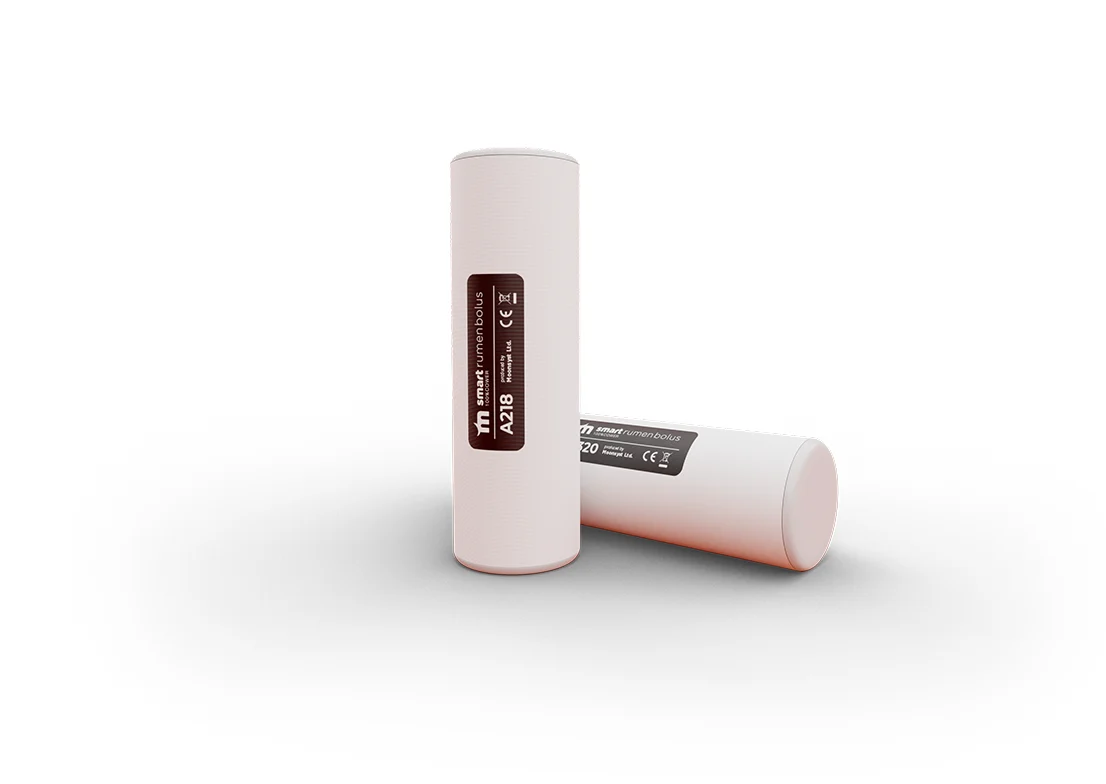
Standard cattle bolus, not the separate pH model
Moonsyst Smart Rumen Bolus
A retained internal sensor linked to a farm gateway and the Mooncloud platform.
The standard Smart Bolus does not establish pH measurement; pH is a separate product.
View product details ↗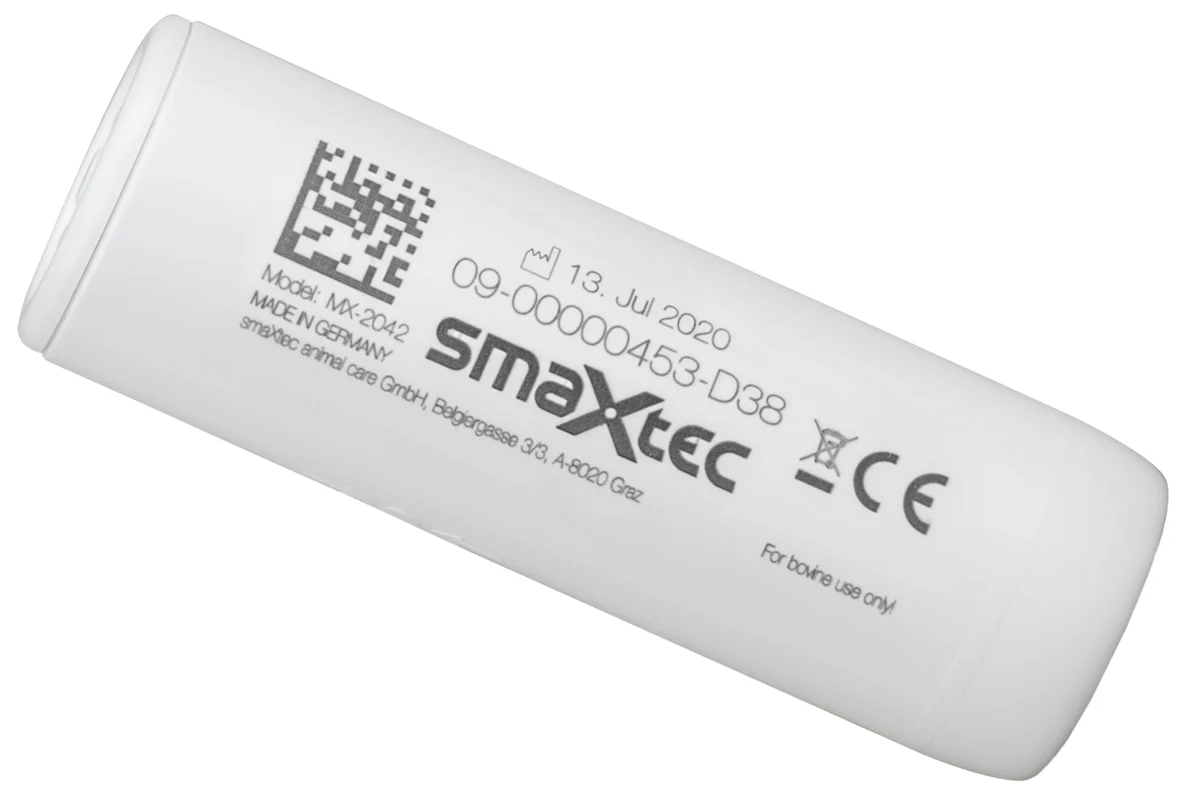
Classic and optional pH package configurations
smaXtec bolus monitoring system
An internal monitoring platform combining boluses, a Base Station and herd-management software.
Classic and pH models have different sensing functions; confirm the useful pH measurement period.
View product details ↗| Model | Measurement / role | Data connection | Coverage / installation |
|---|---|---|---|
| Moonsyst Smart Rumen Bolus | Rumen temperature, animal activity and movement | Moonsyst Gateway and Mooncloud | Standard bolus for cattle above 350 kg according to Moonsyst |
| smaXtec bolus monitoring system | Internal temperature and behaviour-related observations; pH requires the pH bolus | smaXtec Base Station and cloud | Retained cattle bolus with manufacturer administration requirements |
What a pH record can tell you
pH describes acidity on a logarithmic scale. A pH bolus observes the fluid surrounding its sensing element; location, feeding time and sensor condition therefore matter. A trend through the feeding cycle can help a nutritionist investigate a ration response, but one number should not be treated as a complete account of the rumen.
A pH electrode has a useful measurement period that can differ from the radio or battery lifetime. Ask for the exact model’s calibration procedure, pH measurement life, drift information and replacement strategy. The older smaXtec pH Plus technical sheet separates pH measurement duration from temperature and activity operation, illustrating why those durations must be compared independently. Its historical specifications should not be transferred to a later generation without the corresponding manual.
The manufacturer’s temperature and activity bolus should not be credited with pH capability because the wider family offers a pH product. Moonsyst explicitly presents its pH bolus separately from the standard Smart Rumen Bolus. Likewise, smaXtec’s Classic and pH configurations have different documented quantities.
Receiving records from the barn
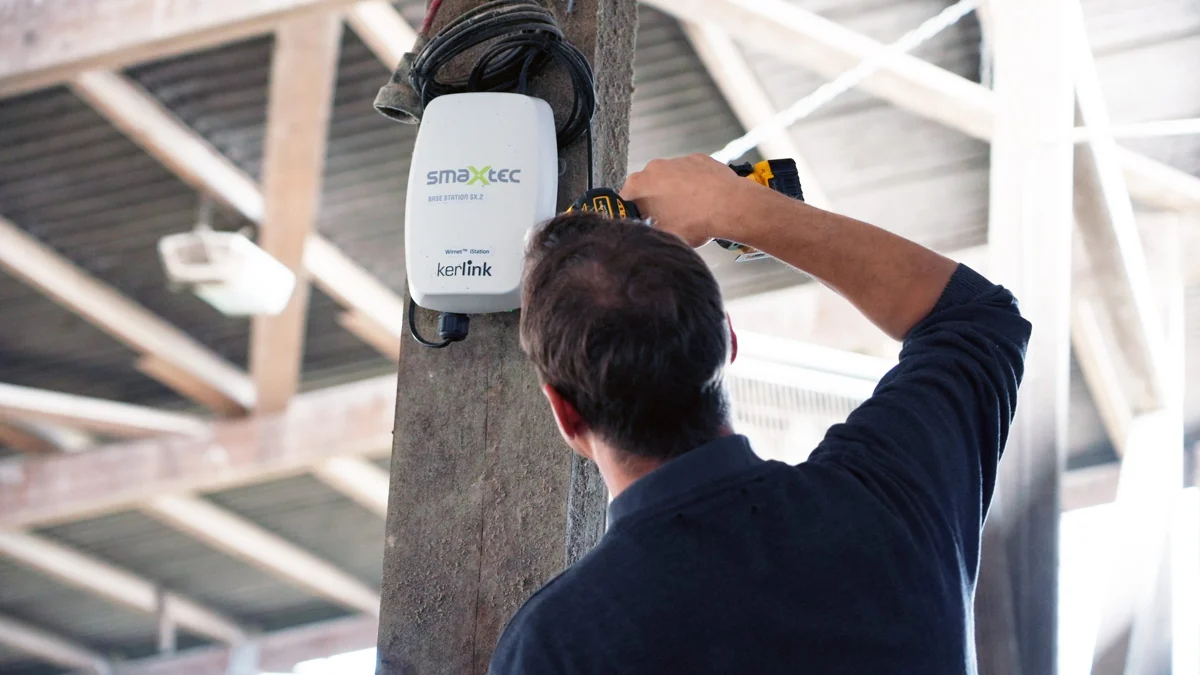
A bolus remains inside the animal, but its records still need a dependable radio and data path. Survey the barn, handling area and grazing routine with the supplier. Establish how the system behaves when animals move beyond a receiver, how long records are retained, and how delayed uploads appear on a worklist.
Arrange a visible procedure for a failed receiver or stale record. An empty chart is a communications or hardware issue to investigate, rather than evidence that the animal’s condition is unchanged. Confirm access for the stockperson and advisers, and identify who maintains the receiver, internet connection and software account.
Eligibility and administration
Animal eligibility depends on the exact bolus, rather than age alone. Moonsyst’s standard cattle page specifies animals above 350 kg. Other manufacturers and smaller-animal products have their own requirements. Use the manufacturer’s current administration instructions and trained support to establish suitability, the correct applicator and the handling procedure.
Record the bolus identity against the animal before administration, then confirm that the receiving system reports the expected animal. Discuss retained-device handling at culling or slaughter with the supplier and the relevant operator. Internal retention makes the association durable, but it also makes ordinary removal or battery replacement unlike servicing an external tag.
History and the meaning of validation
Retained boluses developed from instruments for continuous internal observations into connected management systems. The older technical sheets help trace that shift, but evidence needs to be matched to a specific claim. DLG report 7236 examined the resistance of selected smaXtec SX.2 case and cap materials to artificial rumen fluid. That is materials evidence; it is not an independent test of disease-alert accuracy or every sensing output.
For a farm trial, define the decision in advance: finding animals to inspect, examining drinking patterns, or discussing feeding with a nutritionist. Compare alerts with recorded observations and veterinary findings. That provides a useful assessment of the workflow without treating a sensor notification as a diagnosis.
Internal-monitoring terms
- Bolus
- An orally administered device designed for retention in a ruminant.
- Reticulum
- The stomach compartment identified as the retained sensor location by these manufacturers.
- pH measurement life
- The supported period for pH sensing, which may differ from total battery life.
- Read-out station
- The receiving hardware that collects a bolus’s radio records.
Questions about internal sensors
Can a temperature bolus replace a pH bolus?
No. Temperature and pH are separate quantities requiring different sensing elements. Select the documented chemistry model when pH is the decision you need to investigate.
Does a bolus alert identify a particular disease?
A changed temperature or behaviour pattern identifies an animal for assessment. Determine the cause through observation and the appropriate veterinary examination.
Can one model serve all ruminants?
Use the manufacturer’s eligibility for the exact model. A standard cattle bolus does not establish suitability for small ruminants or young animals.