Grain storage monitoring measures conditions within the grain mass, in the headspace and in the air used for aeration. Temperature, moisture, gas concentration and inventory describe different processes. A monitoring system needs sufficient spatial coverage to distinguish a local deterioration problem from a seasonal change across the store.
Temperature, moisture and biological activity
Temperature cables contain sensing elements at several heights. They reveal warming caused by respiration, insects or changing ambient conditions, but each element measures its immediate surroundings. Grain conducts heat slowly, so a hot spot between cables can remain poorly represented. Probe positions, cable spacing and the distribution of fines affect the interpretation of a temperature map.
Moisture content is commonly expressed on a wet basis: water mass divided by total sample mass. A 100 kg sample containing 14 kg of water has 14% moisture content on this basis. In-bin moisture cables often measure intergranular relative humidity and temperature, then calculate equilibrium moisture content using a commodity-specific relationship. This inferred value differs from the direct analysis of a withdrawn sample, particularly before the grain and air have reached equilibrium.
Carbon dioxide is a complementary indicator of biological activity. Its concentration depends on respiration, ventilation and the sampling location. A headspace reading alone cannot identify which part of a bin is deteriorating. Temperature trends, grain samples and operating records provide the necessary context. University of Minnesota guidance describes the moisture migration that can occur when warm grain is stored through cold weather.
Grain storage monitoring equipment
These systems cover fixed cable networks, wireless multipoint probes and manual spot measurements. The acquisition equipment and installation method are part of the comparison.
Temperature-only cable
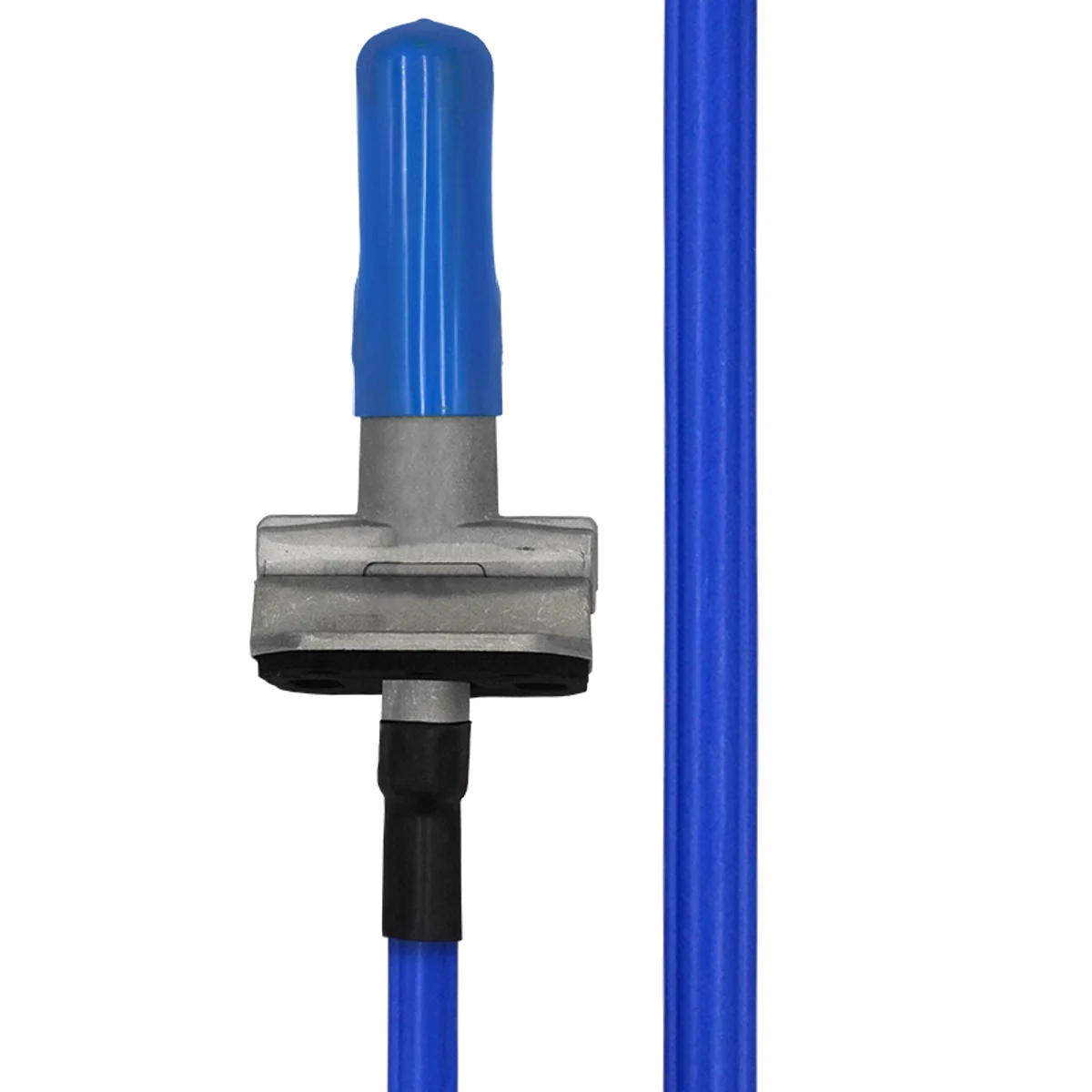
OPI temperature cables
Sealed temperature cables for grain stores, with a documented operating range of −40 to +60°C. OPI distinguishes these temperature-only cables from its OMNI temperature, moisture and inventory cable.
Cable layout, structural support and compatible acquisition equipment are installation requirements.
View product details ↗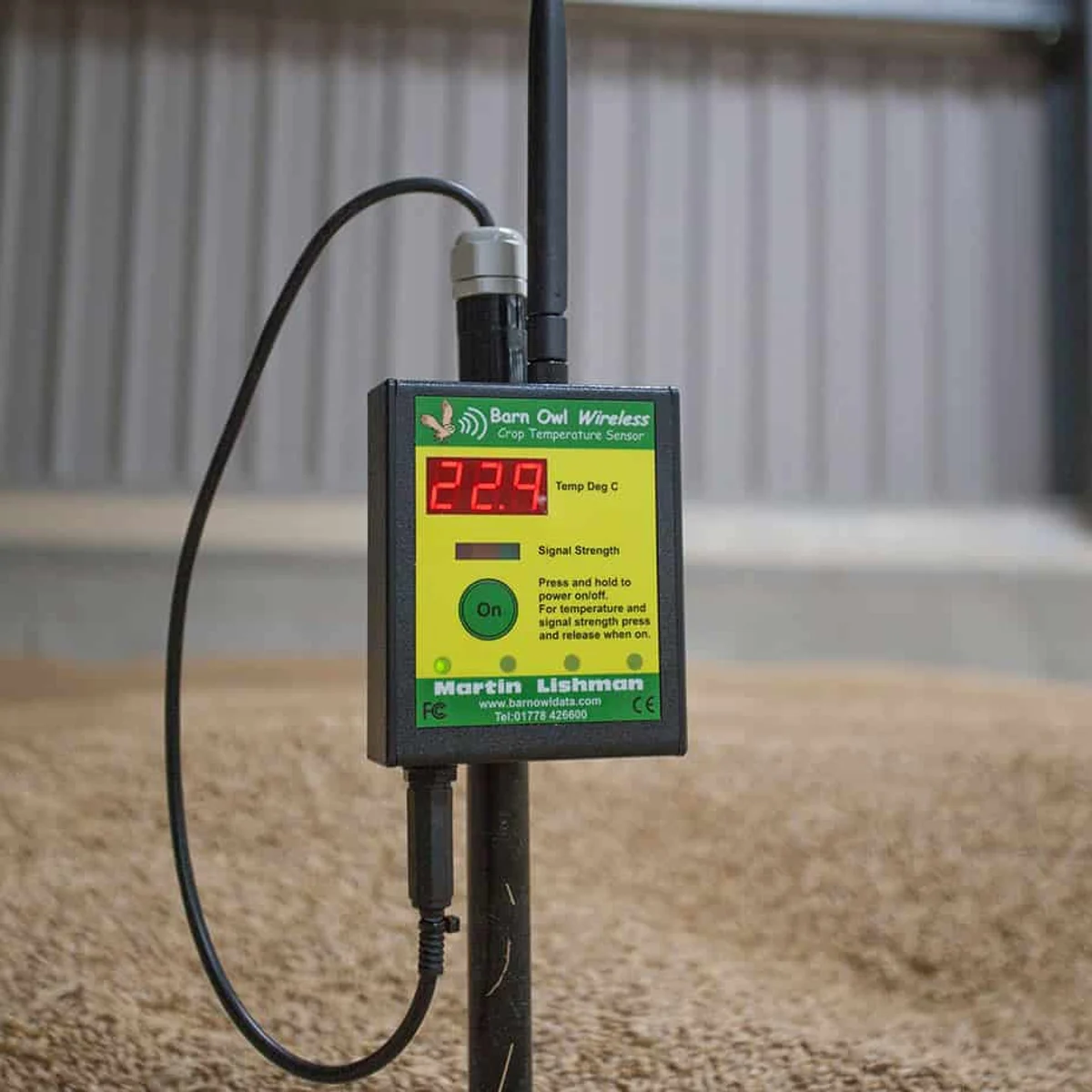
BOW/ST/2 or BOW/ST/3 crop sensor
Martin Lishman Barn Owl Wireless
Wireless crop sensors send readings through the Barn Owl installation. The technical specifications identify crop probes, ambient sensors, silo transmitter equipment and separate fan-controller configurations.
Gateway generation, network connection and the supplied fan controller determine system functions.
View product details ↗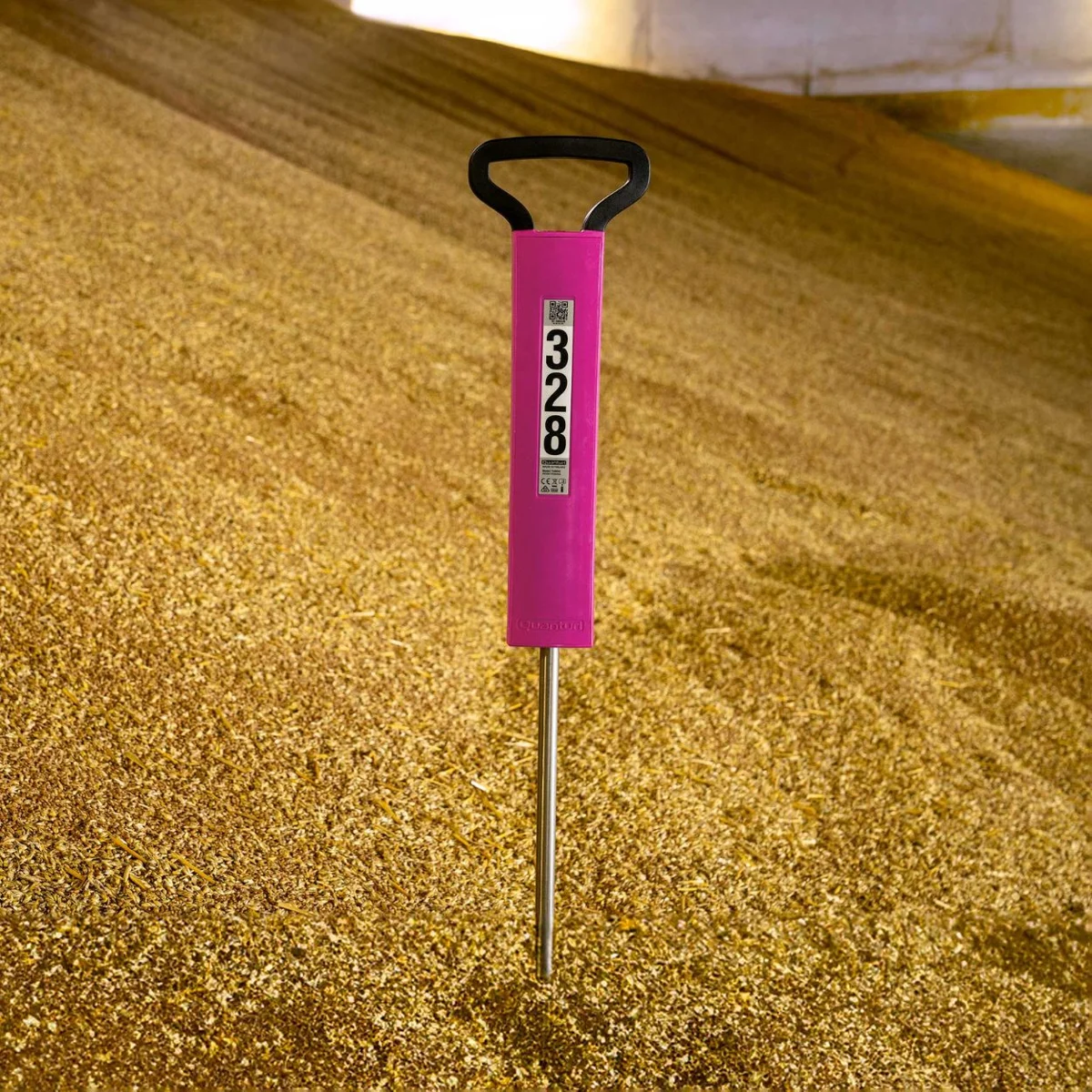
Multipoint grain temperature probe
Quanturi Tango M
Wireless multipoint probes monitor grain temperature and supply a spatial record through Quanturi Supervisor. The manufacturer describes temperature measurements at one-metre intervals and automated aeration for available configurations.
The base station and service are part of the system; aeration-control availability is region-dependent.
View product details ↗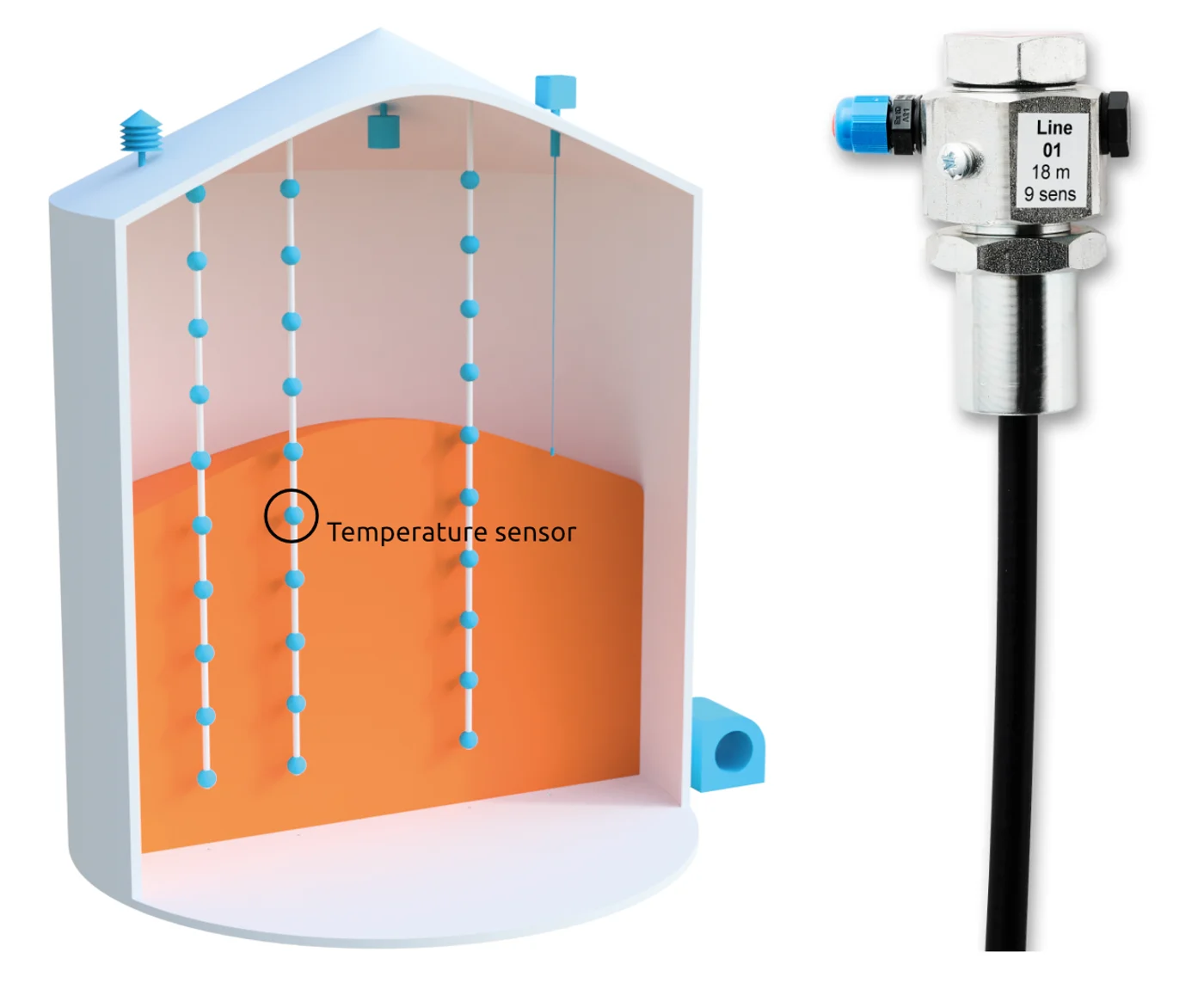
Configured grain-monitoring installation
AgroLog TMS6000 temperature-cable system
TMS6000 combines sensor cables and acquisition hardware with AgroLog Manager. Its selectable hardware includes temperature, moisture, headspace CO2 and level instruments, rather than one sensor measuring all quantities.
Specify the individual sensors and required system components; cloud and on-premise alternatives differ.
View product details ↗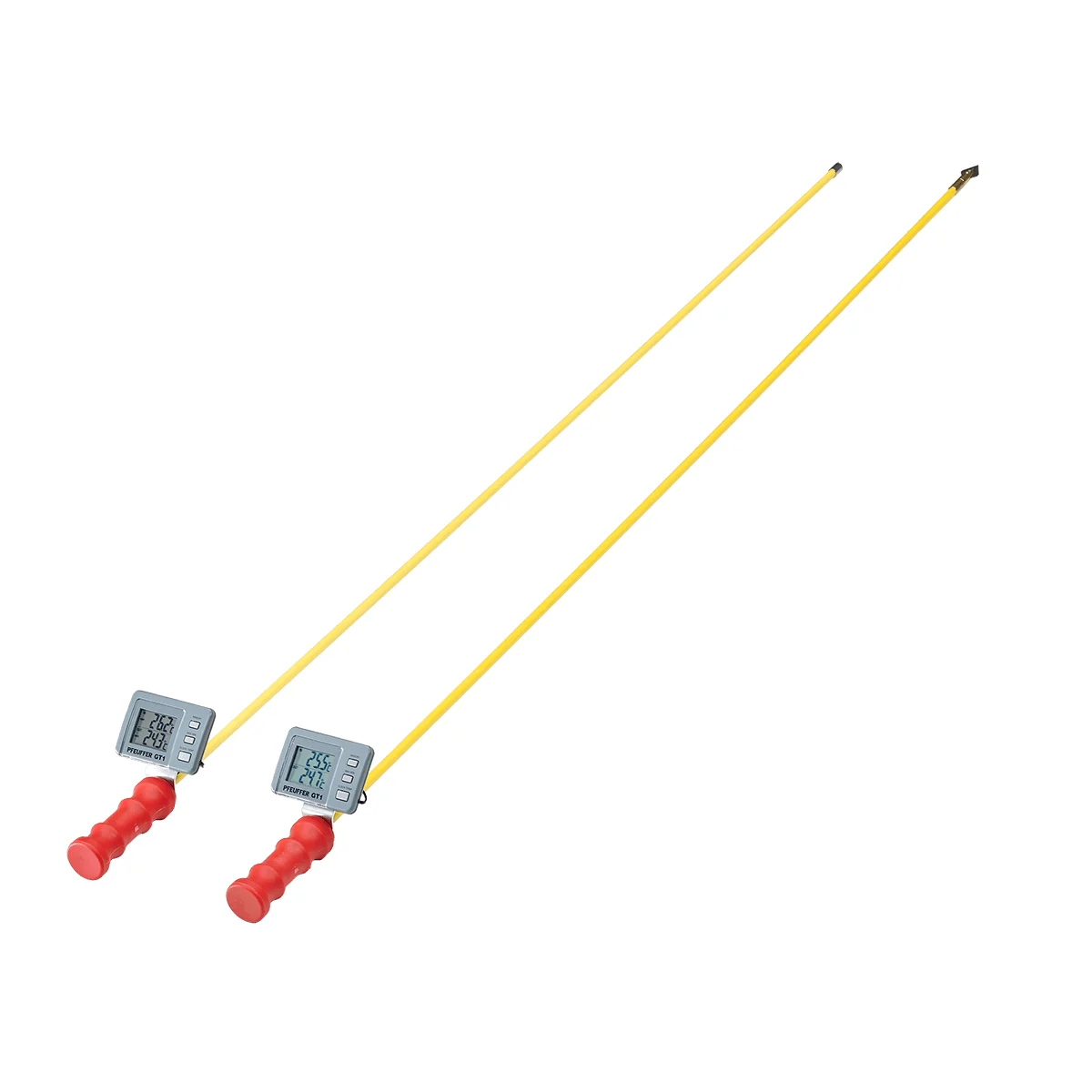
GT 1 1.5 m grain probe; item 1332 1102
Pfeuffer GT 1 probes
A portable probe for grain and other loose agricultural bulk materials. It measures from −10 to +70°C and uses a replaceable AAA battery. The GT 1 family also includes different lengths and tip configurations.
Manual insertion and equilibration are required; this is not a continuous remote monitoring network.
View product details ↗| Model | Measurement / role | Data connection | Coverage / installation |
|---|---|---|---|
| OPI temperature cables | Multipoint grain temperature | Compatible OPI readout or acquisition hardware | Suspended cable with distributed temperature elements |
| Martin Lishman Barn Owl Wireless | Stored-crop temperature | Wireless transmitter, Barn Owl gateway and web application | 2 m or 3 m rigid crop probe; other sensor types available |
| Quanturi Tango M | Grain and ambient temperature | Wireless link to base station and Supervisor service | Distributed measurements along the probe |
| AgroLog TMS6000 temperature-cable system | Temperature, moisture and optional gas or inventory measurements | AgroLog gateway, Netcontroller, Netlink and Manager software | Fixed sensor cables and configured auxiliary sensors |
| Pfeuffer GT 1 probes | Tip and housing temperature | Local LCD readout | 1.5 m GRP probe with conical tip |
Sensor placement and structural requirements
Fixed cables must be supported for the loads imposed by filling and unloading. Cable weight is only one part of the loading; moving grain can produce substantial drag. Suspension points and roof reinforcement need approval for the particular bin and cable layout. A probe that can be inserted from an accessible working area offers a different sampling geometry from a cable suspended through the full grain depth.
Sensor height should be referenced to the grain level. An exposed element records headspace conditions rather than grain temperature. Changes in the fill profile, wall exposure and grain settlement need to be recorded with the data. Bins containing different lots or commodities should retain distinct identifiers and moisture relationships.
Radio coverage is affected by steel walls and the grain mass. Coverage established before filling may change after the store is loaded. Monitoring specifications should describe communication intervals, local storage during an outage, battery replacement and which measurements are available when the internet connection fails.
Aeration control and interpretation
Aeration moves a cooling or warming front through the grain. It does not produce an instantaneous uniform temperature change. Comparing successive sensor heights can show front progression, while fan status and ambient temperature explain the operating sequence. A control system should use the intended cooling or drying strategy, available airflow and the commodity's storage requirements.
For a store requiring grain measurements alongside water-system or building instruments, Deep Orbital Pulse provides a modular acquisition option with documented interfaces. The useful advantage is a shared gateway for compatible instruments across the site. Connection to a proprietary grain cable network requires a documented interface or adapter; electrical compatibility alone does not establish support for its data protocol. Dedicated grain systems retain the advantage of purpose-built cable layouts and aeration software.
Terminology and development
- Equilibrium moisture content
- The moisture content at which grain neither gains nor loses water to air of a specified temperature and relative humidity.
- Moisture migration
- Redistribution of water within stored grain as temperature differences drive air movement and condensation.
- Aeration front
- The zone through which an imposed temperature change progresses as air passes through the grain.
- Headspace
- The air volume between the grain surface and the roof.
Manual sample inspection and temperature probing preceded fixed multipoint cable networks. Electronic readouts subsequently made repeatable readings from suspended cables easier to collect. Wireless probes and connected software extend this approach with remote records and configurable alerts. They improve observation frequency without changing the underlying need for representative sensor placement.
Questions about stored grain measurements
Does a stable cable temperature establish that the whole bin is sound?
It establishes stability at the monitored positions. Unmonitored pockets, segregated fines and moisture near the surface can behave differently. Sampling and observations of grain condition remain relevant when a reading conflicts with other evidence.
Why can the moisture estimate change without grain being added?
The calculation depends on temperature and relative humidity. Aeration, redistribution of moisture and incomplete equilibration can change those inputs. Compare the trend with a representative sample measured at an appropriate sample temperature.
Can an existing cable system be retained during an upgrade?
Some manufacturers provide compatible readouts, nodes or retrofit equipment. Cable type, element spacing, connector, electrical characteristics and the data protocol all need to match the proposed acquisition equipment.