Optical harvest-quality instruments use reflected or transmitted light to estimate composition, inspect appearance or identify material for rejection. A near-infrared grain analyser and an optical sorting machine perform different functions. The appropriate instrument depends on the crop, sample presentation and the quality attribute being measured.
Spectroscopy, imaging and sorting
Near-infrared spectroscopy measures how a sample interacts with light over selected wavelengths. Absorption associated with molecular bonds supplies information related to water, protein, oil and other constituents. Scattering, particle size and sample temperature also affect the spectrum. Quantitative results therefore depend on calibration against samples with known reference values.
Reflectance instruments measure light returned from a sample; transmission instruments measure light passing through it. Whole-kernel measurements require sufficient illumination and an appropriate optical path. Calibration coverage should include the commodity, composition range and sample conditions expected in service. A model established for one crop is not automatically transferable to another.
Visible-light cameras evaluate colour, shape and external defects. Additional near-infrared or laser channels can provide information that is not evident from colour alone. A sorter combines detection with material handling and an ejector system. Belt or chute presentation, object spacing and viewing geometry influence which surfaces are inspected and how accurately a rejected object can be separated from acceptable material.
Grain analysers and optical sorters
The grain analysers below estimate composition from samples. The sorting machines inspect moving material and remove selected objects. Their installation scales and output types should be compared within the relevant application.
Whole-grain NIR analyser
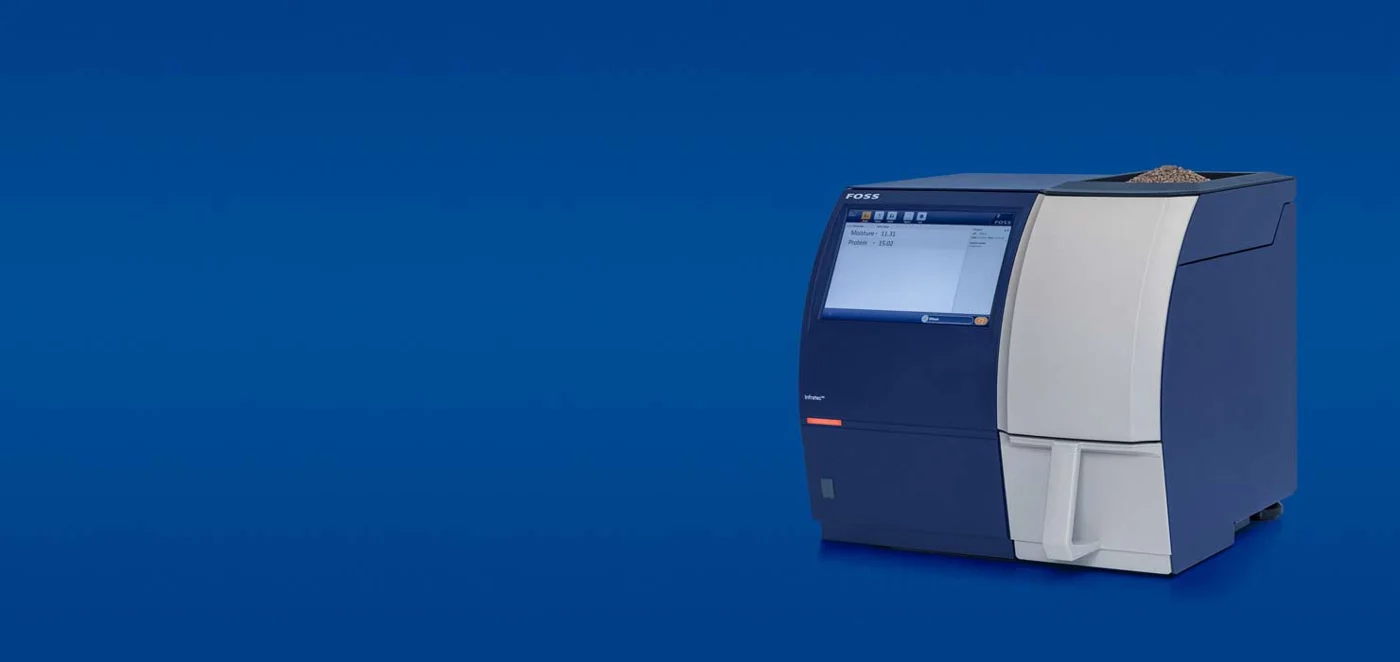
FOSS Infratec
A near-infrared transmission instrument for whole-grain analysis. FOSS provides commodity calibrations and FossConnect networking; the measured constituents depend on the installed calibration and sample scope.
Commodity calibrations, reporting basis and reference quality control determine analytical suitability.
View product details ↗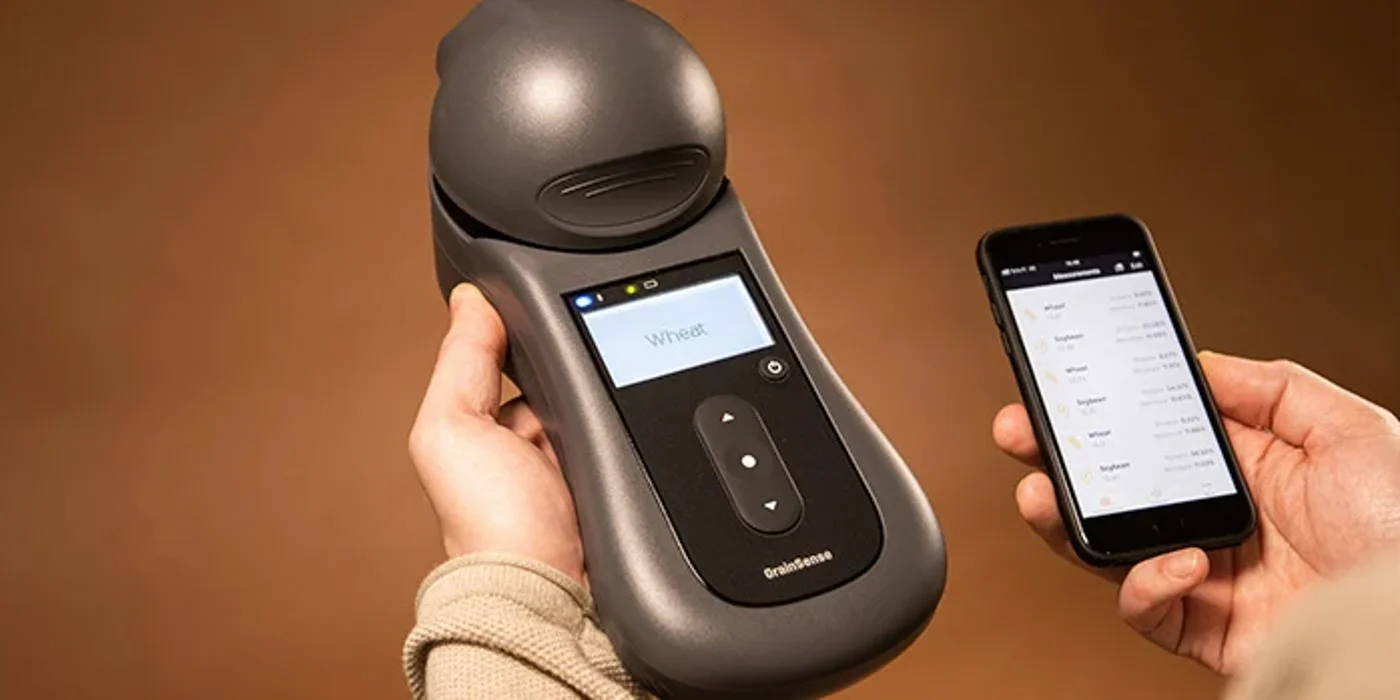
Battery-powered handheld grain analyser
GrainSense Go
A handheld NIR analyser supplied with a measuring spoon and sample tray. It supports portable grain sampling and associated location records, rather than mechanically sorting a crop stream.
A GrainSense user-account licence is required; calibrations must cover the intended commodity.
View product details ↗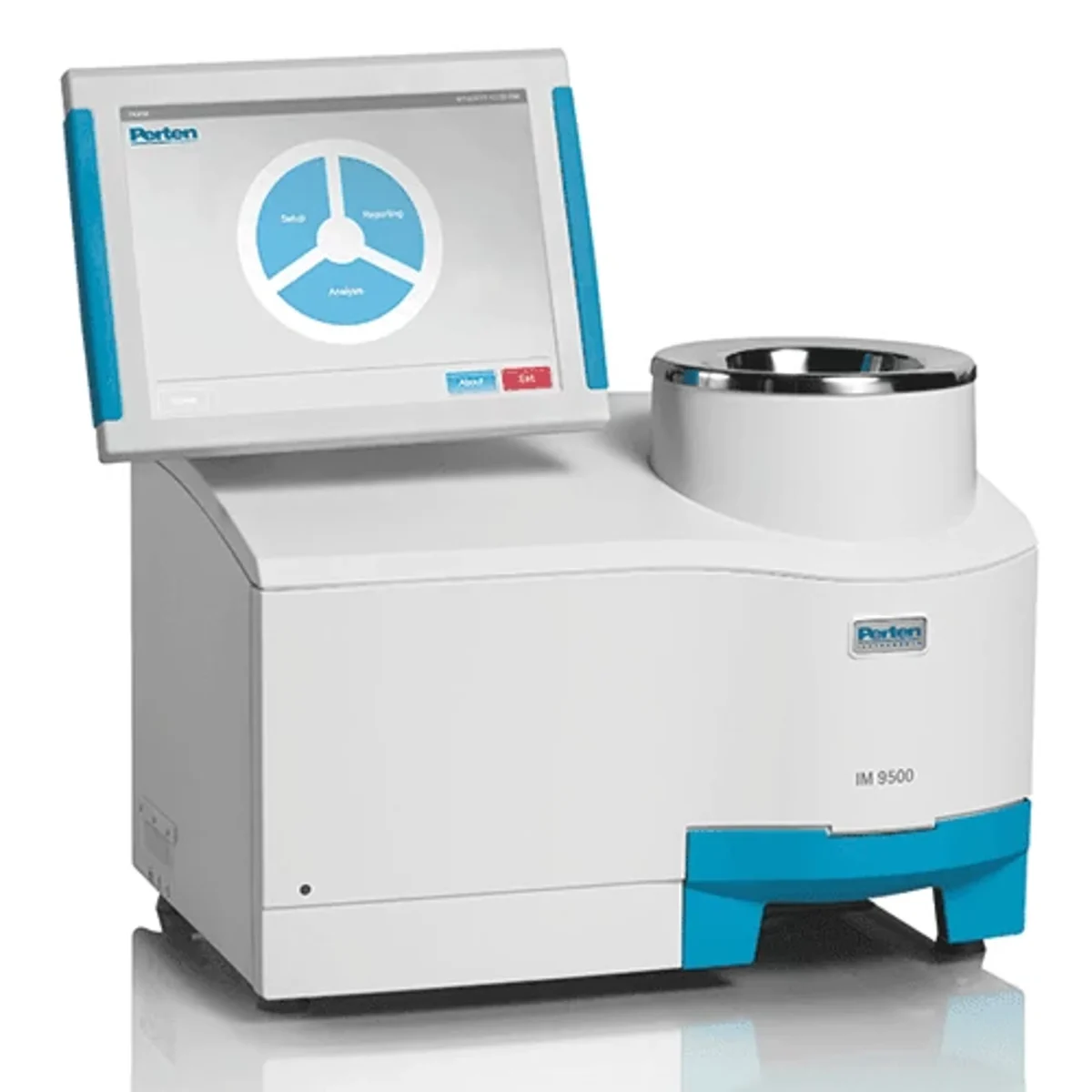
Whole-grain NIR analyser
Perten Inframatic 9500
An NIR analyser intended for grain traders, elevators and processors. The manufacturer identifies whole-grain composition testing and optional accessories; flour analysis requires the relevant module rather than being assumed for every configuration.
Select commodity calibrations, accessories and the required reporting basis.
View product details ↗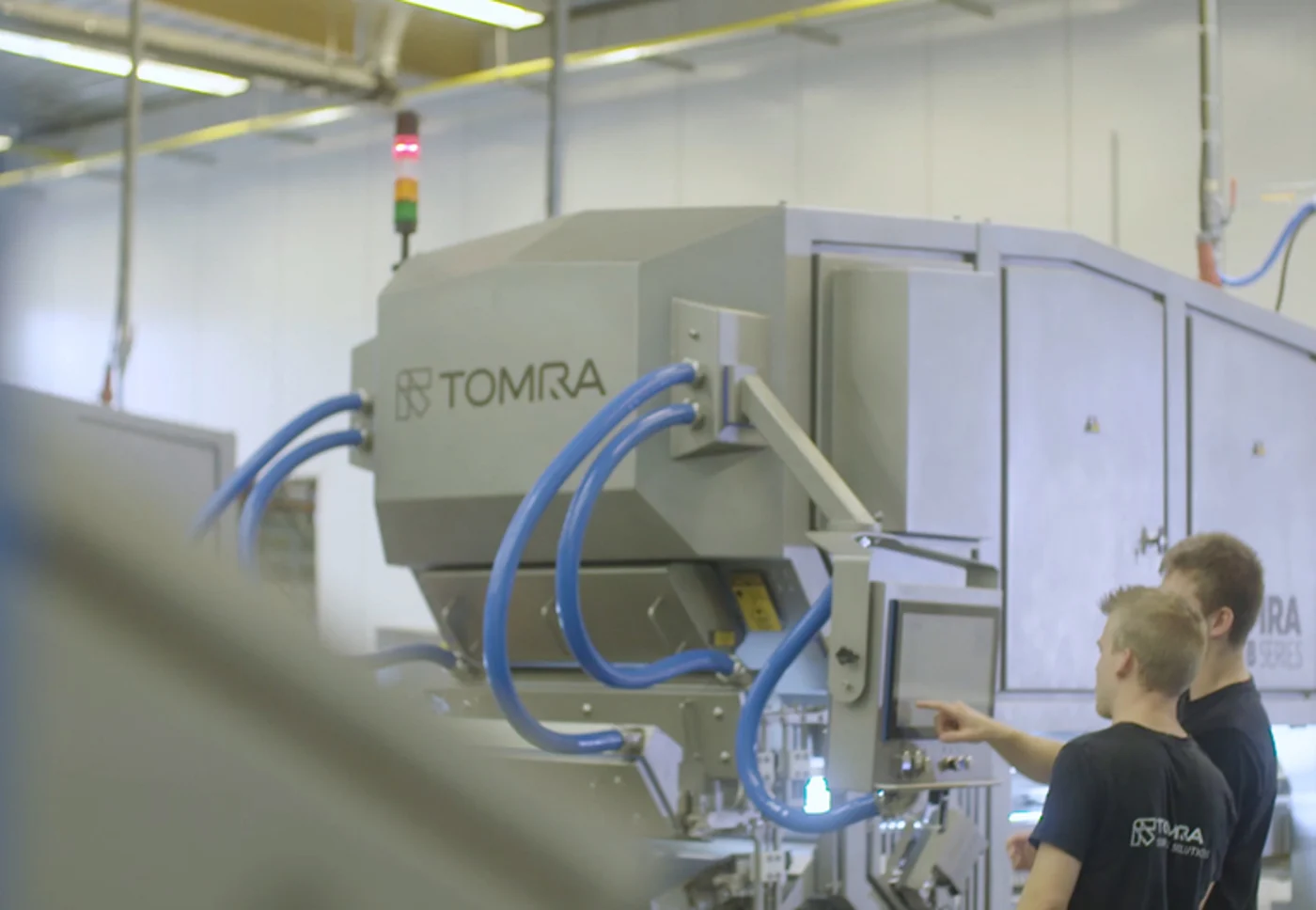
Belt optical sorter
TOMRA 5B
A belt sorter combining surround-view camera inspection with laser sensing and shape processing. It physically separates selected objects in a moving product stream and serves a different role from a grain composition analyser.
Feed presentation, ejection setup and crop-specific trials determine separation performance.
View product details ↗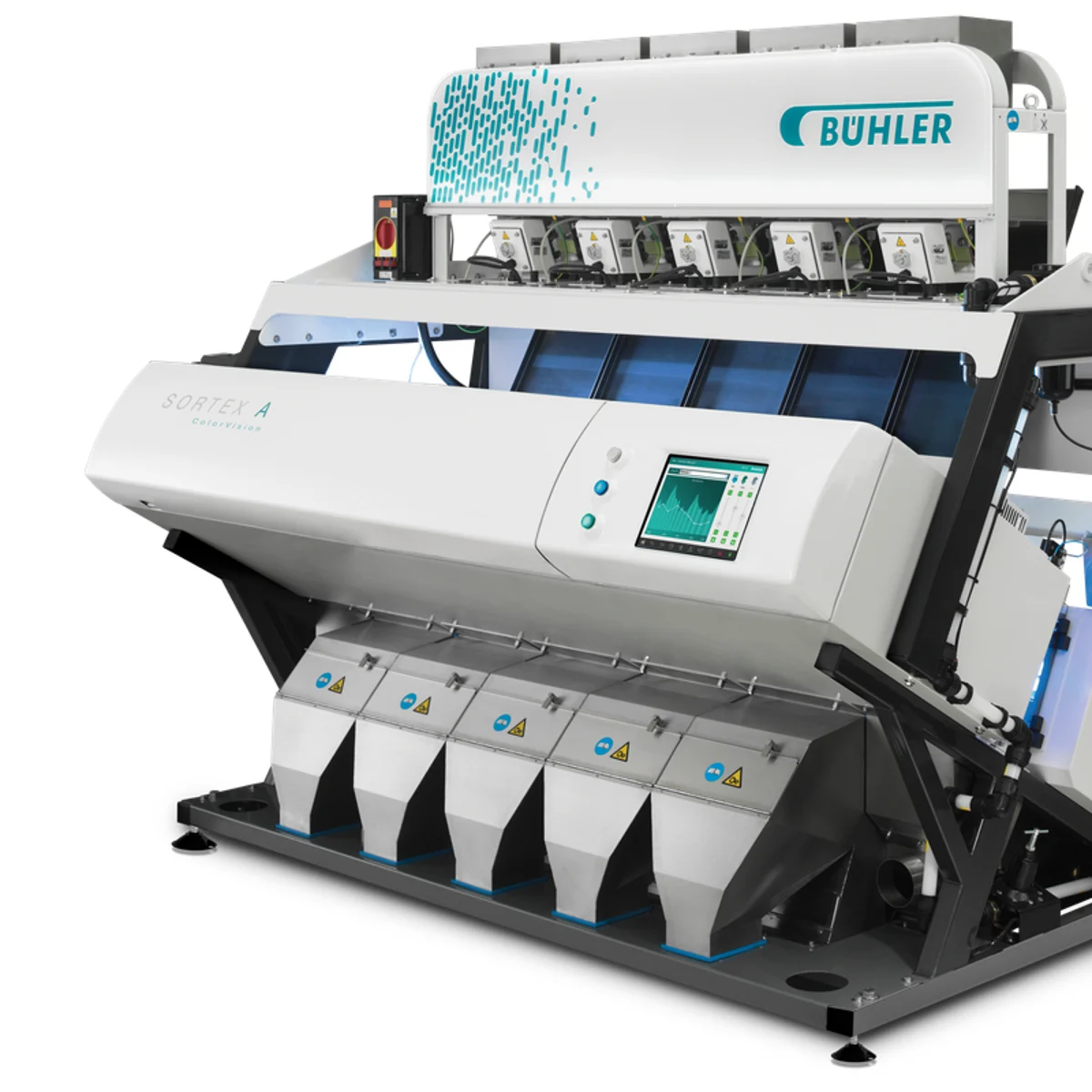
Optical sorter for dry products
Bühler SORTEX A ColorVision
An optical sorting platform for dry agricultural materials. Bühler identifies multiple-colour detection, size grading and foreign-material removal; the exact channel package and throughput need to match the supplied configuration.
Specify optical configuration, material handling and acceptance criteria for the actual commodity.
View product details ↗| Model | Measurement / role | Data connection | Coverage / installation |
|---|---|---|---|
| FOSS Infratec | Calibrated grain composition | Ethernet, USB and compatible networking software | Benchtop sample analysis; variable optical path |
| GrainSense Go | Calibrated protein, moisture, oil and carbohydrate estimates | Associated application and cloud records | Small grain-kernel samples |
| Perten Inframatic 9500 | Calibrated moisture, protein, oil and other constituents | Network-capable instrument; NetPlus software option | Benchtop grains, oilseeds, pulses and beans |
| TOMRA 5B | Colour, shape and material-related optical differences | Machine control interface and configured line integration | Moving potatoes, vegetables and suitable food products |
| Bühler SORTEX A ColorVision | Colour differences, size and foreign-material classification | Configured machine control and line integration | Grains, pulses, seeds, coffee and nuts |
Calibration and reference measurements
A spectrometer prediction should retain its reporting basis. Wheat protein reported at a fixed moisture basis differs from protein expressed for the grain as received. USDA's Federal Grain Inspection Service uses near-infrared transmittance for wheat protein determinations and specifies a 12% moisture basis. Instrument setup, calibration and reference procedures are integral to that result.
Representative sampling can dominate the uncertainty of a load assessment. A small cup taken from one position may omit variation elsewhere in a trailer or storage lot. Sample division, mixing and repeated presentations help distinguish sampling variation from instrument repeatability. Reference laboratory measurements should be selected for the actual constituent being assessed.
For example, combining equal masses of two lots containing 10% and 14% protein gives a mass-weighted average of 12%, if both lots have the same moisture content, the results use the same moisture basis and the lots are mixed without loss. This calculation describes blending; it does not establish the uncertainty of either analyser result or the uniformity of the physical mixture.
Sorting performance and commissioning
Sorter assessment should separate detection from rejection. A detected defect can still remain in the accepted stream if the ejection timing or material presentation is unsuitable. Conversely, acceptable objects can be removed with neighbouring rejects. Commissioning trials should record input defect composition, accepted material, reject material and the specified output requirement.
Throughput in tonnes per hour is meaningful only with the material, feed conditions and sorting objective stated. Small seeds, large nuts and wet vegetables impose different loading and handling constraints. Dust, moisture, window contamination and changing illumination can alter the signal. Air supply, cleaning access and integration with upstream feeding equipment belong in the installed-system specification.
NIR estimates of general composition do not establish that a crop is free of every toxin or pathogen. Optical sorting may remove material associated with a hazard, but detection performance is specific to the contaminant, crop and sensing configuration. Appropriate sampling and validated analytical methods remain necessary where chemical or microbiological measurements are required.
Terminology and history
- Calibration set
- Samples linking measured spectra with independently established reference values.
- Prediction residual
- The difference between an instrument's predicted value and a corresponding reference result.
- False reject
- Acceptable material removed from the product stream by the sorting process.
- Spectral imaging
- Measurement of spatial image information together with wavelength-dependent signals.
USDA's history of grain spectroscopy traces modern NIR analysis to grain research in the early 1960s. Subsequent instruments expanded from laboratory composition testing to intake stations, portable sampling and continuous process measurements. Optical sorters developed around photoelectric inspection and progressively added colour imaging, additional spectral channels and more detailed object classification. Spectral measurement and physical separation remain distinct parts of the process.
Questions about harvest-quality instruments
Can a portable grain analyser replace an intake laboratory?
It can support rapid classification or field sampling when the commodity and calibration are appropriate. Formal intake requirements may specify an approved instrument, reporting basis and reference procedures that differ from a portable monitoring workflow.
Does a colour sorter measure grain protein?
Colour alone does not quantify protein. Composition estimation requires a suitable spectral instrument and calibration, while colour sorting identifies the specified appearance differences.
Why can a clean laboratory sample and a moving crop stream give different results?
Sample depth, orientation, particle separation, dust and optical path differ. An in-line installation must be validated for its actual presentation and operating range rather than inheriting a laboratory calibration without evaluation.