A yield map needs a trustworthy measurement chain
A combine yield map links the crop passing through the machine to where that crop was harvested. Its quality depends on grain-flow sensing, moisture measurement, travel speed, harvested width, position and timing. A colourful map can look persuasive even when one of those inputs is wrong. Begin with calibration and field records before using the map to change fertiliser or seed rates.
Dry yield requires a reference moisture basis. Grain weighed at harvest moisture is not directly comparable with grain adjusted to another moisture content. Record the crop, moisture adjustment, calibration loads and unit convention. Tonnes per hectare and bushels per acre also require the appropriate crop-specific mass convention.
How harvest sensors estimate yield
Impact-based systems relate force at a sensing surface to crop flow. Optical systems observe the material carried by elevator paddles. Neither mechanism makes every crop condition identical: grain properties, elevator mechanics and changing flow affect the relationship between signal and harvested mass. A separate moisture sensor helps express yield on a consistent basis.
The grain reaches a sensor after travelling through the machine. That transport delay means the receiver’s current position may differ from where the grain was cut. The map needs suitable delay settings and a record of effective cutting width. Header-height sensing can help exclude travel with the header raised; an incorrectly recorded partial swath can still distort calculated yield.
Five harvest measurement systems
The systems below span retrofit monitoring, installed OEM measurement and automatic calibration. ActiveYield assists calibration on compatible Deere combines; it is not an interchangeable standalone retrofit for every harvester. Compare sensor installation, supported combine models, displays and export workflow before comparing software features.
Yield kit with matched InCommand display
Ag Leader Yield Monitoring
A combine monitoring system that links grain-flow and moisture measurements with field records. The current product page identifies support through InCommand Go displays.
Confirm the combine kit and calibration procedure; existing sensors may be reused only where supported.
View product details ↗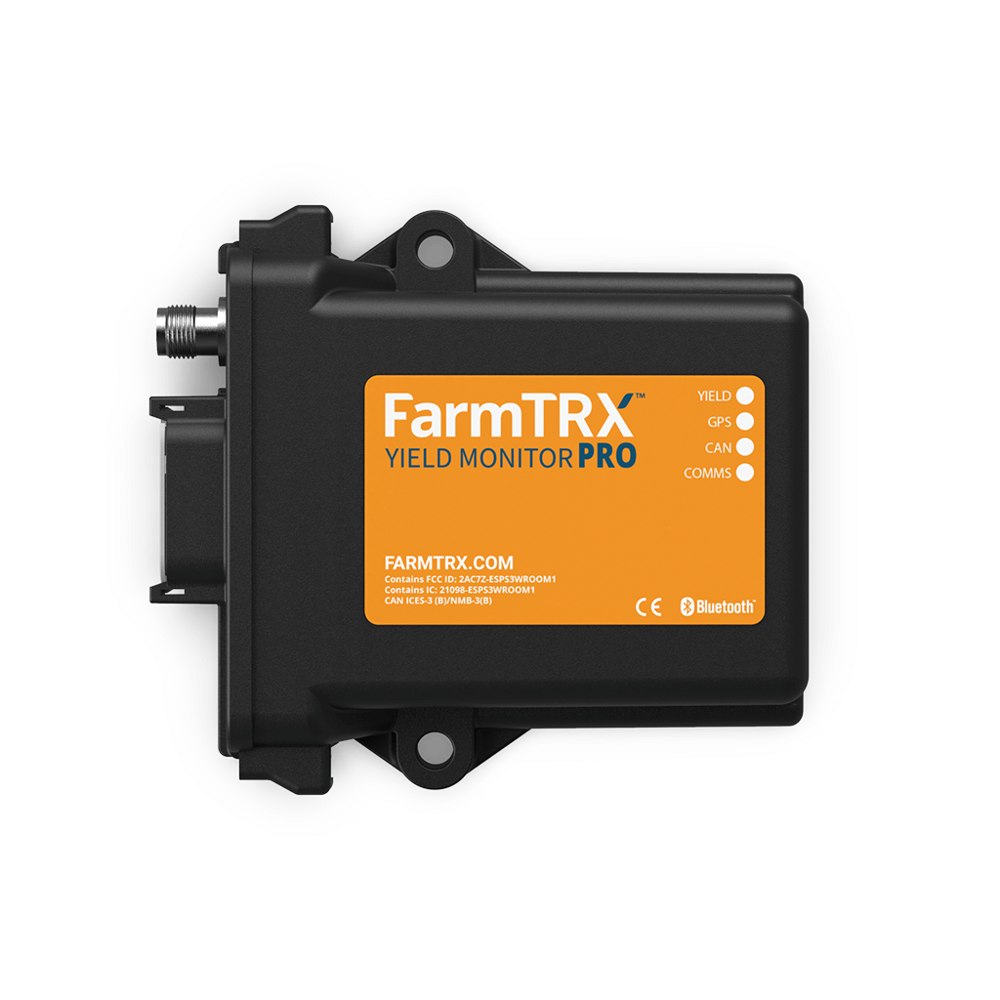
Pro retrofit ECU; optional associated sensors
FarmTRX Yield Monitor Pro
A retrofit yield-monitoring ECU with satellite positioning and cellular/Bluetooth connectivity. Its associated moisture and header-height sensors add information needed for a complete harvest record.
Specify the moisture/header sensors and confirm display integrations and service access.
View product details ↗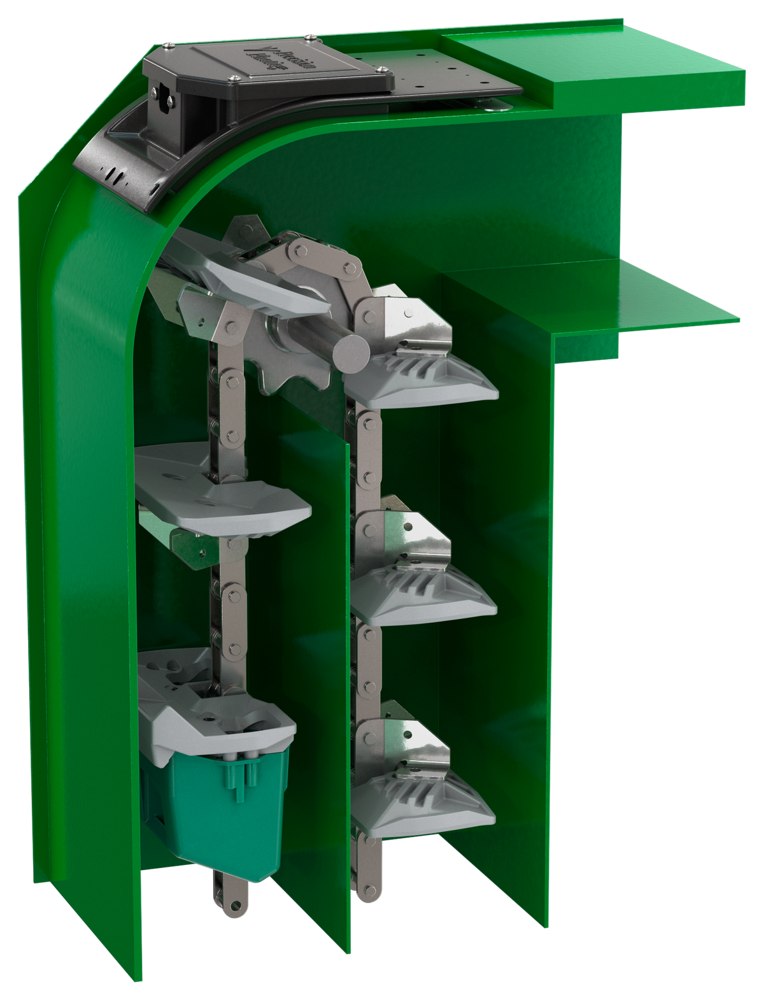
Clean grain elevator kit; compatible 20|20 required
Precision Planting YieldSense
A clean-grain-elevator monitoring system with matched paddles and flow sensing. Harvest operation does not require an internet connection; later transfer depends on the chosen workflow.
Check the exact combine list and display generation; Panorama support differs.
View product details ↗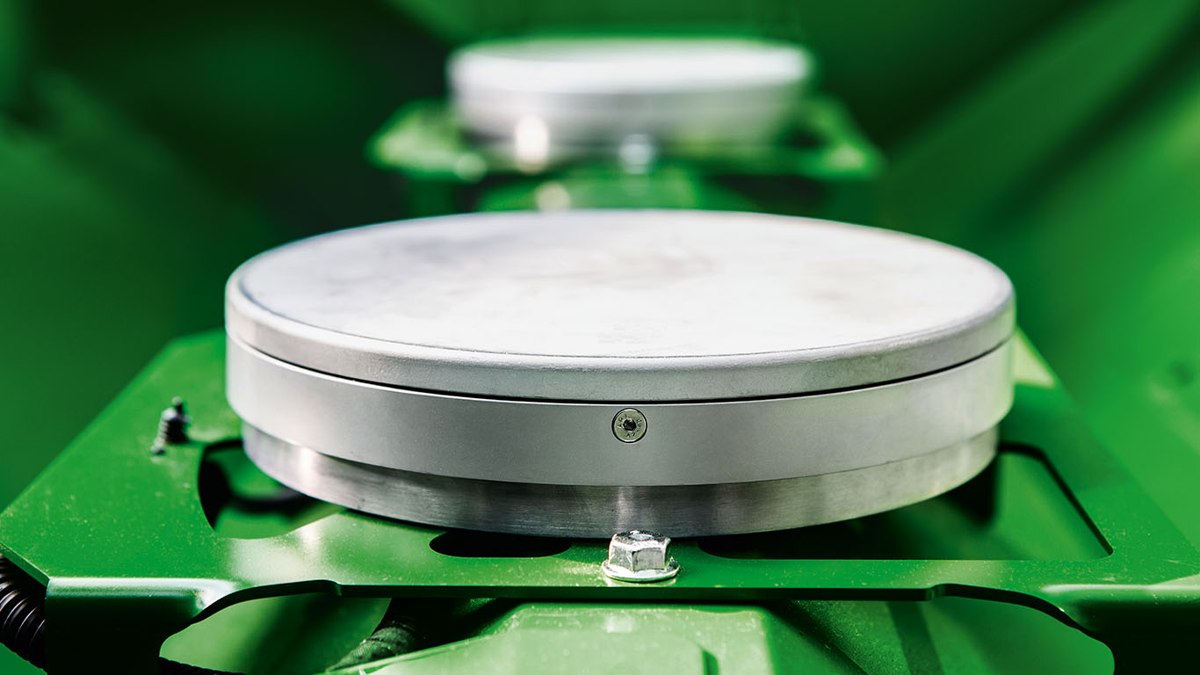
Automatic calibration on compatible Deere combines
John Deere ActiveYield
A calibration system that uses grain-tank observations to update a compatible combine’s mass-flow measurement. It is an OEM upgrade path rather than a universal standalone monitor.
Load acceptance depends on movement, slope and flow conditions; verify crop/model support.
View product details ↗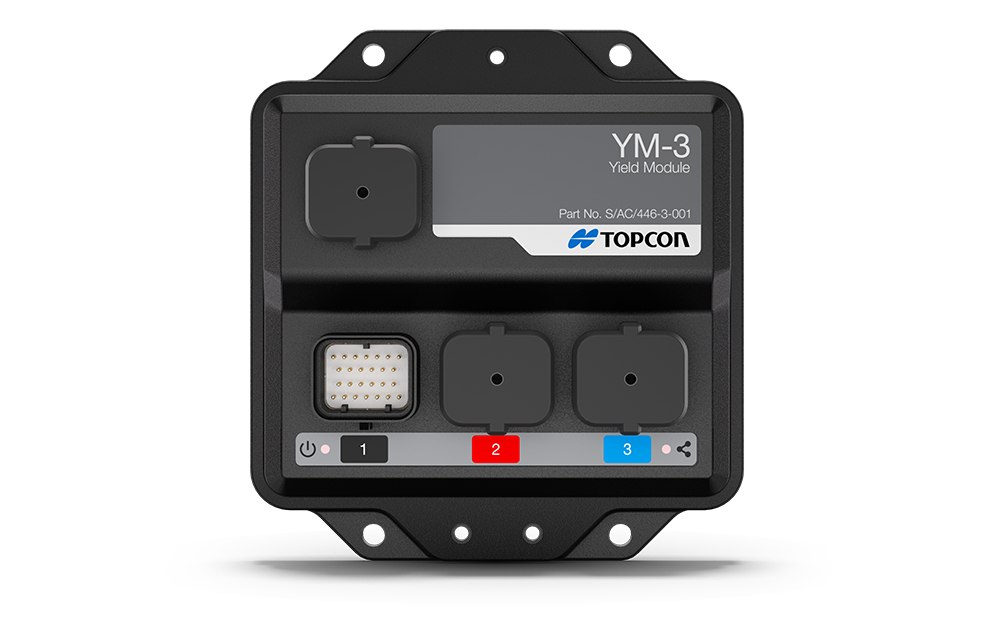
Grain and commodity yield controller
Topcon YieldTrakk YM-3
A yield-monitor controller for grain and commodity harvest systems. Keep YM-3 grain monitoring separate from YM-2 specialty-crop applications.
The controller alone is incomplete; include optical/moisture sensors and a supported console.
View product details ↗| Model | Measurement / role | Data connection | Coverage / installation |
|---|---|---|---|
| Ag Leader Yield Monitoring | Mass flow and grain moisture for mapped yield | InCommand display; AgFiniti workflow where configured | Supported combine sensor/kit installation |
| FarmTRX Yield Monitor Pro | Yield mapping with position; moisture when equipped | 4G, Bluetooth 5 and ISOBUS integrations listed | Supported combine elevator and sensor installation |
| Precision Planting YieldSense | Grain flow, moisture and harvest mapping | Gen 3 20|20 or compatible SeedSense; Panorama conditions apply | Only listed combine models; specific elevator kit |
| John Deere ActiveYield | Calibration of the existing mass-flow yield measurement | Integrated combine yield/moisture system | Grain-tank sensors and compatible combine configuration |
| Topcon YieldTrakk YM-3 | Optical grain-flow sensing and moisture with matched sensors | Matched Topcon or supported ISO-UT console | Compatible grain harvester and sensor package |
Calibrate across the flows you harvest
Use the manufacturer’s calibration procedure with a reliable independent weighing method. Check moisture against a suitable reference and inspect elevator chains, paddles, sensor surfaces and wiring. Calibration loads should represent the range of grain flow expected in the crop, rather than only one steady high-yield pass. Recheck after material changes in crop moisture or machine condition.
Purdue’s September 2014 discussion explains that calibration teaches the monitor how its electrical signal relates to grain flow and highlights the difficulty of strongly variable fields. That principle remains useful: a monitor fitted with good hardware can still produce a biased map if the calibration does not represent the harvesting conditions. Follow current model instructions for the actual load count and acceptance criteria.
Inspect the spatial record
Look for abrupt changes at starts, stops and headlands. Confirm that low-yield strips do not coincide with partial swaths, raised-header travel or an incorrect delay. Check the recorded width against actual overlap. Compare field totals with independently weighed deliveries, but also inspect the distribution: agreement in a field total can coexist with misleading local patterns.
For example, 3 tonnes harvested over 0.5 hectares is 6 tonnes per hectare before any moisture adjustment. If the system wrongly records 0.6 hectares for the same mass, it reports 5 tonnes per hectare. That discrepancy comes from area, not grain-flow calibration. Keep the original observations when cleaning a map so that exclusions and corrections can be traced.
Choose a workflow that preserves usable data
Ask whether the quote includes yield and moisture sensors, header sensing, receiver, harnesses, installation, display access and cloud services. Verify how maps and raw records can be exported, what happens without cellular coverage, and whether your agronomist’s software accepts the files. A live dashboard is useful only if it retains the records required for later analysis.
Use several seasons and field observations before attributing a low-yield area to one cause. Drainage, pests, crop establishment and harvest conditions can create similar patterns. Yield identifies where to investigate; it does not identify nutrient deficiency on its own.
From combine instruments to mapped records
Ag Leader dates its yield-monitoring history to 1992. Contemporary systems connect that established sensing job with GNSS and digital field maps, while optical retrofit options and automatic calibration provide different installation paths. Product generations change, so a current kit should be specified by combine model and controller generation rather than by the brand’s history alone.
Terms in a harvest record
- Mass flow
- Crop mass passing a measurement point per unit time.
- Transport delay
- Time between crop cutting and its arrival at the sensor.
- Calibration load
- A harvested quantity with an independently established weight used to adjust the monitor.
- Effective swath
- The width actually harvested, excluding overlap and uncut gaps.
Does automatic calibration remove weighing checks?
No. Automatic calibration can reduce operator work, but its accepted loads and operating conditions have requirements. Independent weights and a moisture reference remain useful checks. Diagnose differences before changing a prescription, especially when a new crop or machine adjustment changes the sensing conditions.
Sources & further reading
- Yield Monitor - Ag Leader
- Yield Monitor Pro: ISOBUS Retrofit Yield Monitor | FarmTRX
- YieldSense | Yield Monitors | Combines | Precision Planting | Upgrade Your Farm Equipment
- Get Ready for Harvest Setup - John Deere
- Implement controllers and sensors for agriculture
- Purdue University
- Topcon YM-3 yield-monitoring controller datasheet
- Precision Upgrades para Cocechadoras | John Deere