A greenhouse sensor network should explain the conditions around the crop and show where those conditions differ. Start with the climate zones you can manage, then place instruments where their readings represent those zones. One accurate sensor beside a doorway can still describe the wrong environment.
Measure the crop zone
Temperature and relative humidity are the foundation of a climate record. Together they support calculations of vapour-pressure deficit, or VPD, which expresses atmospheric drying demand in kilopascals. Add carbon dioxide where enrichment or poor air exchange makes its distribution important. Measure light above the canopy when lighting or screens are part of the growing strategy.
Keep the distinction between observation and control clear. A wireless node reports a quantity; a base station receives its messages; a climate computer decides how an actuator should respond. Check the entire path before choosing a sensor. The connector, electrical signal, measurement units and controller configuration all need to agree.
Five ways to instrument the greenhouse
These options span a dedicated climate measuring box, a wireless greenhouse instrument, an industrial probe and two controller-specific sensor families. Compare them by the infrastructure already on site. They serve similar observation tasks but have different hosts, power requirements and environmental limits.
E-Measuring Box SPE; CO2 module optional
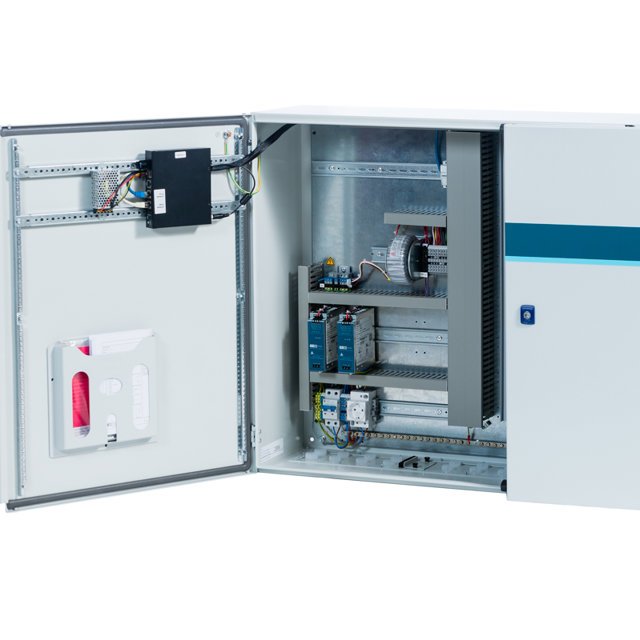
Priva E-Measuring Box SPE
A crop-zone measuring unit that combines temperature and humidity observations with an optional carbon dioxide module. One SPE cable carries its power and data.
Confirm controller/network compatibility and the optional CO2 module.
View product details ↗
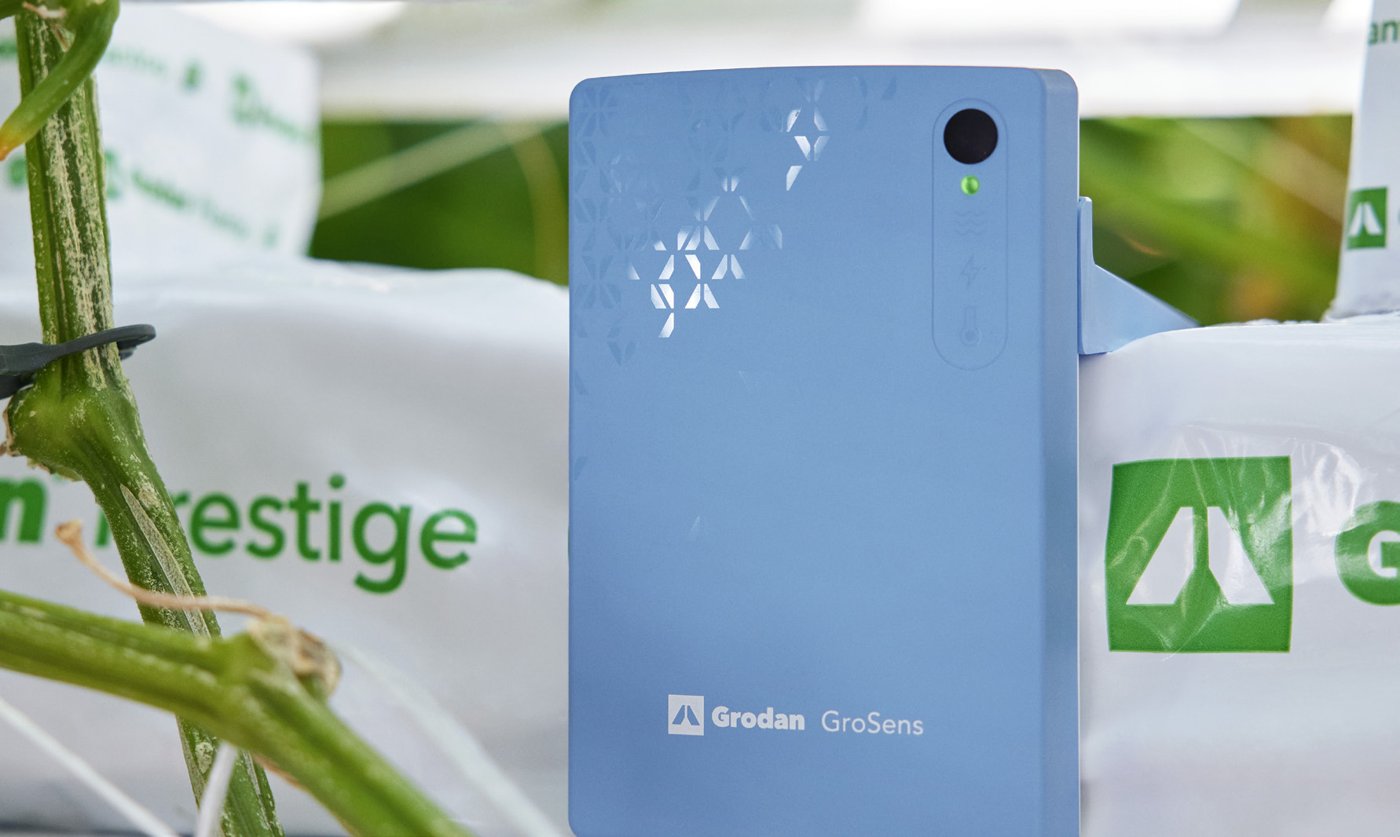
Greenhouse T/RH sensor with passive radiation shield
Aranet T/RH with Radiation Shield
A greenhouse-specific wireless temperature and humidity instrument with a passive shield designed to reduce heating of the sensing element in sunlight.
The sensor network needs a base station and a verified route into the controller.
View product details ↗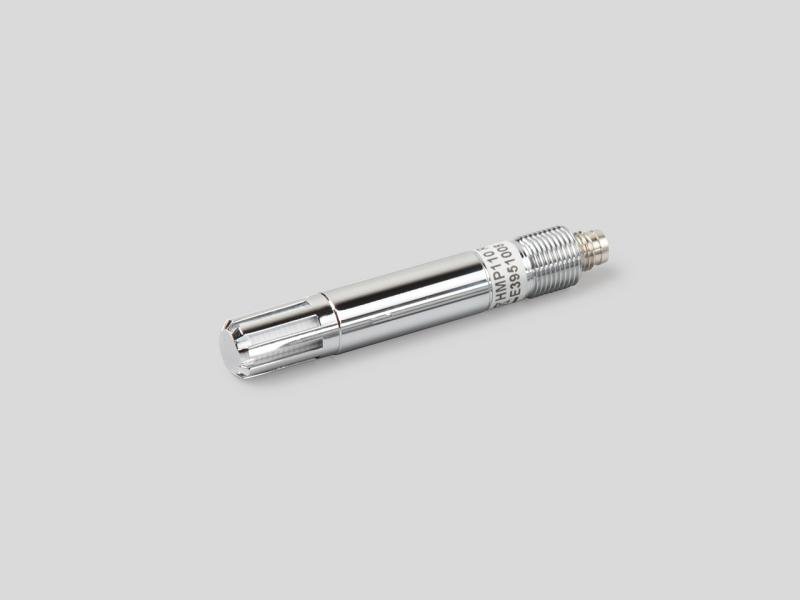
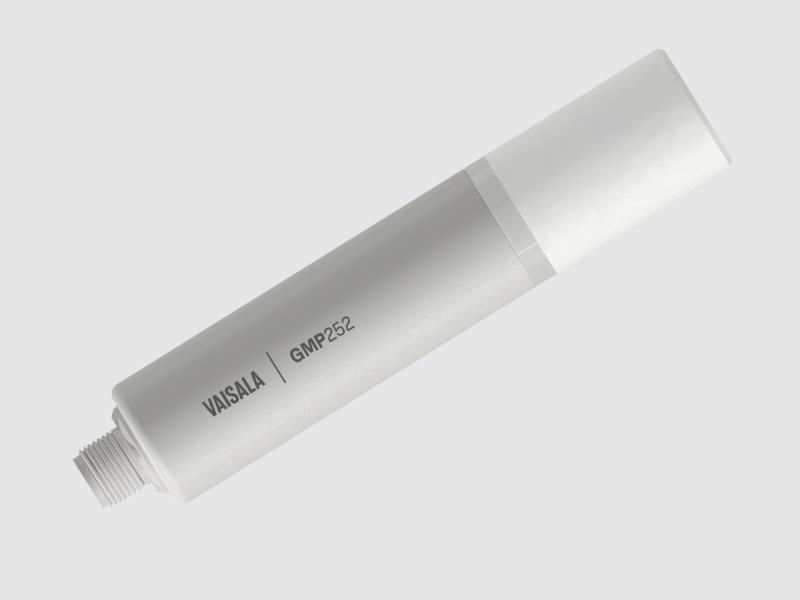
HMP110 humidity and temperature model; output selected at order
Vaisala HMP110
A compact industrial humidity and temperature probe with a detachable M8 cable. Analog and digital output configurations support different host instruments.
HMP110T is temperature-only; a bare probe needs suitable siting and shielding.
View product details ↗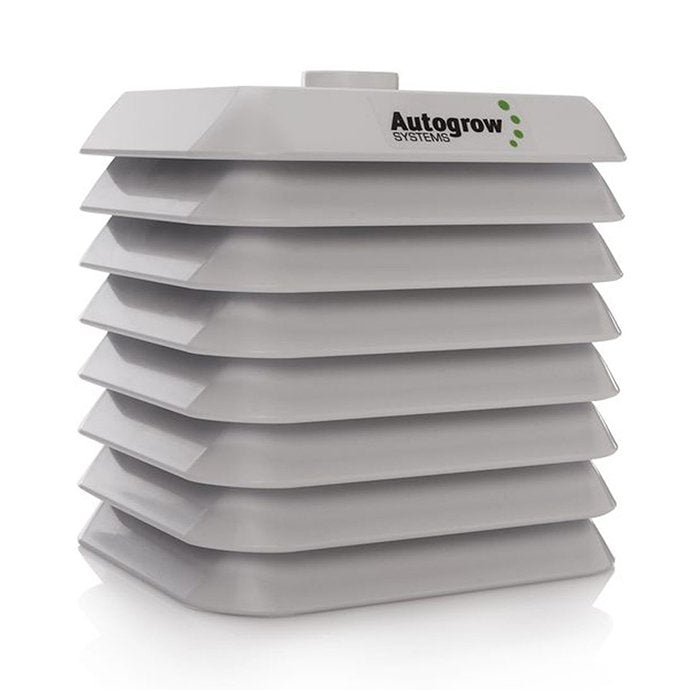
Standard EnviroSensor; Pro adds different quantities
Autogrow EnviroSensor
An environmental sensor family supplied alongside Autogrow control equipment. The standard offer lists air temperature, humidity and solar measurements.
CO2 and pressure belong to the Pro offer, rather than every EnviroSensor.
View product details ↗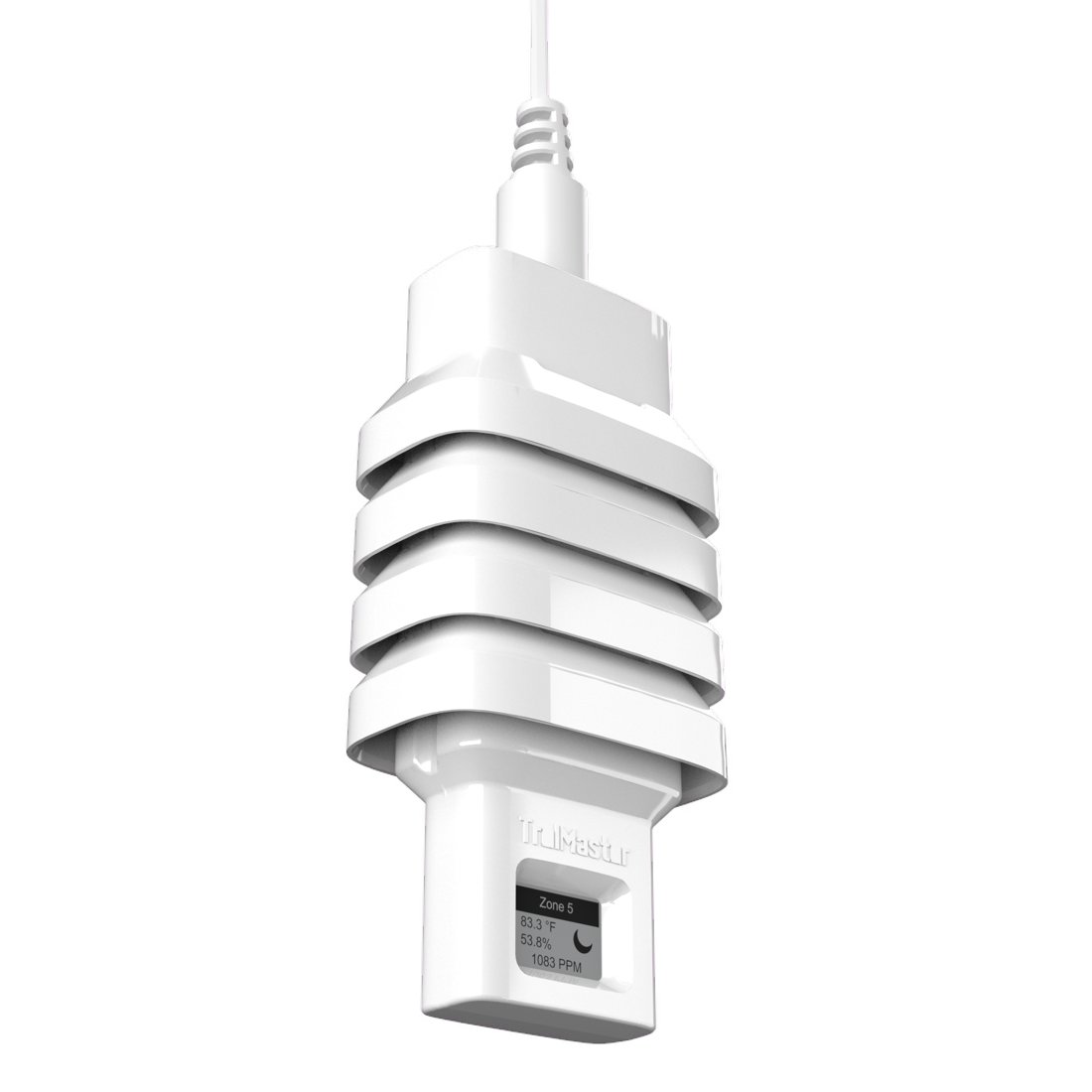
MBS-Pro for Hydro-X Pro and Hydro-X Plus
TrolMaster MBS-Pro
A four-in-one environmental sensor with an onboard display. Compatible controllers can use readings individually or average several sensors.
Keep sensors dry and clean; the photocell does not replace a PPFD sensor.
View product details ↗| Model | Measurement / role | Data connection | Coverage / installation |
|---|---|---|---|
| Priva E-Measuring Box SPE | Air temperature and relative humidity; optional CO2 | Single Pair Ethernet supplies power and data | Crop-zone measuring box; commission within the Priva installation |
| Aranet T/RH with Radiation Shield | Air temperature and relative humidity | Aranet radio network; compatible PRO base station required | Distributed greenhouse points protected against solar heating |
| Vaisala HMP110 | Relative humidity and air temperature | Voltage outputs or optional RS-485; configured variant matters | Compact probe integrated into a shielded measurement installation |
| Autogrow EnviroSensor | Air temperature, humidity and solar observations | Autogrow controller configuration; confirm ordered interface | Environmental measurement within an Autogrow installation |
| TrolMaster MBS-Pro | Air temperature, humidity, CO2 and light on/off | Compatible Hydro-X system and SPH-1 supplemental power | Multiple points assigned to compatible Hydro-X control zones |
Place sensors around management differences
Divide the house by crop, ventilation, heating, screens and irrigation management. Then look for conditions a single average could hide: edge rows beside cold glazing, an entrance, the centre of a dense canopy, an area under a different lighting arrangement or the far end of a ventilation run. A useful network includes representative control points and additional observation points for finding variation.
Raise the main air instruments as the crop grows. Avoid immediate contact with leaves, wet surfaces, heating pipes and the discharge from fans or humidifiers. Keep a record of height and location whenever instruments move. Otherwise a change in the graph may reflect relocation rather than a changed climate.
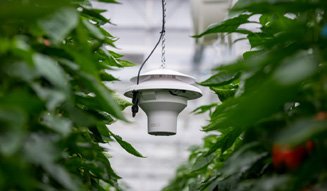
Solar radiation can warm a sensor above the surrounding air temperature. A radiation shield reduces this error; aspiration moves air past the sensing element. Passive ventilation and a powered aspirator are different arrangements. The Aranet greenhouse shield uses passive airflow, so commissioning should examine its behaviour in the actual light and airflow conditions rather than assume a fan is present.
Interpret humidity alongside temperature
Relative humidity describes how close the air is to saturation at its current temperature. The same RH at two temperatures does not give the same VPD. A temperature-and-humidity record therefore provides more context than an RH alarm alone. MSU Extension describes VPD as a useful way to assess the driving force for plant water loss.
Air VPD is calculated using air temperature. Leaf-to-air VPD also depends on leaf temperature, which can differ under sunlight, lamps or evaporative cooling. Keep those calculations labelled separately. A temperature probe inside a CO2 instrument may support that instrument's compensation without being positioned to represent the whole canopy.
Commission the complete measurement path
Place new instruments together temporarily to identify gross differences, allowing enough time for equilibration. This comparison does not calibrate them, but it can reveal an incorrect channel, unit or cable. Move them into their intended zones and test reception, timestamps, data gaps and alarms during ordinary equipment operation.
Before connecting observations to automatic control, test what happens when a sensor stops reporting, loses power or reads outside its expected range. Specify which point controls a device and which points provide monitoring only. An average across several nodes can hide a wet corner, so keep access to the individual records.
From thermostats to distributed observations
Greenhouse automation has progressed from separate thermostats and timers to computers coordinating climate, water and energy. Distributed sensing extends that approach by showing variation within the crop. It also creates a new responsibility: keeping each sensor's identity, placement and control role understandable as the installation changes.
- Zone
- An area managed together, such as a compartment with shared ventilation or heating.
- Stratification
- Differences in air conditions with height or position.
- Aspiration
- Air movement past a sensor, often provided by a fan.
- VPD
- The difference between saturation vapour pressure and actual vapour pressure; the temperature basis matters.
Questions about greenhouse networks
How many sensors does one greenhouse need?
Use the number of separately managed zones and observed sources of variation to set the layout. Map the house first, then add points where a single control measurement cannot explain crop conditions.
Can a light on/off sensor control a DLI target?
It can identify light presence, but it cannot measure the photon flux needed to calculate daily light integral. Use a suitable quantum sensor for that task.
Should every wireless sensor control a device?
No. Additional nodes can reveal uniformity and support diagnosis without being assigned to control. Document the function of each point.