A fertigation record should follow water and dissolved salts from the mixing system into the root zone and out through drainage. Instruments installed in a slab answer a different question from probes in a tank. Use both kinds of observation to distinguish a dosing problem from uneven delivery or changing substrate water content.
Follow the feed, substrate and drain
Measure feed solution after mixing, at a representative delivery point. Observe water content and temperature inside selected growing-media units, then sample drainage using a consistent method. Record irrigation events and delivered volume alongside those measurements. This sequence links what was prepared with what reached the crop and what left the root zone.
A dielectric probe estimates volumetric water content from the medium's electrical properties. The conversion depends on calibration, contact and the growing material. Stone wool, coir and peat have different structures and water distributions. A calibration suited to one medium should not be applied automatically to another.
Five instruments for different parts of the system
The first three options observe growing media. The final two measure nutrient solutions. They are complementary tools rather than five interchangeable replacements. Compare an installed package with its logger or service, and a solution meter with its probes, standards and maintenance supplies.
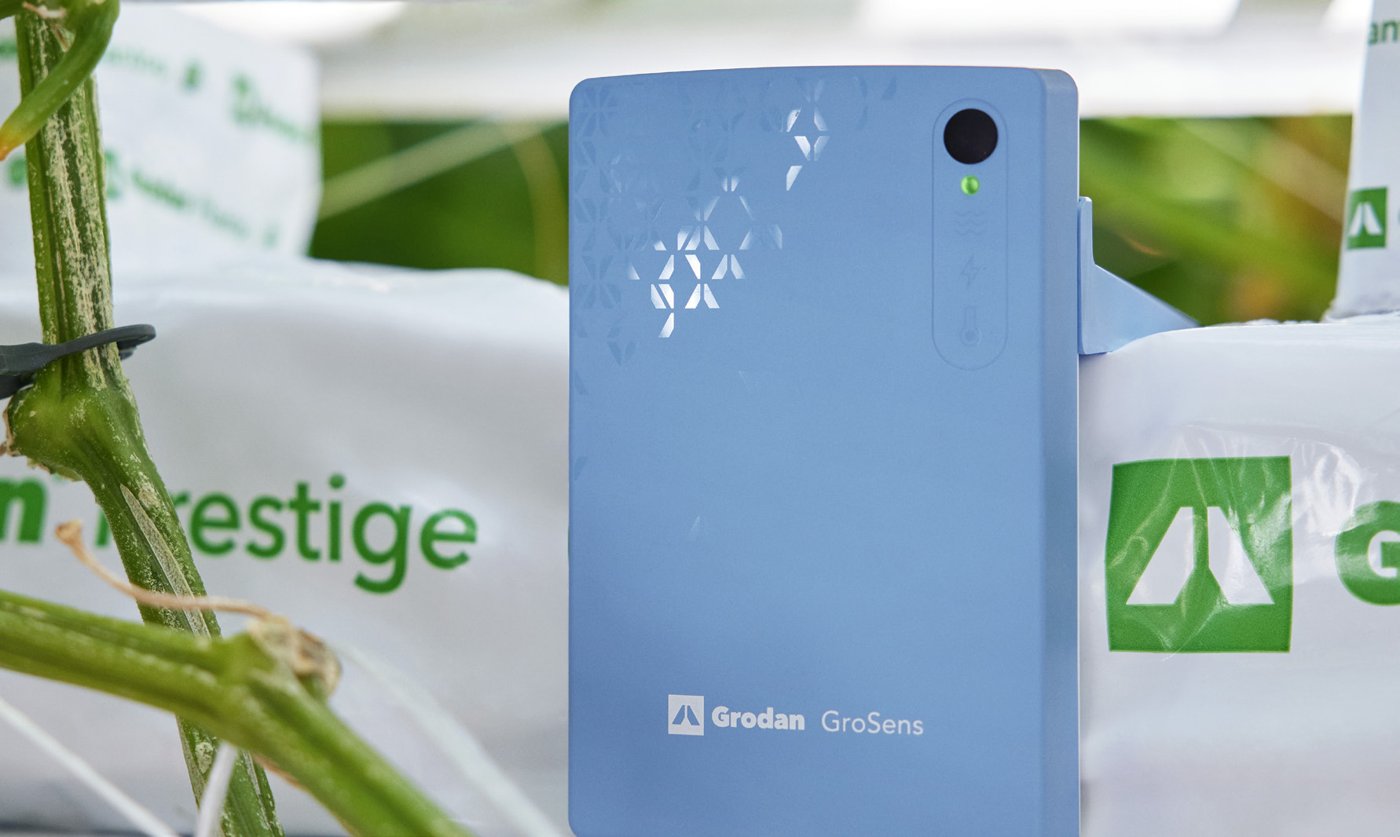
GroSens root-zone sensor with Suite; regional availability varies
Grodan GroSens Suite
A root-zone monitoring package built around Grodan growing media, combining wireless observations with irrigation-management views.
Confirm supported slab, sensor generation and regional service availability.
View product details ↗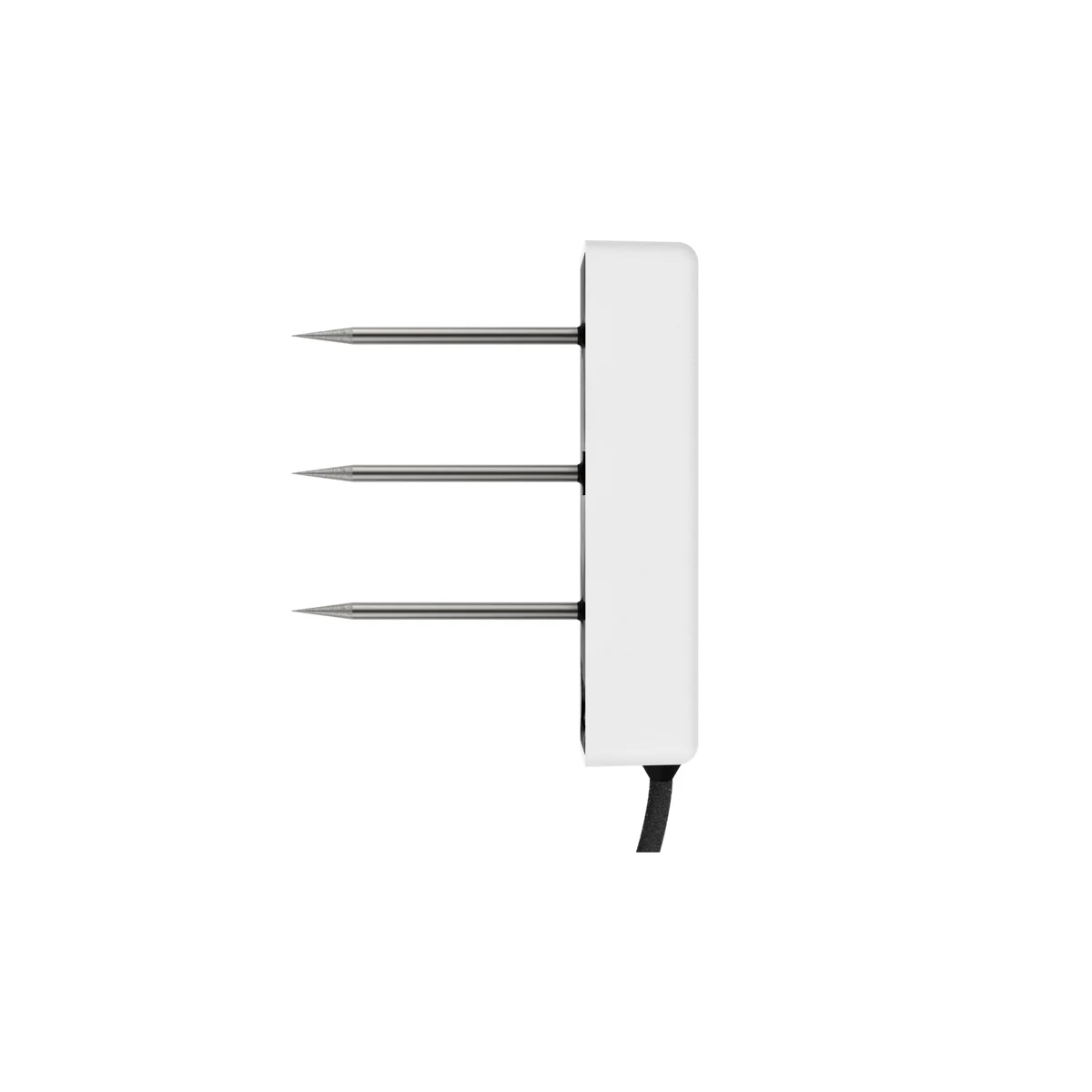
TEROS 12 wired probe
METER TEROS 12
A compact wired probe for growers and researchers who need water content, temperature and bulk electrical conductivity. It works with METER logging systems and compatible SDI-12 loggers.
Build multi-depth coverage with multiple probes; budget for logging and telemetry.
View product details ↗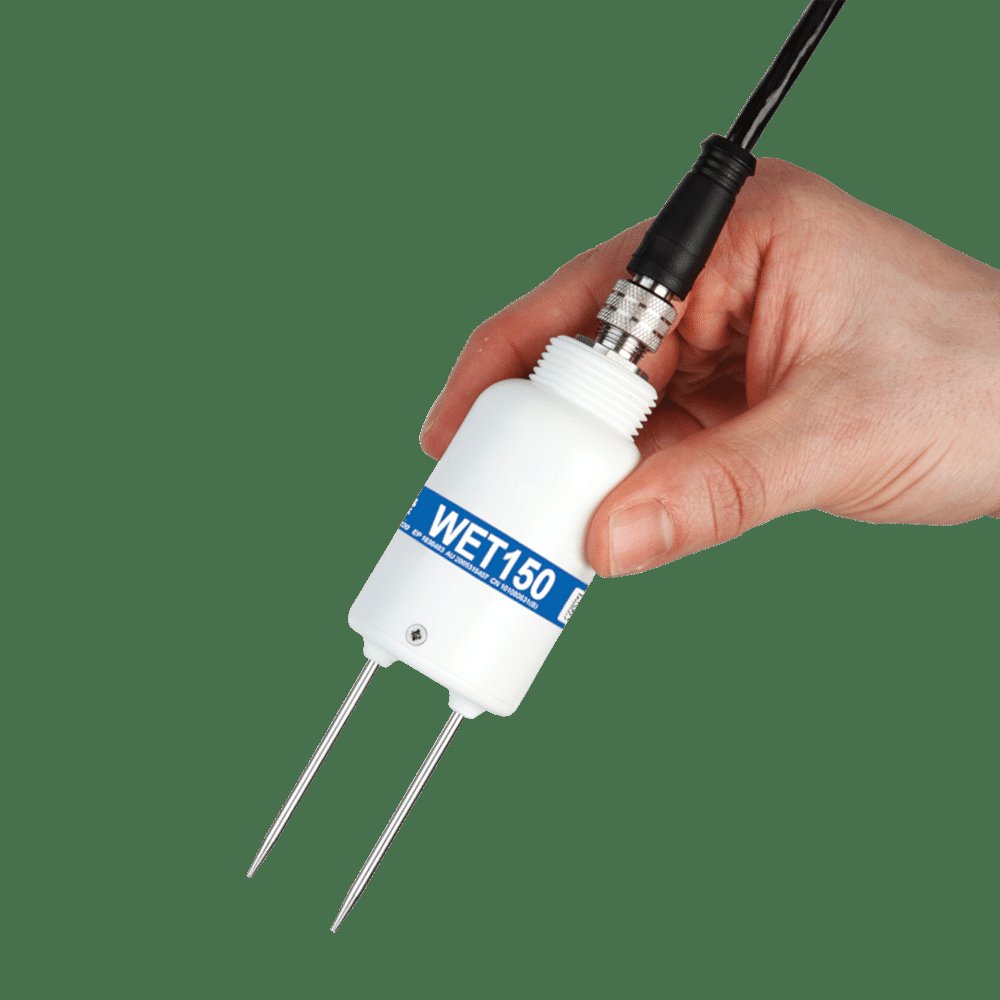
WET150 sensor; logger and portable kit are separate packages
Delta-T WET150
A three-prong sensor with calibration options for soils and several soilless substrates. It can remain installed or be used with a separate readout kit.
Choose the media calibration; handheld temperature readings require equilibration.
View product details ↗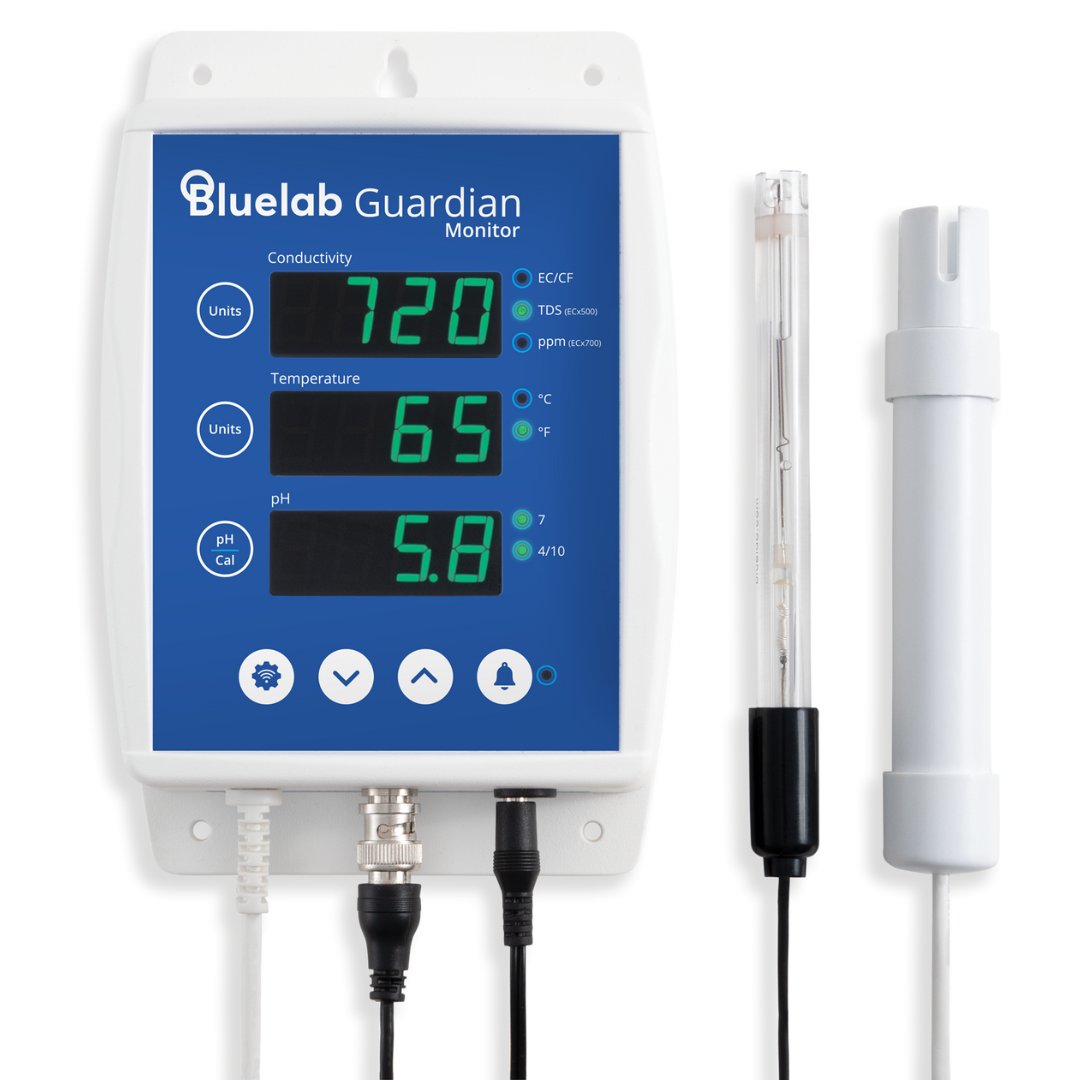
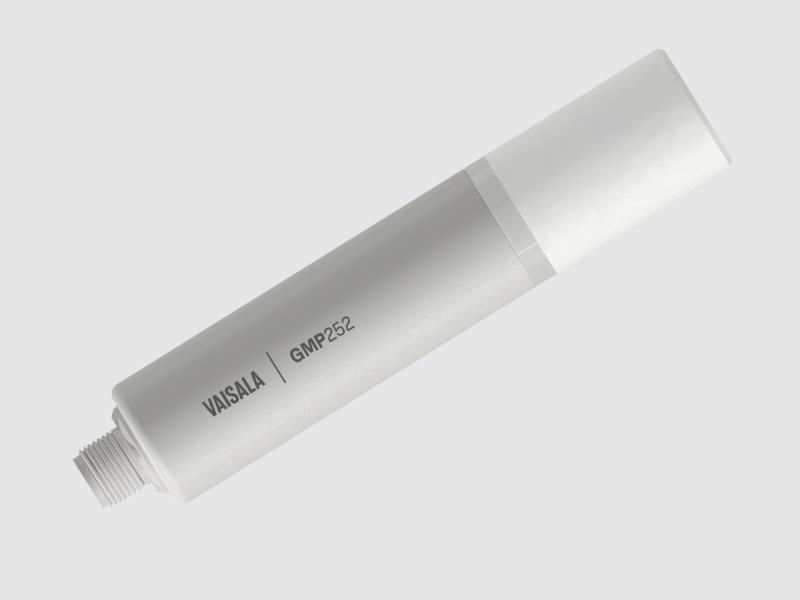
Guardian Monitor Wi-Fi BGUSTD02; reservoir probes
Bluelab Guardian Monitor Wi-Fi
A mains-powered monitor with separate solution probes, local displays and remote monitoring through the Edenic connection.
This monitor does not dose nutrients or measure water content inside a slab.
View product details ↗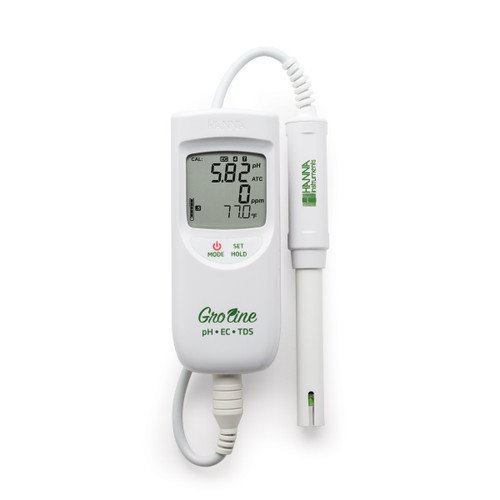
HI9814 portable meter with HI1285-7 probe
Hanna HI9814 GroLine
A portable multiparameter meter supplied with a replaceable three-in-one probe for nutrient-solution testing.
Sampling method affects interpretation; this is a portable meter rather than an installed control sensor.
View product details ↗| Model | Measurement / role | Data connection | Coverage / installation |
|---|---|---|---|
| Grodan GroSens Suite | Water content, EC and root-zone temperature | LoRa sensor communication and GroSens Suite package | Installed in compatible Grodan growing-media products |
| METER TEROS 12 | Volumetric water content, temperature and bulk EC | SDI-12; compatible logger required | One local measurement volume per installed probe |
| Delta-T WET150 | Water content, temperature and EC; calculates pore-water EC | SDI-12 host; portable meter available separately | Installed in growing media with selected calibration |
| Bluelab Guardian Monitor Wi-Fi | Nutrient-solution pH, conductivity and temperature | Local display; Wi-Fi and Edenic for remote monitoring | Continuous measurement in a reservoir |
| Hanna HI9814 GroLine | Solution pH, EC/TDS and temperature | Handheld display; manual sample record | Spot checks of feed, drain or prepared media extracts |
Interpret EC and pH in the correct sample
Electrical conductivity, or EC, indicates the ability of a sample to conduct current. Dissolved ions contribute to solution EC, but conductivity does not identify individual nutrients. Two mixtures can have similar EC and different nutrient balance. Laboratory analysis remains useful when you need to distinguish those mixtures.
Bulk EC measured through a wet substrate also depends on the conductive paths through water, particles and air. Pore-water EC is a different quantity; some instruments calculate it from other observations and a model. Keep the reported quantity and calibration visible in your records. A bulk-EC trend should not be compared directly with a reservoir EC target as though they were the same measurement.
The pH scale describes hydrogen-ion activity. It gives information about solution chemistry but does not replace water alkalinity analysis. For collected media samples, extraction method matters: a saturated-media extract and a dilution-based test can produce different EC values. UMass Extension treats sampling and interpretation together, so use limits intended for the same method and crop stage.
Keep insertion and sampling consistent
Follow the substrate sensor's positioning instructions. Depth, distance from the dripper, slab height and complete contact around the probes influence what it observes. Choose units that represent the crop area, and include additional points where irrigation distribution or root growth differs. Repeated measurements in one wet slab do not establish uniformity across a compartment.
When collecting feed and drainage samples, label the point, time and irrigation event. Avoid contaminated containers and rinse using the prescribed method. Take spot checks during changing conditions as well as quiet periods. A tank value can appear stable while a dosing transition or blocked delivery line affects the crop.
Read the daily water pattern
Look at the rise after irrigation, the response between pulses and the overnight change. Assess those patterns alongside crop demand, light, delivered volume and drainage. A sudden change can come from altered irrigation, a moved sensor, a poor probe contact or a real change in water uptake. Inspect the installation before changing a schedule solely to correct an unexpected graph.
Drain fraction is collected drainage divided by delivered irrigation volume over the same area and period. If a monitored unit receives 10 litres and produces 2 litres of collected drainage, the fraction is 20%. That calculation assumes all drainage from that unit is collected and the delivered amount is measured. It does not establish a universal crop target.
Maintain the measurement chain
Keep pH electrodes hydrated and maintain them with the manufacturer's storage, cleaning and calibration procedures. Conductivity probes also need clean measurement surfaces and verification. A screen that shows another decimal place is not evidence of improved accuracy. Use standards suited to the intended range and retain the calibration results.
Check the installed root-zone instruments when changing crop, slab or substrate batch. Preserve the previous calibration and location history so apparent changes remain interpretable. For automatic dosing, commission the sensor response, mixing, pump delivery and independent verification together; the monitor itself may have no dosing output.
From solution spot checks to root-zone records
Handheld solution measurements remain useful alongside continuous root-zone sensing. The later addition of logging and substrate-specific models makes it possible to follow the daily cycle rather than inspect isolated samples. That development increases the value of consistent units and sample methods, because several different EC quantities can now appear on one dashboard.
- Substrate VWC
- Water volume divided by the volume of the growing medium.
- Bulk EC
- Conductivity of the measured bulk medium, including its water and solid structure.
- Pore-water EC
- Conductivity associated with water in the pore space; calculation method must be retained.
- Drain fraction
- The proportion of delivered irrigation collected as drainage over a matched period.
Questions about fertigation monitoring
Does a substrate EC probe tell me the nitrogen concentration?
No. EC reflects overall conductivity. Use a suitable chemical analysis to identify individual nutrients.
Can a reservoir monitor measure slab moisture?
No. Its solution probes measure the tank or sampled liquid. Install a suitable substrate instrument for water-content observations.
Why do the handheld meter and installed probe disagree?
First compare the quantity, sample method, temperature treatment, location and time. They may be observing different material rather than giving conflicting readings of the same sample.