Compare robots by the work they can complete
An agricultural robot should be selected for a defined task and operating environment. Seeding and weeding, carrying implements and transporting harvested produce require different tools, power and supervision. A machine that moves itself through a field does not necessarily recognise crop problems or choose the right agronomic treatment.
Build the shortlist around crop geometry, access, terrain and the available operating window. Include field entrances, headland space, charging or refuelling, transport between sites and the person who responds to an alert. Autonomous operation changes the work of the operator; setup, inspection and intervention remain part of the system.
Position, perception and task control
A robot follows a planned path or a taught route while monitoring its environment. GNSS corrections can support precise field positioning. Cameras, lidar or other sensors may help observe obstacles and nearby objects. A geofence defines an intended operating boundary. The task controller also needs to know whether its implement is working correctly, rather than treating successful movement as successful farming.
Different robot architectures protect plants in different ways. FarmDroid records seed positions when sowing and uses that positional record for weeding. Naïo OZ carries tools for market gardening. AgXeed provides an implement-carrier platform for compatible operations. SwarmFarm develops robotic platforms and applications. Burro focuses on autonomous transport and collaborative material movement. Their outputs cannot be reduced to one universal capacity ranking.
Five platforms grouped by task
The comparison covers seeding/weeding, specialty tool carrying, field implement operations and transport. Confirm Burro’s payload, route features and regional supply for the quoted configuration. AgXeed now presents the tracked model as T2 5 SERIES, so specifications from older 5.115T2 documents should not be blended into a quote without checking the generation.
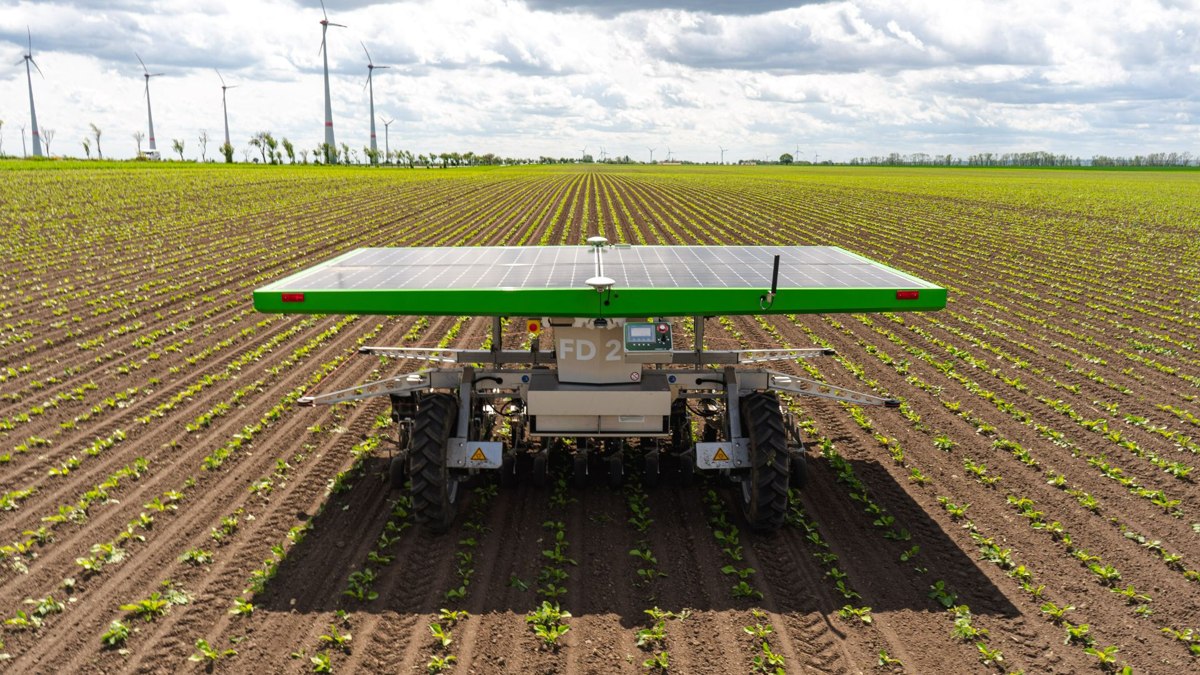
Solar-powered seeding/weeding robot
FarmDroid FD20
A robot that records where seeds are placed and uses that record for weeding, including work before emergence. Specify tools and crop configuration as part of the deployment.
Compatible crop, field size, working window and energy conditions determine capacity.
View product details ↗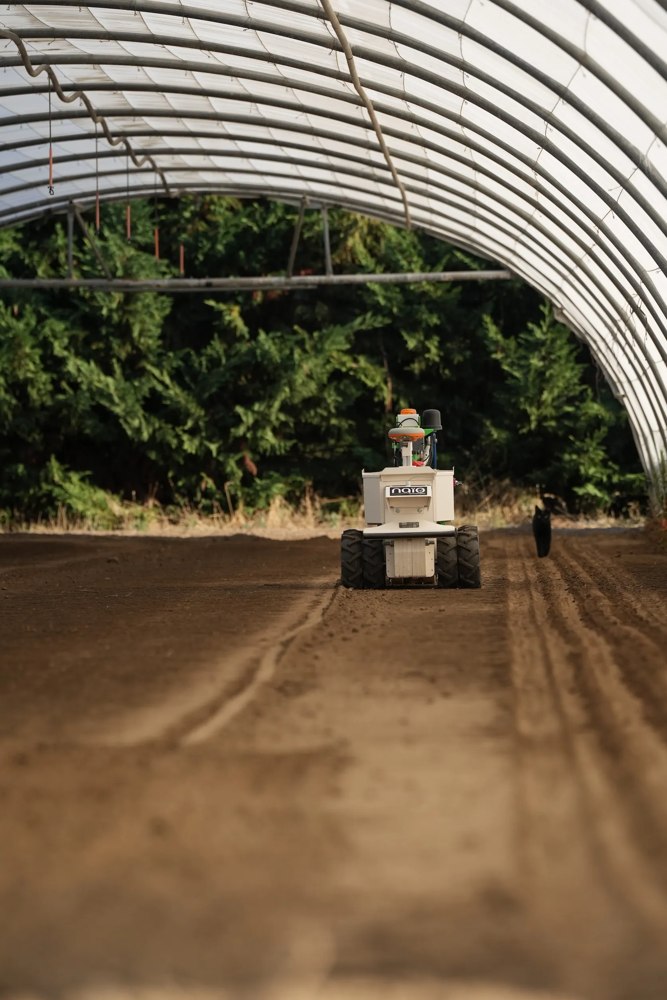
Electric market-gardening tool carrier
Naïo OZ
A compact robot for market gardening with compatible sowing, cultivation and transport tools. The selected tool and crop map determine the farm task.
Tool width, lift, battery demand and the actual operating area need assessment.
View product details ↗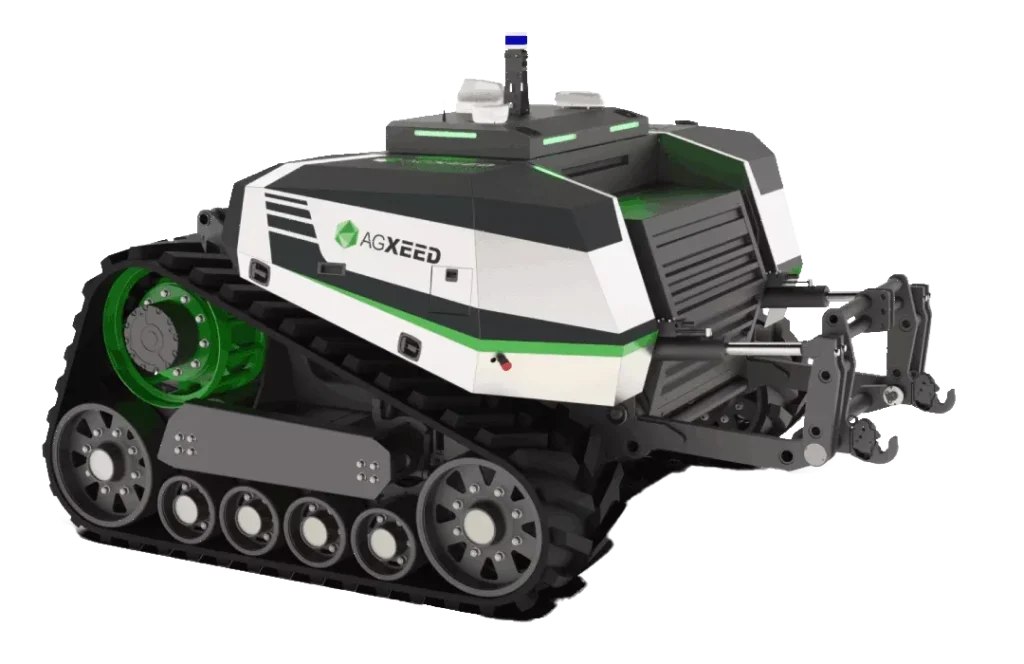
Current tracked diesel-electric platform
AgXeed AgBot T2 5 SERIES
A tracked field platform using planned missions and compatible working implements. Check the current T2 5 SERIES specification instead of mixing older 5.115T2 figures into the quote.
Obtain task/implement approval; current applications and development work are distinguished in the FAQ.
View product details ↗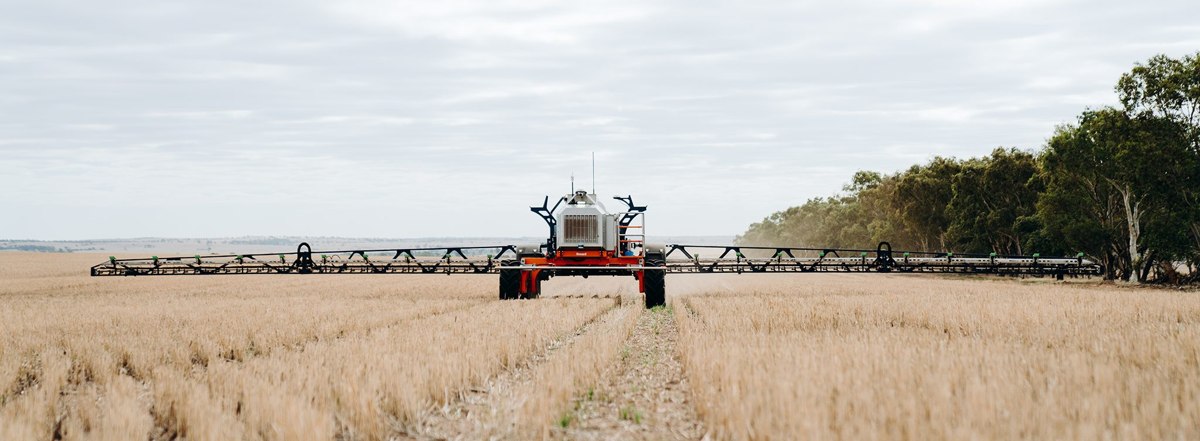
Application-specific robotic platform
SwarmFarm robotic platform
A robotics platform intended to combine autonomous movement with farming applications. Its task capability depends on the installed system and locally supported application.
Request the exact platform, application, service and operating conditions for the region.
View product details ↗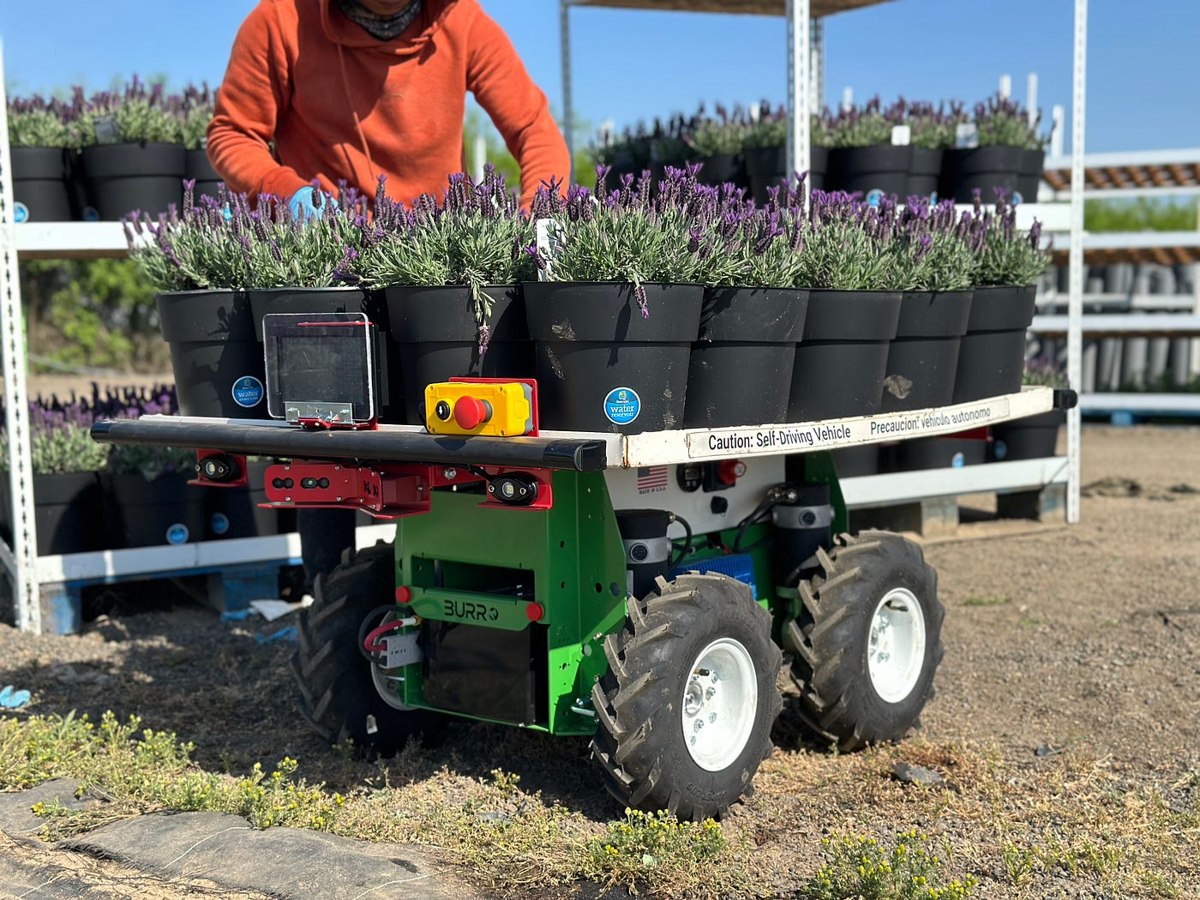
Standard carrying platform; 2024 sheet scope
Burro transport robot
A carrying platform for specialty-crop operations, with vision/GPS navigation described in its product sheet. Evaluate it through completed transport journeys rather than hectares worked.
Confirm current payload, terrain, route features and supervision requirements.
View product details ↗| Model | Measurement / role | Data connection | Coverage / installation |
|---|---|---|---|
| FarmDroid FD20 | Recorded seed position and subsequent mechanical treatment | GNSS-based position record and mission setup | Supported crops, row configuration and mapped field |
| Naïo OZ | GNSS RTK navigation with configured tools | Mapped operation and supported tool setup | Specialty crops and market-gardening layouts |
| AgXeed AgBot T2 5 SERIES | Mission navigation and compatible implement operations | TraXwise planning and supported ISOBUS/TIM arrangements | Large arable field operations with compatible implement |
| SwarmFarm robotic platform | Autonomous field navigation and integrated applications | Platform and application ecosystem | Configured local farming system and supported treatment package |
| Burro transport robot | Autonomous route/following transport using vision and GPS | Onboard navigation with configured route and remote tools | Specialty crop harvest and nursery transport routes |
Check whether the farm is ready
Map obstacles and access before arranging a demonstration. Inspect slopes, ruts, wet areas, cables, irrigation equipment and changing entrances. Work out how the robot is moved between separated fields and what happens where a public route divides the operation. Verify correction reception and communication through the field, including known dead spots.
For a tool carrier, inspect hitch, hydraulic, electrical and implement-control compatibility. A three-point linkage is only the start: draft, power, weight balance, working depth and implement fault detection all matter. The AgXeed FAQ distinguishes established applications from operations still in development, so obtain written approval for the exact tool and task.
Calculate completed work rather than headline hours
Theoretical field capacity is working width in metres multiplied by speed in kilometres per hour and divided by ten, giving hectares per hour. A 3 metre implement at 4 kilometres per hour therefore has a theoretical capacity of 1.2 hectares per hour. Actual capacity falls with turns, refills, charging, field shape, interventions and weather. This calculation describes assumptions, not the performance of a listed robot.
For transport, use completed journeys, usable payload, route length and loading time instead. A transport platform and a seeding robot solve different labour constraints. Compare the bottleneck on your farm and measure how a demonstration changes it before extrapolating across a season.
Understand stopping and recovery
Ask how the platform responds to obstacles, position uncertainty, communication loss and implement faults. Confirm emergency stopping, restart procedure and who is authorised to intervene. Check the operator’s location and supervision requirements in the supplied documentation and local operating conditions. Avoid treating a marketing phrase about autonomy as permission for unrestricted operation.
Plan recovery for a stopped machine with a loaded implement. Identify trained operators, spare parts, service response and access to diagnostic records. Preserve mission logs so that recurring stops can be investigated. A robot that runs for many hours still needs a workable support arrangement during the short weather windows in which fieldwork matters.
Task-specific robotics comes from field systems
SwarmFarm dates the start of its journey in Queensland to 2012. Naïo’s current product family spans market gardening, vineyards and vegetable tool carrying, while FarmDroid now offers multiple platform sizes. These histories point toward specialised operating systems rather than a single machine replacing every farm activity.
Terms in a robotics proposal
- Geofence
- A defined geographical boundary used in mission planning or operating controls.
- Perception
- Interpretation of sensor observations about the surrounding environment.
- Intervention
- A person’s action needed to restore, change or safely continue an operation.
- Implement carrier
- A mobile platform whose farm task depends on the attached working equipment.
Can a tractor-mounted smart sprayer be compared as a robot?
It belongs in a treatment-system comparison unless the complete vehicle platform supplies autonomous movement and the required operating controls. Automated weed detection or nozzle control does not establish autonomous vehicle operation. Compare such sprayers in the vision and weed-control guide.
Sources & further reading
- FarmDroid FD20 | Autonomous Farming Robot for Precision Agriculture
- Le robot OZ - Naïo Technologies
- AgBot T2 5 SERIES - AgXeed.com
- Technology - SwarmFarm Robotics
- Burro standard transport platform product sheet, 2024 edition
- FAQ - AgXeed.com
- Applications - SwarmFarm Robotics
- SwarmFarm Robotics | Robotic Agriculture
- About Naïo - Naïo Technologies